
Saturday, July 5, 2008

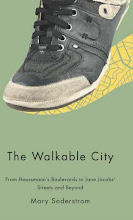
Saturday Photo: When Walking Gets Too Much and You Need a Little Help...


The world is on holiday this month--or so it seems--and there are going to be many people over the next few days who might wish to have what this man appears to have--three feet!

Actually of course what we see is two boots and one foot, as in the famous picture by Bruegel, The Peasant Wedding.

My photo was taken in Paris, but the need for a little pedestrian aid can occur anywhere. Or any time: the painting dates from 1568.


Friday, July 4, 2008

Fireworks in San Diego, Quebec City and, perhaps, Iraq

The Fourth of July is the day when my father would be reluctantly persuaded to drive us to the edge of a cliff overlooking Mission Bay in San Diego so we could see the celebatory fireworks in the distance. He hated crowds so he would never take us to the amusement park where the pyrotechnics were set off so we could see them up close. When Montreal began to have a fireworks competition at the old Expo 67 amusement park in the middle of the St. Lawrence, I began to understand his reluctance better. We took the kids once, which meant huge crowds on the Jacques Cartier bridge which overlooks the display. Since then the fireworks have become almost routine, with regular displays in addition to the 10 summer shows.

But last night Quebec City saw the grand-daddy (or perhaps, le grandpapa) of pyrotechnic shows. Some 7500 individual items--supposedly the largest number in Canadian history--were set off from barges in the St. Lawrence while hundreds of thousands watched from the shore and the bridges. Shipping was stopped on the St. Lawrence for the first time in the summer since Quebec City was founded. And the founding of the city is of course what the celebration was all about: the 400th anniversary of the arrival of Samuel de Champlain on July 3, 1608.

A lot of water has flowed down the St. Lawrence since then. Empires have risen and fallen, a fact that is good to remember during patriotic celebrations. Quebec City had been existence nearly 170 years when the Declaration of Independence was signed, while there had been great cities on the shores of the Euphrates a good 3,000 years.

What kind of fireworks will there be in Baghdad today?

Thursday, July 3, 2008

Growing Like Weeds: The Answer to Green House Gases?

My neighbor is back in the city for a few days after passing some time at her cottage in the Laurentians. Things are incredibly green, she says, and growing like…well, growing like weeds. The immense amount of snow last winter plus frequent rain in late spring have combined to make this a bumper year for all sorts of plants.

Vigorously growing plants: therein lies a partial solution to the problem of green house gases, two recent articles suggest. The first, by Freeman Dyson in The New York Review of Books, notes that carbon in the atmosphere decreases during the growing season in the northern hemisphere. After discussing two new books dealing with global warming—one which argues that the long turn costs of doing nothing will equal the costs of several possible solutions—Dyson suggests that trees bred or genetically modified to take up carbon rapidly might effectively counteract what we’ve been doing to the atmosphere.

Then Sunday’s New York Times Magazine had a fascinating article about weeds by Tom Christopher, “Can Weeds Help Solve the Climate Crisis?” The scenario is pretty gloomy, looked at one way, because it appears that many weeds grow more vigorously as the carbon dioxide content of the air increases. Christopher says that kudzu is moving north and taking over more forests; ailanthus trees next to a major highway grow 20 feet in five years compared to five feet in the mountains; and if you make things tougher, the fittest weeds will thrive.

But this can be worked to our advantage. Specifically Christopher quotes weed expert Lewis Ziska arguing that kudzu roots could be a good source of ethanol, while the vines could be burned. But there are other possibilities. Christopher writes: “If we are to avoid disaster, experts agree, we will need to be tenacious but flexible, ready to identify and exploit any opportunity in what will be a challenging, even hostile situation. In this new world that we have made, weeds, our old adversaries, could be not only tools but mentors.”

One way to look at human history is continual destruction of forests. The Indian epic Rig Veda talks of a great forest which extended from the Indus to the Ganges; the Cedars of Lebanon were chopped down in part to build Babylon; Julius Caesar’s Europe was covered with forest; and the island of Madeira got its name because of its trees, which burned in a forest fire which lasted seven years in the 1420s. The deforestation of North America followed, and we now seem intent of finishing the job in Amazonia, Southeast Asia and elsewhere.

So there certainly is room for reforestation. Would doing this mean developing Dyson’s super trees? Or could we rely on weed trees to do the job? I have no idea, but it is time that some serious research was done on the subject.

Wednesday, July 2, 2008

African Solutions for African Problems: Good News from Burundi, Bad News from Zimbabwe

Ten days before Robert Mugabe “won” the presidential election in Zimbabwe, the last remaining rebel leader in Burundi announced the end of their struggle against a government of reconciliation. According the United Nations information service IRIN, Agathon Rwasa, marked the formal start of the cantonment of his fighters at a special ceremony.

"Through this pre-cantonment process we want to show the Burundian and international community that we are committed to reaching a lasting peace," Rwasa said as 150 combatants from his Palipehutu-Forces nationales de libération (FNL) assembled at Rugazi.

This is good news: the slow march toward peace in Rwanda’s non-identical twin has been going on for nearly a decade. That was when African nations set in place an embargo against Burundi in an attempt to bring the warring Tutsi and Hutu factions to the negotiation table. Nelson Mandela played a decisive role in those discussions, which led to relatively free elections and the implementation of a government of reconciliation three years ago.

African Union leaders meeting this week have not come down with similar sanctions against Zimbabwe. Unlike Mandela, whose continual efforts to bring democracy and peace to his part of the world were so important in Burundi, South Africa’s current president Thabo Mbeki has dragged his feet. According to the Christian Science Monitor, this is nothing new with Mbeki.

The long, but ultimately successful struggle in Burundi is evidence of how Africans can solve their own problems when they act in concert and when their men of principle are listened to. Mandela, whose 90th birthday was exhuberantly celebrated in London last week too, should serve as an example to his succesors.

Tuesday, July 1, 2008

Moving Day and Staying Put in Montreal: July 1 in All Its Splendour

Today is Canada Day, and also Moving Day in Montreal. For most of the country it’s the holiday which celebrates the founding of the nation in 1867. There will be some festivities here too, but the biggest activity will be moving.

About 60 per cent of Montreal households are renters, a proportion which is decreasing with the increased availability of condos. Still, the fact that the standard lease expires July 1 means that thousands of people move on or around that day. Our family is touched this year. The reason we took Elin to CAMMAC on Sunday was because Emmanuel is deeply involved in boxing his marvelous stuff in preparation for their move into a large duplex next Sunday. Today Lukas and Sophie are helping a friend move, and for the last week or so Lee has been clearing out his office at McGill.

That last move is involving getting rid of many things. He’s been in the same office for 38 or 39 years, and the wall hanging—an interesting piece of fabric I found for him years ago—has not been washed since Lukas was born, I’m pretty sure. We brought two car-loads of books and papers home last week, but there’s still another load which we’ll pick up sometime in the next few days. His project for today is to do more work on the bookcase extensions required for all the stuff he thinks he’ll still want to have around. Of course, all this is a way of saying that July 1 has another meaning for us this year: after 40 years at McGill, he’s officially retired as of today. For a job that he took on a three year contract back in 1968, it turned out pretty well.

Monday, June 30, 2008

Making Music in the Woods: Real Diversity at CAMMAC, But Not, Alas, at the CBC

Yesterday we delivered Elin to the CAMMAC (Canadian Amateur Musicians Musiciens Amateurs du Canada) summer music program where she’ll be teaching this next week. Part vacation colony, part summer school, CAMMAC is a unique place which welcomes families as well as adults who take their music enthusiastically but seriously. When we arrived people were pitching tents in the campground, a couple of 9 or 10 year old boys were practicing soccer moves on the lawn and a passel of younger kids were playing in a big sand box. All the while others were unloading a wide variety of musical instruments or, having arranged their rooms in the main building, were rocking on the wide porch which looks out over Lac Macdonald.

It’s an idyllic setting, with varied programs all summer. This week it’s Early Music with an emphasis on that surrounding the pilgrimage to Campostella, with activities ranging from advanced viola da gamba workshops through concerts to beginner recorder lessons. Later on there will be jazz, chamber music, and vocal weeks, during the last of which the music will range from Rossini to Broadway.

The contrast between this eclectic, joyful mix of music and what is happening at the CBC couldn’t have been stronger. The CBC brass tried to put a good spin on programming changes at Radio Two last week but, according to The Globe and Mail a Radio 2 promotional video highlights “a bevy of Canadian acts, including Jann Arden, Feist, Ron Sexsmith, Alex Cuba, Michael Bublé and rapper k-os” but only “a brief clip of a symphony orchestra in concert.”

Don’t the CBC brass realize that you don’t have to short change serious music to bring diversity to Radio Two? Canadian musicians are among the best in the world, they have a world-wide audience. But they need support at home from our public broadcaster, as the folks who are enjoying themselves at CAMMAC this summer would agree. As for the musicians who are teaching there—well, the CBC has been the incubator for many of them, and they are going to feel the Radio Two cuts acutely.