Saturday, 18 April 2015
Saturday Photo: And Next up, Scylla
The progression of spring flowers is upon us. Last week the snowdrops came up, this week it's the turn of scylla. Tulip leaves have emerged also and my neighbor's crocuses are about to bloom
I spent Monday raking the garden, and installing drip hoses. It wasn't a moment to soon since to do that work today would mean tromping on the emerging plants. When spring arrives here, it often comes at a gallop.
Le Devoir Turns Green
Fascinating weekend edition of the influential daily Le Devoir: nearly all the news and features are about environmental topics. Sure. there's the latest about the Stanley Cup--no Montreal newspaper could afford not to mention that the Habs lead the Sens 2-0--but even the culture and travel pages are loaded with stories that have an environmental twist.
Editor in chief Josée Boileau explained this morning on Radio Can that the aim was, for once, not to concentrate on the dreadful consequences of climate change and our headlong rush to pollute everything. Rather, the idea was to provide background that shows where we're headed in the right direction. Lack of hope can lead to inaction, she said, when what is needed is action. Tellingly, the title of the issue is Vers l'espoir, Toward Hope.
There are many articles worth reading, even if your French is rusty.
Wednesday, 15 April 2015
A Little Context for Boko Haram: Two Novels
The news yesterday was full of images from Nigeria, where people were marking the sad anniversary of the kidnapping of 132 girls
and young women by Boko Haram a year ago. What is going on with
fundamentalist groups is extremely hard for me to understand. The BBC recently did a piece on
the Nigerian group, which gives some context. The aim is a caliphate
where Sharia law rules, it seems. Everything Western should be
forbidden.
But Muslims are not the only terrorists in the world, as witness Uganda's Lord's Resistance Army, a rebel group operating on borders separating Uganda, Sudan, the Central African Republic and the Democratic Republic of Congo. Ostensibly motivated by Christian revelations, it uses child soldiers with impunity.
Inter-ethnic violence also is a curse, and probably to date conflicts like those which have pitted Hutus against Tutsis in Rwanda and Burundi have killed and displaced more than the Muslim groups have.
How did things come to this? Two novels I read recently give a little insight.
The first is Running the Rift by Naomi Benaron. It tells the story of Jean-Patrick Nkuba, a Tutsi in Rwanda who wants to run. He has a chance to represent his country in the Olympics, but is caught up in the 1994 genocide. Much of his family is wiped out, but he escapes. The frenzy that led up to killing spree--estimates are that at least 500,000 people were killed in three months--is portrayed in terrifying detail. The story is not all horror though because it ends with a certain hopefulness that forgiveness is possible.
The subtext is that competition for land can be manipulated to profit the self-interest of individuals, and that vestges of colonial domination have exacerbated things.
The second is Three Weeks in December by
Audrey Schulman takes place in Rwanda and Kenya. There actually are
two "three weeks," the first at the end of the 19th century and the
other at the beginning of the 21st. In alternating sections, Schulman
tells the story of an engineer from Maine who heads up the team building
of a railroad from Mombasa on the Indian Ocean coast to what would
become Nairobi, and of a brilliant woman ethnobotanist who has
Asperger's Syndrome and who is searching for a medicinal plant in the
mountains where the last mountain gorillas live.
There's an O. Henry-like ending that ties things up which I won't spoil, but I think it's fair to say the two stories point out what colonialism has done to the people and ecosystems of Africa. The dignified, wise hunter-gatherers of the first period contrast drastically with the drugged children's army, the Kuti, that Shulman has invented, who thrash about, trying to recreate a pre-colonial state. Similarly, the starving lions who ravage the railroad workers in the first story presage the sorry state of the gorillas that the ethnobotanist hopes to protect.
Both novels are good reads. The Schulman one, however, is plagued by sloppy editing that casts doubt on the background research that she's done. The two that bothered me the most were the reference to iced tea being drunk in 1899 on a ship in the Indian Ocean (where'd the ice come from?) and the repeated reference to jerricans, those useful metal containers that weren't invented until the 1930s.
But Muslims are not the only terrorists in the world, as witness Uganda's Lord's Resistance Army, a rebel group operating on borders separating Uganda, Sudan, the Central African Republic and the Democratic Republic of Congo. Ostensibly motivated by Christian revelations, it uses child soldiers with impunity.
Inter-ethnic violence also is a curse, and probably to date conflicts like those which have pitted Hutus against Tutsis in Rwanda and Burundi have killed and displaced more than the Muslim groups have.
How did things come to this? Two novels I read recently give a little insight.
The first is Running the Rift by Naomi Benaron. It tells the story of Jean-Patrick Nkuba, a Tutsi in Rwanda who wants to run. He has a chance to represent his country in the Olympics, but is caught up in the 1994 genocide. Much of his family is wiped out, but he escapes. The frenzy that led up to killing spree--estimates are that at least 500,000 people were killed in three months--is portrayed in terrifying detail. The story is not all horror though because it ends with a certain hopefulness that forgiveness is possible.
The subtext is that competition for land can be manipulated to profit the self-interest of individuals, and that vestges of colonial domination have exacerbated things.
The second is Three Weeks in December by
Audrey Schulman takes place in Rwanda and Kenya. There actually are
two "three weeks," the first at the end of the 19th century and the
other at the beginning of the 21st. In alternating sections, Schulman
tells the story of an engineer from Maine who heads up the team building
of a railroad from Mombasa on the Indian Ocean coast to what would
become Nairobi, and of a brilliant woman ethnobotanist who has
Asperger's Syndrome and who is searching for a medicinal plant in the
mountains where the last mountain gorillas live. There's an O. Henry-like ending that ties things up which I won't spoil, but I think it's fair to say the two stories point out what colonialism has done to the people and ecosystems of Africa. The dignified, wise hunter-gatherers of the first period contrast drastically with the drugged children's army, the Kuti, that Shulman has invented, who thrash about, trying to recreate a pre-colonial state. Similarly, the starving lions who ravage the railroad workers in the first story presage the sorry state of the gorillas that the ethnobotanist hopes to protect.
Both novels are good reads. The Schulman one, however, is plagued by sloppy editing that casts doubt on the background research that she's done. The two that bothered me the most were the reference to iced tea being drunk in 1899 on a ship in the Indian Ocean (where'd the ice come from?) and the repeated reference to jerricans, those useful metal containers that weren't invented until the 1930s.
Monday, 13 April 2015
Saturday Photo, Several Days Late
Computer problems: that's my excuse for not posting for the last few days. Think they may be solved, so I'll have no reason not to rant....
And here is the other reason for sloth: the weather has finally changed, the snow is practically gone, and the snow drops are up. Tomorrow at some point I'm going to have to rake the little front garden and put down the drop hoses. That has to be done before the bulbs come up, and I have a feeling that they are going to burst out of the ground quickly.
Saturday, 4 April 2015
Saturday Photo: What We Don't Need
Appparently there was a big baseball game in Montreal yesterday when you actually could have imagine it was spring, and another one today, when it is snowing, again. The Cincinnati Reds beat the Toronto Blue Jays 2-0 yesterday, I'm told.
The exhibition pre-season game is part of a campaign to bring baseball back to Montreal, I'm also told. There have been drawings circulating which show what a new stadium for a revived Montreal Expos might look like. (The games this year are taking place in the old Olympic Stadium, built at the cost of $1.5 billion and now needing $220 million in repairs.)
The expense for a new stadium would be immense, and the location being proposed is far from Metro lines. What's worse is that all this is coming when the Quebec government is cutting drastically right and left.
No, we don't need a new stadium. What we do need is a little wisdom when it comes to the ineffacity of austerity measures.
Wednesday, 1 April 2015
This is Not a Poisson d'avril: The Rivers May Not Run Much Longer
Thinking about contact between humans and nature, particularly with the world's big rivers. Kept coming across the important role they played in the peopling of the world, as highways for travel and as sources of food.
Two things stand out today, April Fool's Day, which in French is Poisson d'avril:
First, that we've made a mess of most of them by dumping our waste in them.
Second, many are going to disappear due to climate change. Those rising in the mountains where glaciers are melting are particularly at risk, as are those of California where the fourth year of drought has reduced the snow pack to practically nothing in the Sierras.
Monday, 30 March 2015
Death of a Philosopher King: Lee Kuan Yew of Singapore
The founding father of Singapore died ten days ago, and the event passed me by even though I've been one of his fans ever since my first trip to the island nation in 2000.
Lee Kuan Yew, educated in the UK and called Harry Lee for the first part of his life, led Singapore to independence when it was flung out of Malaysia in the 1960s. At the time, observers wondered how the small country, formerly a British colony, could ever survive.
It did, however, with Lee being in large part responsible for its emergence as a well-housed, well-educated and productive nation, an example of how things can be done.
To be sure, Lee was sometimes heavy-handed. In fact when I first visited I was rather afraid of what I might see in the way of repression. But the cabbies groused to me about the government the way they do most places, and there was a notable absence of uniformed police or military on the streets. Shortly afterwards I made my first trip to Paris and was shocked to see soldiers with machine guns in the Métro. My conclusion was that there are a lot of ways to control a population, and since Singapore worked so well, perhaps Lee had some good solutions to complex problems.
Indeed, Nicolas Kristof, the New York Times columnist and specialist on Asia, called Lee Kuan Yew a “philosopher king” in his review of Lee’s memoirs.
Plato, you'll remember, recommended philosopher kings as the best rulers since they combined both wisdom and power for the betterment of their countries. The world has had exceedingly few of them. When one emerged he all too often was corrupted by power. He was told what he wanted to know. His wisdom turned to caprice. He frequently became a tyrant. He would be tempted to overstay his welcome.
Lee Kuan Yew, however, stepped down in 1990, having carefully planned his succession. He was sixty-eight and in apparent good health, and a few days before he retired he spent part of a Sunday planting a tree in a recently refurbished park along the city’s waterfront The event was nothing new—he’d inaugurated this annual Tree Planting Day nearly twenty years earlier. But this day he didn’t like what he saw. He squatted down and held his hand above the new pavement, telling reporters and dignitaries that he could feel just how much heat was still radiating from the ground even though the sun was setting. The trees, he said, should be planted closer together so that when they were full grown the canopy they formed would shade the pavement.
It was a small detail. Not one you would think a philosopher king would be concerned about. But it was symptomatic of the care and thought that have gone into making Singapore an example for green cities all over the world.
Too bad there are not more like him around.
(The photo is of Palm Valley in the Singapore Botanical Garden: my first trip there was to research it for my book Recreating Eden: A Natural History of Botanical Gardens. I visited there again in 2006 because I wanted to include it my book Green City: People, Nature and Urban Places.)
Saturday, 28 March 2015
Saturday Photo: It's the End of March, for Goodness Sake!
Got up this morning to a light dusting of snow, again! But even though the temperature is well below freezing, the sun has been out most of the day, makin for a lighter heart and some melting.
But it's about time that the white stuff disappeared and we had a little spring, don't you think?
Wednesday, 25 March 2015
I Am Woman, Hear Me Roar Department
Le Devoir this morning carried a front page story in which a group of feminist medical types warn that new omnibus legislation restructuring the health care system in Quebec might make it harder for women to get abortions in the province. Anne-Marie Messier, director of the Centre des santé des femmes, and 30 others had written a letter to the crusty Health Minister Gaétan Barrette charging that a draft rule, attached to the bill, would do such things as put a cap of 504 abortions per doctor per year. The figure works out to less than ten per week, which is far fewer than health professionals at abortion clinics provide.
However, shortly after sunrise when the newspaper article began to circulate both Barrette and Premier Philippe Couillard took the airwaves, saying that that the government has no intention of restricting abortion. The quota would not apply doctors who specialized in teh procedure. By afternoon Le Devoir had changed its headline and modified the story.
The prompt action is very interesting. Obviously the groundswell of protest that flooded call-ins and social media this morning convinced Quebec's leading class that this was a debate they didn't want. As Chantal Hébert said on the Radio Canada morning show C'est pas trop, the last thing any government in Canada wants at this point is to get involved in the abortion question. Even Stephen Harper, who has a flock of backbenchers against abortion, would rather have dissension in caucus than to open the debate, she pointed out.
So score one for the women who jumped into the fray immediately.
Tuesday, 24 March 2015
Signing Back on after a Couple of Productive Months
This morning I sent off a draft of my new non-fiction book Road through Time to a publisher who seems interested in it. What a great feeling!
Reading it over for one last time before I let it go, I was rather pleased with what I've done. Will be interesting to see what the publishing guys say.
This last couple of weeks I've also beeing working revisions and copyreading proofs of my novel River Music, which should be available in mid-May. That, too, was a very interesting experience, as it had been more than a year since I'd read it. Marc Côté at Cormorant Books had done an excellent job in editing it, and I was pleasantly surprised at how good the book was--like reading somebody else's work!
So now that things are more or less back to normal, I'll be posting more often. So many things have happened since the first of the year that cried out for a rant, but I didn't have the time to stop and comment...
Tuesday, 13 January 2015
In the Meantime, River Music is on Its Way...
Very little action on the blog front, as you can see, because current projects have got in the way.
But here's a bit of news about a project that's coming to fruition: My novel River Music is now scheduled to be published by Cormorant Books this spring.
I'll be talking about the long road that got me to this point on at 7 p.m. Wednesday, February 4, 2015 at the Roxboro Public Library, 110 Rue Cartier, Montréal, QC H8Y 1G8.
There are a limited number of places, so to reserve contact the library at: 514) 684-8247.
Monday, 22 December 2014
Happy Holidays to Everyone
The year is drawing to an end, and I find myself running ever faster--but in circles.
But I did have a chance to finish this year's version of our holiday blog. If you'd like to see what's up with us, here's the link.
Tuesday, 9 December 2014
Too Busy to Post
The world swirls on, and there are many event that beg to be commented on, but I've been just too busy lately. Once the dust settles from this intense period of work on Road through Time, I'll get back to posting regularly.
And now back to work....
Monday, 1 December 2014
Saturday Photo: Remembering Brazil
All right, I've been back from South America for a year now, but I keep returning to it mentally. Not only am I getting to the part of writing Road through Time when what I saw there takes pride of place, but as winter closes down around us, I remember how different it was there.
This was taken in late November in a cafe in Brasilia. Not a fancy place, I think, but nevertheless all decked out for the Christmas holidays. What a difference! That I have three small pointsettias from Christmases past that are beginning to produce red leaves is a small triumph, but nothing like the host of outdoor flower here.
Tuesday, 25 November 2014
Edward Snowden and Gabriel Nadeau-Dubois
Went to see Citizenfour, about Edward Snowden, last night. Definitely worth the detour. Snowden, you'll remember, is the young US cyber whiz who was employed by the National Security Agency and blew the whistle on the vast network of cyber spying governments are now involved in.
He was 29 when he broke into public, and seems an earnest, extremely articulate and intellent guy. Full of principles too. As such he reminds me of Gabriel Nadeau-Dubois, the 24 year old Quebec student leader who won the Governor General's award for non-fiction last week and on the weekend launched a campaign to counter propaganda in favour of various oil pipelines. They even look a little alike.Of course, that may merely be due to the fact that skinny young white guys with half shaved beards can't help but resemble each other. But it would be nice if there were a whole lot more people like them willing to stand up when it's important.
(And one more thing: this old lady finally learned something all the rest of you know: how they all keep their stubble at the proper length. At one point in the film, Snowden says he can't shave off his beard entirely because he hasn't got the right razor head. Okay, I guess you're allowed to be a little concerned about your appearance if you're also so straight up about more important things.)
Saturday (or Tuesday) Photo: Brasília
A year ago I was in South America, doing the last bit of on-the-spot research for Road through Time. The photo is of the cathedral designed by Oscar Niemeyer in the Brazilian Capital, Brasília. The building is spectacular, but like much of the city, hasn't aged very well.
Why that's so is one of the things I want to talk about in the new book, but I haven't got there yet. Because the subject is vast--roads as vectors for change and exchange--it's taking me a long way to get from the first roads taken by humans in Africa and out of that continent to populate the world. I've just finished a chapter called "Mysterious Roads" about the paths taken into the Americas by First Nations. The next one is called "The Revenge of the Roads" and begins with a comparison between the wonderful Inka Road in South America and the Spanish Road, which Phillip II of Spain ordered to be built from Milan to Flanders. Needless to say, the Inka one was much better in the period.
All this is a way of explaining why I haven't been posting very much lately. Too many things going on, too many trails to explore...
Saturday, 15 November 2014
Saturday Photo: Springtime in the Andes
Just a year ago I was on a plane on my way to my excellent South American adventure. That's the view as we neared the crest of a 4200 meter pass in Peru, and the bus that took me from Cuzco to Puerto Maldonado. The road we were traveling was the Estrada do Pacifico. Following it (which has more than one name along its length,) you can go from the Atlantic to the Pacific over the Andes and into the Amazon basin.
Right now I'm a little more than half way through a first draft of the book that I was researching on the trip, Road through Time. The next chapter will talk about the Inca road as well as the very bad roads that existed in the 16th and 17th century in Europe. I've got a ways to go before I make it to the present!
Tuesday, 11 November 2014
Red Poppies: Wars Are Eternal
Today is Remembrance Day, but I'll not be wearing a red poppy. It's fine to honour the dead, but not to glorify war.
So I'm posting here a picture I took last summer in Portugal. The poppies were growing in a field near the old Roman town of Conímbriga which was abandoned to attackers about 300 AD.
Conímbriga's ruins are spectacular and definitely worth a detour. The fact that poppies grow in distrubed soil nearby just testifies to the way that wars go on and on.
Saturday Photo: Champlain's Asters
After much back and forth, it looks like the new bridge across the St. Lawrence is not going to be named after a hockey hero. There's even a chance that it will bear the name of Samuel de Champlain like the existing one. Stephen Harper may not like it that a French explorer got here first, and in his campaign to tie Canada more closely to the British tradition, but he can't deny that fact.
Champlain was much more than just a dude who sailed around and claimed territory though. In his 27 voyages across the Atlantic, he produced amazingly accurate maps, and also brought back much flora from the New World to France. Among them were samples of the lovely asters that bloom at the end of summer.
I'm not sure of exactly which of the many native varieties bloomed in our yard until a few days ago, but I love them. Champlain probably did too.
Monday, 3 November 2014
School Boards: Do They Respond to Educational Reality?
Voter turn-out for school board elections in Quebec yesterday was abysmal, particularly in Francophone boards. While about 20 per cent of English school board electors voted, province-wide it appears that an even smaller percentage voted than the 8 per cent turn out four years ago.
This is pretty pathetic, and the current Liberal government is going to use it as another reason to change the way schools are governed dramatically. Whether the boards will be completely eliminated is unclear, but certainly there is going to be more centralization in the system.
How good public schools are is important to everyone in society, not just those who have kids. Schools prepare the future, and if they aren't doing a good job, well, we're in real trouble. The thing is that in Quebec, by many criteria they're doing not badly.
What is is going to make them better is not direction from the top, I'm pretty sure. Local communities must be involved too, and eliminating school boards or drastically decreasing their number is not likely to do that.
Friday, 31 October 2014
Saturday (or Friday) Photo: Smashing Pumpkins, Eh? (In the British Sense of Smashing)!
Sophie took this photo Sunday night just after Jeanne, Thomas and their mothers, plus Grandma had spent a great hour making pumpkins.
The gang will be Jeanne's house tonight. They'll visit a few neighbors and then hand out goodies. She's been convinced to wear a tiger costume over her winter coat for the trick or treating, but she'll have on the great princess/fairy costume inside. Thom will be a fireman, although, at two, he only has a fuzzy idea about what's up.
Grandma and Grandpa will take a pass though. Got to keep up on our reading, including this essay on capitalism, zombies and vampires in The New York Times. It comes highly recommended by our friend Sid Ingerman, but for the life of me I can't figure out what it's about. Maybe I've turned hollow-headed like a Jack o'Lantern.
Tuesday, 28 October 2014
Recession Has Increased Child Poverty, Unicef Report Says
The statistics are dire: The eight years since things went belly-up in 2008 have been terrible on children in many, many countries. But it's clear that many people are going to see in them what they want.
The CBC reports: "Canada's child poverty rate down despite recession."
The Guardian says: "Child poverty up in more than half of developed world since 2008."
And the UN agency's own release states: "2.6 million more children plunged into poverty in rich countries during Great Recession"
What has happened is that where austerity measures were put into place, children have suffered because their parents frequently did not have enough money to feed them and because the social safety net put up in the last 25 years was torn down.
"Many affluent countries have suffered a ‘great leap backwards’ in terms of household income, and the impact on children will have long-lasting repercussions for them and their communities,” Jeffrey O’Malley, UNICEF’s Head of Global Policy and Strategy, was quoted in the Unicef release. It continues:
"In 23 of the 41 countries analysed, child poverty has increased since 2008. In Ireland, Croatia, Latvia, Greece and Iceland, rates rose by over 50 per cent.
"In Greece in 2012 median household incomes for families with children sank to 1998 levels – the equivalent of a loss of 14 years of income progress. By this measure Ireland, Luxembourg and Spain lost a decade; Iceland lost 9 years; and Italy, Hungary and Portugal lost 8...
"In the United States, where extreme child poverty has increased more in this downturn than during the recession of 1982, social safety net measures provided important support to poor working families but were less effective for the extreme poor without jobs. Child poverty has increased in 34 out of 50 states since the start of the crisis. In 2012, 24.2 million children were living in poverty, a net increase of 1.7 million from 2008.
"But in 18 countries child poverty actually fell, sometimes markedly. Australia, Chile, Finland, Norway, Poland and the Slovak Republic reduced levels by around 30 per cent."
Canada was one of them: the decline was 2.4 per cent, from 23.2 per cent to 20.8 per cent.
But before Canadians should pat themselves on the back for that relatively good showing, we should note that a bigger proportion of Canadian kids are poor than are French kids, even though the child poverty rate increased by 3 per cent there to 18.6 per cent of children are classifed as poor.
Similarly, the social safety net that has sustained our kids is being threatened by provincial and federal governments who still have got the message that austerity makes things worse.
Friday, 24 October 2014
Pure Laine Terrorists, Or Why a Little Religious Education Never Hurts
I have no way of knowing if the two troubled young men who took down Canadian soldiers this week had any kind of religious education as children. Given their age, they probably were exposed to a bit of Catholicism in school, since when they were little kids, Quebec schools boards were set up on religious lines. The change to a language based system came in 1997, although a certain amount of teaching about religion--as opposed to teaching religion itself--remains in a compulsary ethics and religious culture course.
The school commission reorganization was something I advocated when our kids were little: schools should be neutral when it comes to religion, I think. But teaching kids about religions is important, as is touching base with whatever religious heritage a family has. That's why we started taking our kids to Sunday School when the oldest was about five. For a couple of years I'd see them into the church basement and then go read in the library until they were done.
The result was that both of them have an appreciation of the more attractive tenents of Christianity and a good moral compass even though they are far from being believers. But that's it.
In contrast the shooters seemed to have had holes in their spirits that cried out to be filled by religion. Their psychological problems resonated with the appeal of radical Islam.
There is no way of knowing if exposure in a positive way to religion in their families would have made a difference. But I think that kind of education should be considered seriously by all parents. Look at it as vaccination against fanaticism, less painful but more time-consuming that the shots that keep our kids from getting diseases.
Sunday, 19 October 2014
Saturday Photo: What the Champs des possibles Was Like Before CP Trashed It
This picture was taken a couple of years ago in early summer when a former industrial site was beginning to bloom. These are the Champs des possibles, acquired by the city of Montreal in 2006 and managed by a citizen's group Les Champs des possibles as a natural wild space surrounded by buildings and train tracks.
But Canadian Pacific razed part of the area--what you see in the background of the photo--on Friday. An "accident," the railway says through spokespersons. But locals aren't so sure.
CP wanted to do some work on the rails, and so set out to put up new track. When called on it, the company apologized and promised to set things back to the way they were.
Lotsa luck. There were beehives and butterflies, insects and all manner of wild things in the little island of verdure. Given the fact that it's only been a few years since the area was set aside for non-development, it's quite amazing what has returned. Shame on CP: there's absolutely no reason for what they've done.
Monday, 13 October 2014
Saturday (or Thanksgiving Weekend) Photo: Time for a Walk
Been cold, will get warmer, but nowhere near as warm as a good Thanksgiving supper! We did our annual number with a bunch of friends and family (23 adults and 7 kids, age range was from 1 to 85) on Sunday. Lots of good food, good company and good conversation (if you could hear over the kids rollicking around.) This is a beautiful time of year when the fruits of the summer are abundant, if you're lucky. We are, and while I'm far from a believer, I think it's a good thing to stop and recognize just how good life has been for us. Privileged folks, indeed, living in a privileged corner of the world with such gorgeous days as today.
And now, since all the dishes from yesterday are done and the kitchen floor is mopped, I think I'll go slice some more turkey for our supper. Leftovers are worth being thankful for, too.
Thursday, 9 October 2014
Imagining the Cities of Tomorrow: A Conversation
What can we do to make our cities more liveable? Here's a conversation between yours truly, transit expert Taras Gresco and architect and urban ist Avi Friedman. I do a lot of humming and hawing, while the guys are more articulate. But it's worth listening to if you care about cities, I think.
Sunday, 5 October 2014
Saturday Photo: Emerald Ash Borer on a Sunny Sunday
Lee and I took Thomas out to the Parc du Cité-du-Havre today. It's one of the unknown gems of Montreal, open space in the middle of the St. Lawrence, where the channel to the Old Port leaves the main body of the river.
There are picnic tables and bicycle paths, short trails down to the edge of the water, and grand views of both the city to the west and the mighty river to the east. What's more there's free parking, and practically no one but a few fishermen on a chilly Sunday morning.
Two year old Thom liked walking along the edge of the road, following the lines painted on it, and going up and down various steps and ramps. The crispy brown leaves were also fun to kick around.
But those leaves gave me the willies. They weren't the usual early fall red and orange ones, but decidedly dead ones from a small grove of ash trees. As I looked closer I saw that the trees themselves looked dead, and had been marked with what looked like signs tagging them for removal.
Emerald ash borer is the culprit, I'm pretty sure. The insect has attacked in the Montreal area for the last three years with thousands of trees as possible victims. It's too late for the ones in the lovely little park, but elsewhere some attempts are being made at stop the assault. The sign above lately appeared on several mature ashes not far from us. The tree is being treated, it says, and we all should be vigilant in protecting other ashes. There are 200,000 in Montreal, it adds, and losing them would be great blow to the urban forest.
Something to make one shiver even when sitting in a sheltered, sunny place.
Friday, 3 October 2014
The Reason Why We Need Local Government Boards and Why Governments Want to Cut Them
The Liberal government of Philippe Couillard is anything but "liberal" in the sense of progressive or enlightened. It is slashing government spending, endorsing austerity while denying that is its aim, and generally messing things up. The health and education system are being pressured to make particularly harmful changes.
But interestingly some school boards are refusing to comply or going public with the terrible effects the cuts--much of which were announced after the start of this school year--will have on the quality of education. Public outcry over the elimination of $4.26 a day given mentally handicapped people working sheltered workshops forced the governement to back down. So did the mobilisation of the cultural community in protest of a plan to axe music five music conservatories in areas some distance from Montreal that in effect are the heart and soul of their regions. (The video is of a protest concert last week.)
This has not set well with Couillard or his ministers who say that their cuts can be made by eliminating fat in administration. They say: combine regional health boards, chop staffing in school board offices, stick to the "basics" in everything else. And do it now.
In other words, get rid of all the local or regional instances who have a mandate to listen to people in communities and react to their concerns. I can imagine that Couillard and his friends are cursing those uppity school commissioners and regional health administrators who question what's going on. Pursuing an austerity agenda is so much easier if you don't have any organizations around who know what's up and are in a position to protest vigorously.
Gee, wouldn't it be great that way, say I in an attempt at irony?
BTW, kudos to Amir Khadir of Québec Solidaire (one of the party's three MNAs) for denouncing Pierre Karl Péladeau for being an "aggressive capitalist." PKP may talk against austerity as he positions himself to run for the leadership of the Parti Québécois, put he's an economic conservative from the get-go.
Monday, 29 September 2014
Make Refuges, Not Refuse: The Fate of the Seas
A very upsetting story about oceanic pollution in The New York Times today, "Swimming through Garbage" by Lewis Pugh. He spent a good part of his summer swimming in the seven seas, literally: the Mediterranean, Adriatic, Aegean, Black, Red, Arabian and North Seas. The longest swim was 37 miles and took him two days.
What Pugh saw was desolation almost every place but where an area had been made a designated refuge.
He writes: "I saw no sharks, no whales, no dolphins. I saw no fish longer than 11 inches. The larger ones had all been fished out.
When
I swam in the Aegean, the sea floor was covered with litter; I saw
tires and plastic bags, bottles, cans, shoes and clothing."
And: "In the Red Sea, I saw no coral and no fish. It looked like an underwater
desert. But then, a little more than a mile later, I swam into a
protected area, where fishing had been restricted. It was a sea as it
was meant to be: rich and colorful and teeming with abundant life."
So there you go. There's where it goes--all the garbage that's tossed into water courses and off the sides of boats, all that stuff we'd rather not think about but which we discard. We'd better think about what we're fishing too.
Pugh addes: "As I was about to jump into the Red Sea, I asked the boat’s skipper
whether I should keep a lookout for sharks. He told me not to worry —
they’re long gone. Well, that’s exactly what does worry me. An estimated
100 million sharks are fished out of the world’s oceans every year.
That’s like removing the lions from the Serengeti. It wouldn’t be long
before the gazelles, zebras and wildebeests had multiplied and eaten all
the grass. And when the land was laid bare the grazers would starve."
Is anybody listening?
Sunday, 28 September 2014
Saturday Photo: Making Honey While the Sun Shines
This weekend has been an absolute gift. After several days of cold, the temperature rose last week, and this weekend we had some of the nicest days of the summer, even though summer is officially over.
Friday evening Jeanne was over and she and Lee went to the neighborhood park after supper. They stayed until dark--which was about 7 p.m. Quite a change from mid summer when the evenings seemed to stretch out forever. But there was a special charm to having sun-dress and sandal weather when the leaves have begun to turn colour.
The big hydrangeas have been blooming for several weeks, and the bees have been enjoying their nectar. Despite the fact that our pears appear not to have been pollinated in May, there are many bees around, including several new hives hidden away in some abandoned spaces. Nice to see the little creatures hard at work in such lovely weather.
First ERDC Claim Comes In!
It's always nice to see something take off, particularly when it's been forever since the preparations began. But on Friday morning the very first claim arrived in the ERDC's post box. Marvelous!
Now freelance writers who wrote for The Gazette between 1985 and 2010 have until March 5, 2015 to follow the example. For more info, click here.
Monday, 22 September 2014
Electronic Rights Defence Committee: Payout Starts
I consider this something of a personal victory. After more than 17 years of work and worry, the Electronic
Rights Defence Committee (ERDC) has
received the green light from Quebec Superior Court to distribute the fruits of
its class action against The Gazette
and the newspaper's various owners.
Claim forms are now available at http://www.erdc.ca Freelance writers who wrote for The
Gazette between 1985 and 2010 should fill one out if they want to take part in
the distribution. Writers will
receive shares of Postmedia A stock according to a point system that was
approved at a special ERDC general meeting in 2012.
Claimants will have until March 5, 2015 to file, listing all
freelance stories they wrote for The Gazette during the period covered by the
class action. The on-line resource
Canadian Newsstand (Proquest) may be helpful in doing this. It is available through many libraries
including the Bibliothèque et archives nationales du Québec. To gain access to the collection by
getting a free BAnQ card, consult
http://www.banq.qc.ca/services/pret/carte/index.html.
In various settlements, the ERDC received 189,479 shares in PostMedia A stock and
$83,210.27 in cash, all of which have been held in trust. In accordance with the Quebec Superior
Court decision of September 5, 2014, the cash plus the proceeds of the sale of
about 20,000 shares will be used to reimburse the Fonds d'aide aux recours
collectifs (the Quebec agency which provided $86,999.35 in seed money for the
class action,) and the ERDC lawyers, who are entitled to receive 25 per cent of
cash and stock, plus taxes, under their agreements with the ERDC.
And why is this such a big thing for me? Not that I ever wrote much for The Gazette. Before the kids were born I wrote frequently for the Montreal Star, but when I started back in the freelance game it had folded. So I did a few things from The Gazette, and then the newspapers--along with many others--started its electronic rights grab. Without permission and compensation, freelancers articles were made available on-line. Eventually the Canadian Supreme Court (in a similar case brought by Heather Robertson against the Thomson chain) ruled that copyright belongs to writers, unless expressly conceded, whence comes the ERDC's settlement.
I was a bystander at the beginning of the case but for the last ten years or so, I've been closely involved. Takes a lot of mulish determination to see something like this through, and I'm proud to have been part of this persistent, perservering effort.
Sunday, 21 September 2014
Saturday Photo; The Ducks on the Pond
For several years ducks have nested in parks around here, but this year I didn't see any early in the summer. However, for the last week or so a little family has taken up residence for at least part of the day in Outremont's Parc Beaubien.
Nice to see them again. It may be that the summertime activities in the park--there are a day camp, soccer games and playgrounds full of kids from mid-June to late August--kept these little quackers away. But they seem to be making themselves right at home now.
Jeanne and Thomas paid them a visit, and were charmed.
Friday, 19 September 2014
Want to Know Who Will Win? Ask a Bookie
This is the day when the world (or at least a part of it) is mulling over the 55.3 per cent rejection of Scottish independence on Thursday. Lots of talk on Radio Can and the Francophone press about what it means for Quebec. (In short, the conclusion not surprisingly is that it doesn't augur well.) I imagine there's probably a similar amount of navel gazing in Spanish-language media about Catalonia.
What should really interest people who care about the democratic process is how the polls in Scotland initially grossly underestimated the force of the independence movement, and then dithered around giving quite different predictions this last week.
Polling is hard, and it's getting harder as people stop answering or even having land lines. The alternative of electronic polling in a universe of respondpents who are carefully selected to reflect the general population is clearly imperfect. Justin Wolfers in The New York Times today, however, suggests that the real problem lies in not asking the right questions.
Bookies, he says, do and got this one much closer than the pollsters.
He notes that the betting markets in Britain in elsewhere early on suggested that the vote would be much closer than the pundits thought. "Throughout most of the campaign, few gave the pro-independence supporters a chance. From the early surveys in 2012 and 2013, all the way through to those run as recently as June of this year, most polls registered support for the Yes campaign as running in the mid-to-low 30s. A few nudged above 40 percent, but far more registered support in the 20s. It’s no surprise, then, that the news media largely ignored the referendum, and that pundits basically wrote it off as a sideshow."
It wasn't until a poll last month showed a surge in "Yes" support that the guys in control woke up. The lesson?"Instead of focusing on whom people say they plan to vote for, ask them instead to focus on who they think will win. Typically, asking people who they think will win yields better forecasts, possibly because it leads them to also reflect on the opinions of those around them, and perhaps also because it may yield more honest answers."
Are you listening, my political junkie friends?
Wednesday, 17 September 2014
Eleven Years Later: Who's Remembering the Iraq Protests Today?
Tell me, everyone, where are the people in the streets protesting the Canadian government's slip into conflict in Iraq? Remember the massive protests in 2003, including 200,000 in Montreal on a February day of -25 C.
An "emergency debate" in the House of Commons just isn't the same. Particularly when neither Stephen Harper nor Justin Trudeau were there. For whatever his faults, Jean Chrétien was front and centre in 2003.
The Ottaw Citizen reports that opposition leader Thomas Mulcair was in the game, as was Liberal MP Marc Garneau:
“The government is not being transparent with Canadians,” said Mulcair. “This is a slippery slope.”
"He also touched on the absence of Trudeau and Harper. “They should have been here and they should have been speaking,” he said.
"Earlier in the day, in Question Period, Mulcair said Harper is breaking a pledge to allow MPs to vote on military deployments.
“This is the same person who, in 2003, wanted Canada to be involved in Iraq,” said Mulcair in that earlier exchange. “He is finally getting his wish.”
Monday, 15 September 2014
Saturday Photo: Not Much of This Left...
Actually this photo was taken some time ago, but I couldn't resist since it was so cold this weekend.
Risk of frost in the suburbs they say, definitely a time for getting out the fall clothes. But today at least it's sunny.
Friday, 12 September 2014
Financing Schools: Cut Private School Grants More
Like the song says, "The rich get rich and the poor get children."
Le Devoir has a story this morning about how the current austerity wave is requiring that Quebec school boards cut even more from their budgets this academic year. The Commission scolaire de Montréal, the province's largest school board, has been asked to cut another $9.1 million even though the school year has already started. Previously school commissions had to cut their budgets by 10 per cent.
The new cuts can't be made without seriously affecting the quality of education, says the commission's president, Catherine Harel-Bourdon. The only places to trim, since contracts have already been signed with personnel, is in services like homework aid and health. This will have terrible effects on the most most vulnerable schools and students. So the commission just won't make them.
In contrast, Quebec has not made the same kind of cuts in the funds it allocates to private schools. In June finance minister Carlos Leitão took $14.1 million from the $480 million it gives to support approved private schools. That's 3 per cent of their budgets, not 10 per cent.
The association of private schools protested, of course, claiming that they actually save the province money: public schools receive an average of about $11,000 in public funds, while private schools in 2011-2012 received $4,320, according to figures the assciation bandied about last spring. What is not mentioned is that private schools can and do refuse any kid with problems. The public system, in contrast, must provide special support for thousands which means considerably more expense.
A study released at the beginning of the summer (and which flew below the radar of many including myself) estimated that the province could save between $65 million and $186 million by reducing support to private schools. Public schools spend 21.5 percent more on teaching per student than do private schools ($7,157 compared to $5,888 ) and 147 per cent less than private schools for administrative services ($515 compared to $1,273.)
Partisans of private school always argue that each child that switches from their system to the public one will cost the public more money. True, but I expect that if more of the childen of the chattering classes and the society's decideurs went to public schools, we'd see a whole lot more pressure to increase, not cut, the resources of public schools. And investment in a system that educates all children well is money very well spent.
Tuesday, 9 September 2014
The Wisdom of Plants? Caffeine's Advantages and Disadvantages
Which, it turns out, is exactly what coffee trees evolved to provide.
The New York Times Science section today has a fascinating, if a little technical, story about the way caffeine offers advantages to coffee trees. To make a long story short, in large doses, as when the trees' leaves fall to the ground and degrade, the chemical hinders germination of other plants that might compete with coffee. Small amounts in nectar from the trees' flowers, however, give bees and pollinating insects a little buzz of energy that encourages them to come back. Apparently coffee trees are not alone in this. The ability to make caffeine is not exclusive to them: among others, tea, yerba mate, and cacao plants also produce it, although in different ways. This "convergent evolution" suggests just how useful caffeine is the plant world, the story quotes scientists involved in a study just published in the journal Science.
"Every second, people around the world drink more than 26,000 cups of coffee. And while some of them may care only about the taste, most use it as a way to deliver caffeine into their bloodstream. Caffeine is the most widely consumed psychoactive substance in the world," the story says.
Okay, my coffee's finished. Time to get to work before the buzz wears off...
Saturday, 6 September 2014
Saturday Photo: When the Uncovered Past Does Not Linger
As I've mentioned here before, one of the summer's highlights was our trip to the Roman town of Coninbriga, not far from Coimbra in Portugal. The site was a going concern for more than 300 years, until Visigoths moved in on the Roman outpost in the 4th century BCE.
Afterwards the location on a well-watered plateau was farmed, while the old town faded from collective memory. Some of the ruins were pillaged for building materials after Napoleon's forces razed a nearby town, but it wasn't until the 1930s when the possibility of rediscovering a gem from Roman times spurred excavation.
Now about 10 per cent of the former town has been excavated, with astounding results. Among the finds are mosaics as fresh as the day they were finished from the floors of houses which must have been home to the wealthier residents. Several thermes, or Roman bathhouses have been found as well large houses with elegant interior patios and a large, pillar-lined public space, the Forum.
But time marches on. Dirt is blown by wind, grass seeds sprout, weeds grow up. Unless maintenance is constant, the forces of the earth conspire to hide the ruins once again, as attests the photo of the partially uncovered wall which now has several decades of weeds growing on it.
Nothing is permanent, in other words...
Afterwards the location on a well-watered plateau was farmed, while the old town faded from collective memory. Some of the ruins were pillaged for building materials after Napoleon's forces razed a nearby town, but it wasn't until the 1930s when the possibility of rediscovering a gem from Roman times spurred excavation.
Now about 10 per cent of the former town has been excavated, with astounding results. Among the finds are mosaics as fresh as the day they were finished from the floors of houses which must have been home to the wealthier residents. Several thermes, or Roman bathhouses have been found as well large houses with elegant interior patios and a large, pillar-lined public space, the Forum. But time marches on. Dirt is blown by wind, grass seeds sprout, weeds grow up. Unless maintenance is constant, the forces of the earth conspire to hide the ruins once again, as attests the photo of the partially uncovered wall which now has several decades of weeds growing on it.
Nothing is permanent, in other words...
Friday, 5 September 2014
The Real Intergenerational Inequity Is Not Public Debt But Lack of Public Support
Are the guys in power in Canada and the US listening to voice of economic reason? The answer is "No!" of course.
As Paul Krugman charges again today, austerity measures and fear of inflation have led Europe into economic times worse than the 1930s. He says it is in the "grip of a deflationary vortex." He adds that finally, thankfully, the European Central Bank has finally realized that, and just announced measures to boost Europe's economy.
What he doesn't say is what is perfectly clear to anyone who has looked at the toll bad times and budget cuts takes from the next generation. Around here, much is being said about saddling our children and grandchildren with debt: intergenerational equity has become a catch phrase. But the real problem will come when children don't have the schools, health care, libraries, social services and healthy towns and cities they require to grow up educted and strong.
Significantly, this week The Washington Post has a telling story about the Baltimore Beginning School study. In a report called The Long Shadow, researchers recount what they found following a randomly chosen group of kids who entered first grade in 1982. They were followed for 25 years with results that reinforce doubts about how egalitarian American society is, and just how much poverty influences what happens to kids.
The Post say : "Some of them — children largely from the middle-class and blue-collar white families still in Baltimore’s public school system in 1982 — grew up to managerial jobs and marriages and their own stable homes. But where success occurred, it was often passed down, through family resources or networks simply out of reach of most of the disadvantaged."
It goes on: "We like to think that education is an equalizer — that through it, children may receive the tools to become entrepreneurs when their parents were unemployed, lawyers when their single moms had 10th-grade educations. But (researchers) Alexander and Entwisle kept coming back to one data point: the 4 percent of disadvantaged children who earned college degrees by age 28.
"“We hold that out to them as what they should work toward,” Alexander says. Yet in their data, education did not appear to provide a dependable path to stable jobs and good incomes for the worst off.
"The story is different for children from upper-income families, who supplement classroom learning with homework help, museum trips and college expectations. Alexander and Entwisle found one exception: Low-income white boys attained some of the lowest levels of education. But they earned the highest incomes among the urban disadvantaged.
"They were able, Alexander and Entwisle realized, to tap into what remains of the good blue-collar jobs in Baltimore. These are the skilled crafts, the union gigs, jobs in trades traditionally passed from one generation to the next and historically withheld from blacks. These children did not inherit college expectations. But they inherited job networks. And these are the two paths to success in the Beginning School Study."
Take home lesson? That schools need formidable resources to counter the effects of families' economic difficulties, which are becoming much more acute in these bad times when government budgets are cut in the name of "short term pain for long term gain."
And that the slogan "Solidarity Forever" with all that implies for unions and collective action has made an enormous difference in the lives of ordinary North Americans.
Friday, 29 August 2014
Saturday Photo (Day Early): 50 Years Déjà!
It was a Saturday, all right, 50 years ago today when Lee and I got married. Seems hardly possible that so much time has passed, particularly since he's the same sweetie, only with a beard, a little less hair on top and a little more weight around the middle.
The VW was what brought us together. We'd been buddies on the student newspaper at Berkeley until he bought the car between our Freshman and Sophomore years with his summer savings. Then he asked me out to a dance where there was going to be an open bar (the drinking age was 21 in California then) and which he didn't want to waste on the girl he'd been dating who didn't drink. The rest is history, I guess!
The car was decorated by his friends, who also had written "Help Me" on the soles of his shoes. He discovered this minutes before the ceremony and tried to keep his feet flat when we kneeled for the blessing so the "dearly beloved gathered here" wouldn't see. But all's well that ends well, and we'll toast each other tonight: we still like a glass of wine 50 years later! Tuesday, 26 August 2014
Scandalous Double-Double: the Tim Hortons/Burger King Deal
Has Canada become a flag of convenience? That's certainly what it looks like as two fast food giants get ready to merge and take advantage of the tax benefits that accrue from being a Canadian corporation.
When I first heard about the Tim Hortons/Burger King plan which would see BK buy TH, forming a new entity with head offices in Canada, I couldn't believe my ears. American corporations have been criticized for setting up shell companies in foreign countries to avoid US taxes through a process called tax inversion, but in the past they've usually been places like Bermuda, the Cayman Islands or Panama.
More recently Ireland has gotten in on the act, but we know just what a hit that country took in the 2008 meltdown, so perhaps it's not surprising the Irish are making things easy for corporation.
But Canada doesn't have that excuse. We did pretty well post-2008, in large part because Stephen Harper had his feet held to the fire by the Liberals and NDP, forcing him to actually stimulate the economy intially. Since then, though, Harper hasn't let a good crisis go to waste (as Naomi Klein would say) and has continued to undermine our tax system by lowering coporate taxes (first started by the Paul Martin Liberals) while dismanteling our social safety net. Believe it or not, Canada now taxes corporations considerably less than the US.
This is scandalous--and another reason to get rid of Stephen Harper.
Sunday, 24 August 2014
Saturday Photo: Olives and Chicory in Portugal
Drought in Spain and blight in Italy may increase the price of olive oil this winter, various business insiders report.
That's not a pleasing prospect, as I find myself using more and more olive oil in cooking. My latest thing is garlic confit, which is just garlic cloves cooked slowly for about 20 minutes in olive oil over low heat. Delicious as an additon to stews, and the oil is wonderful on salads.
My favourite oil is from Greece, though, so I don't know how a shortage will play out in that market. And as for Portugal, where this picture of old olive trees in a field overrun by chicory, apparently it olive orchards are still expected to produce more than last year.
I haven't seen Portuguese oil here in regular markets, although you probably could find it at stores catering to the Portuguese community like Picado (4553, St. Laurent, in the neighborhood where the big wave of Portuguese immigrants first settled when they arrived in the 1960s and 1970s.) What I picked up in Lisbon in July was excellent, though.
Saturday, 23 August 2014
More on the War against Children: Quebec's Education Minister Says Not Buying Books Won't Kill Kids
My jaw dropped yesterday when Le Devoir quoted Yves Bolduc, Quebec's education minister, as saying that not buying books for school libraries wasn't a problem because it wouldn't kill kids. The reaction has been swift from many corners of the society, but Bolduc's comment underscores what is shaping up to be a continent wide war against kids, it seems to me.
I can not see how even a middle class young couple in the US can afford to have kids. The kind of institutionalized support--family allowances, affordable day care and good public schools--that civilized countries provide is either non-existent or deteriorating. Canadians are somewhat better off. Even with erosion of our health care system, family allowances, maternity leave and good day care (at least in Quebec) remain.
But we simply can not cut corners with the education--in the broadest sense of the term--of our children. Everything starts with learning how to read, and to solve problems. If you don't give teachers and parents the support they need, children are going to suffer. Some talk about shortchanging future generations by leaving them debt, but a far worse thing is short changing them when they start out.
Monday, 18 August 2014
You'd Think Nobody Cared about the Kids: Why the Working Poor's Kids Are Short-Changed
The New York Times recently had a story about a young single mother working at Starbucks who is having a terrible time coordinating her very changeable work schedule and child care. "Working Anything but 9 to 5" was the headline, which sounds far to flip for a really tragic situation. Relying on family members to pick up the slack was not working out, and the woman is at her wit's end. Starbuck's management says the scheduling software they use should not cause such problems, but it's clear that on the store level nobody gives a damn.
I was saddened when I read the story, but I was even more upset when I came across a series that The Huffington Post is running: The American Nightmare. Over the last few months, people who are on the edge have been telling their stories which are far from pretty. We're talking hear about people who are frequently educated and articulate, but who are worn out and ground down by poverty.
And who is taking the biggest hit? The kids, who are not getting the kind of attention they need from their parents, who sometimes aren't even getting enough to eat.
Things are marginally better in Canada, particularly in Quebec. At least affordable day care is a reality, although the govenrment just announced that it is going to cut special grants to day cares in poor neighborhoods for the kind of support services that kids from poor families sometimes need.
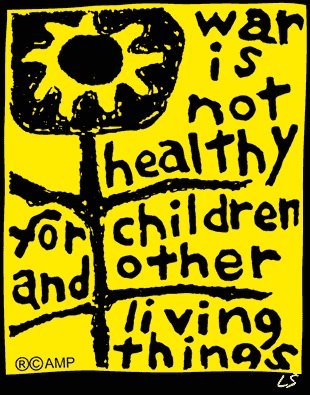
Back in the days of the Cold War, I thought the slogan "War is not healthy for children or other living things" eloquently put the problem in proper perspective. Perhaps we need a campaign along the same lines to keep kids from suffering from our collective lack of concern for their future.
I was saddened when I read the story, but I was even more upset when I came across a series that The Huffington Post is running: The American Nightmare. Over the last few months, people who are on the edge have been telling their stories which are far from pretty. We're talking hear about people who are frequently educated and articulate, but who are worn out and ground down by poverty. And who is taking the biggest hit? The kids, who are not getting the kind of attention they need from their parents, who sometimes aren't even getting enough to eat.
Things are marginally better in Canada, particularly in Quebec. At least affordable day care is a reality, although the govenrment just announced that it is going to cut special grants to day cares in poor neighborhoods for the kind of support services that kids from poor families sometimes need.
Back in the days of the Cold War, I thought the slogan "War is not healthy for children or other living things" eloquently put the problem in proper perspective. Perhaps we need a campaign along the same lines to keep kids from suffering from our collective lack of concern for their future.
Sunday, 17 August 2014
Saturday Photo: Inca Path
Work on Road through Time progresses: the chapter about "Warriors' Roads" is just about done.
One of the things that I've learned is that most road improvements in early times came not from demand for better paths for commercial travel, but from the desire to link and conquer territory. The Roman road system is perhaps the est known, but the grand Inca network should not be forgotten. Indeed, when Spaniards first arrived in Inca county they were very impressed by the roads. At that time there was nothing like them in Europe, since the Roman system--built more than 1000 years previously--had been allowed to deteriorate.
This photo is of a wall in Cuzco along a thoroughfare that had been laid out and built by Incas. The neatly carved stone blocks are fit together so well that many have survived earthquakes that destroyed structures built after the Spaniards arrived.
Saturday, 9 August 2014
Saturday Photo: All Roads Lead to Rome
Back to working on the next non-fiction book, Road through Time. One of the pleasures of our trip earlier this summer was a day in Conímbriga, a Roman town in central Portugal.
For a good three hundred years or more, it was a provincial center on the road between what is now Lisbon and Braga. Excavated over several decades in the 20th century, it now has a grand sample of what Roman roads look like.
Friday, 8 August 2014
No Pears Bis: It's Not the End of the Bees, It Seems
This morning I checked out two other pear trees in the neighborhood to see how they had fared this spring.
As I recounted in the last post, we don't have any this year for reasons unknown. My greatest fear was that the lack was due to the great Bee Crash, which may have devastating effects on food production. Many, many crops need bees to pollinate, pears among them.
Ironically, living in the centre of the city may be good for bees, since most municipal governments have stopped using pesticides and herbicides in their open spaces. In addition, gardens in our part of town are of two sorts--those which are more or less left to go to seed, and those nurtured by eco-types who try to garden in an environmentally sound way. Train tracks near by also are a corridor untouched by chemicals (for the moment, if there's an accident all bets are off, though.) And I know of at least three places where people keep bees not far away.
So when it appeared that the blossoms on our trees produced no fruit, or so few that the squirrels have already disappeared them, I literally shivered. However, it looks like things around here have not evolved into the worse case scenario. The bees are out in force in our garden too. If only they'd been more successful last May when the pears were in bloom.
Saturday, 2 August 2014
Saturday Photos: There Are No Pears
This is the weekend that I'm usually thinking about harvesting our pears before the squirrels do. The two trees in our backyard have born fruit for more than 25 years. Some years the crop has been more than the squirrels have wanted: the photo was taken in early August 2008 which was a particularly good year
But this year there are no pears on the trees at all. They bloomed in early May as usual, I'm pretty sure I saw a few fruit setting on and a couple of half eaten, half formed pears on the grounds earlier this year. So I'm not sure what happened.
Could be that putting compost tea on the ground early this spring gave them too much nitrogen. Could be the cool and rainy weather in early May interfered with pollination. Could be the trees are getting old. Could be the general decline in the bee population is having its effect here.
Don't know. I certainlly hope it isn't the last reason. I'll have to ask around to see if other pear trees in the neighborhood have had the same problem.
Subscribe to:
Posts (Atom)