Saturday, 30 October 2021

Saturday Photo: Halloween Anyway


 No kids at our house going out trick or treating this Halloween, but I did buy a pumpkin.  The photo is of someone else's house, but I'm sharing it just because I like it.

Take care!

Sunday, 24 October 2021

Saturday Photo: Resilience,, Times Two


 This is the Bibliothèque Mordecai-Richler, lodged in what was formerly The Church of the Ascension, an Anglican church that closed its doors something like 30 years ago.

Using the church building as a library was a great thing to do, and the fact that the library now bears the name of Montreal's legendary Jewish novelist is either wonderfully eceumenical, ironic or simply classy.  Certainlly it shows the resilience of several aspects of society: urban planning, cultural continuity, humour....

But the photo shows another sort of resilience: the sunflower growing in the gutter on the roof.  Tried to get a better photo of it, but was too far away and messing with Photoshop doesn't help.  That flowers will grow so far up is really great...

Saturday, 16 October 2021

Saturday Photo: Resilience, or Something to Remember When You're Feeling Caged in


 This was taken in a new park in my neighborhood.  The plantings are all perennials, and most are native to the  region.  This has mean that they'd done very well during this hot, dry summer.

So well, in fact, that some of them have sprouted off spring, including this little flower that seems to be overflowing with life.  You can bring beauty nearly everywhere--or at least take a stab at it.

Saturday, 9 October 2021

Saturday Photo: Happy Thanksgiving, Despite Everything


 This Canadian Thanksgiving weekend.  The statutory holiday is Monday but we've always celebrated whenever it's convenient for friends and family to get together.  At times we have had big potluck parties (we did the turkeys and several sides, while everyone else brought something to share), but I'm afraid that is behind us, what with Covid 19 and all.

Nevertheless, while I'm far from a believer, I think it's a very good thing to stop now and then to realize just how many good things have come my way.  I invite you to do that this weekend, even if I can't invite you to supper.  Doing so puts everything in perspective....
Saturday, 2 October 2021

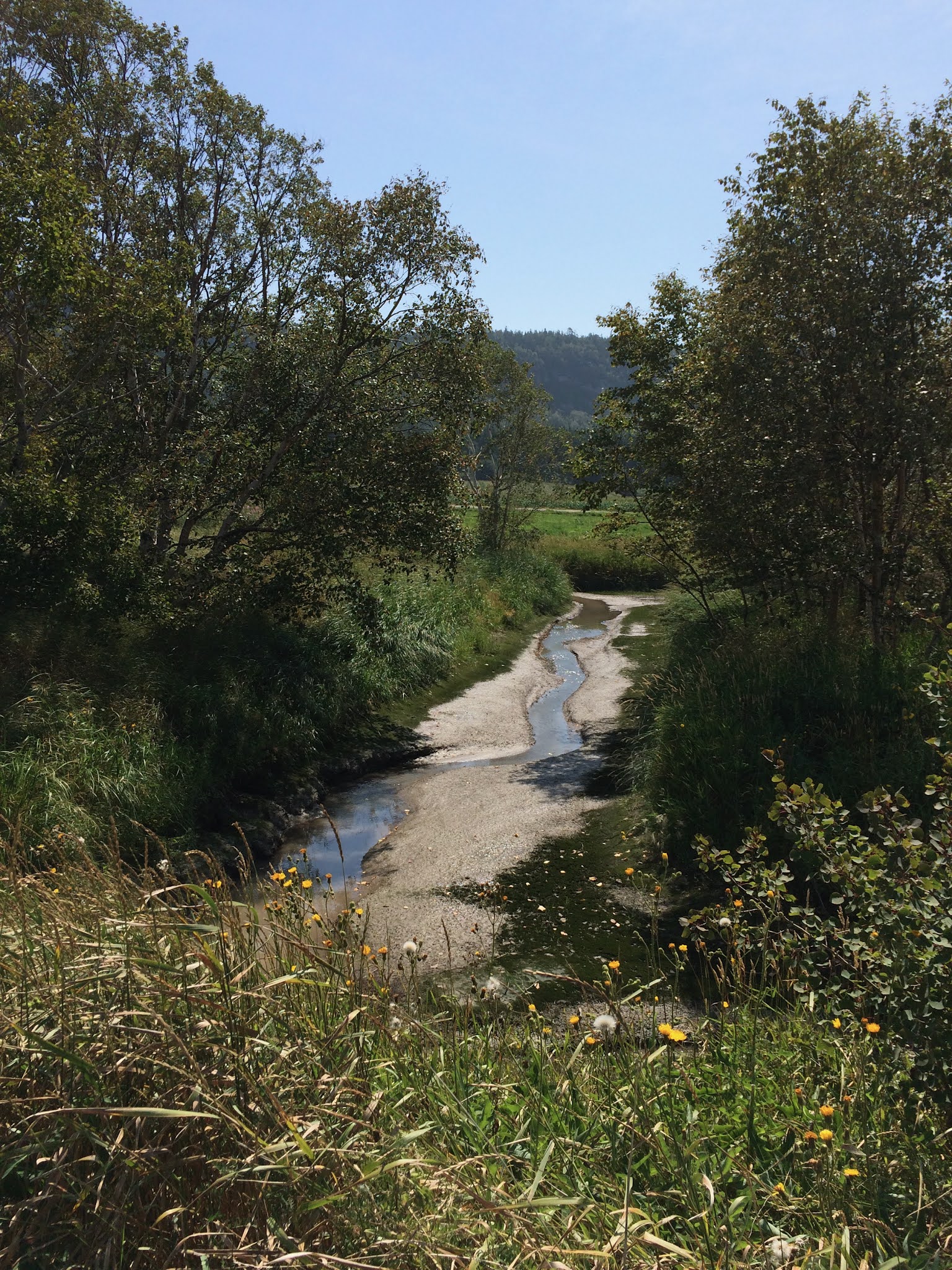
Saturday Photo: The Streams That Flow to the Fleuve


 I've always wondered at the distinction made in modern French between fleuve and rivière. For a long time I thought that one was big and the other little, but that's not it.

What makes the difference is whether the watercourse flows into the sea. If it doesn't, it's a rivière no matter how bit it is. 

A fleuve, on the other hand, goes directly into the sea.  The St. Lawrence is a fleuve  but all its tributaries are rivières.

 The photo is of a small stream that drains one of the fields along the St. Lawrence.  In this summer of drought, it was very small indeed.
Saturday, 25 September 2021

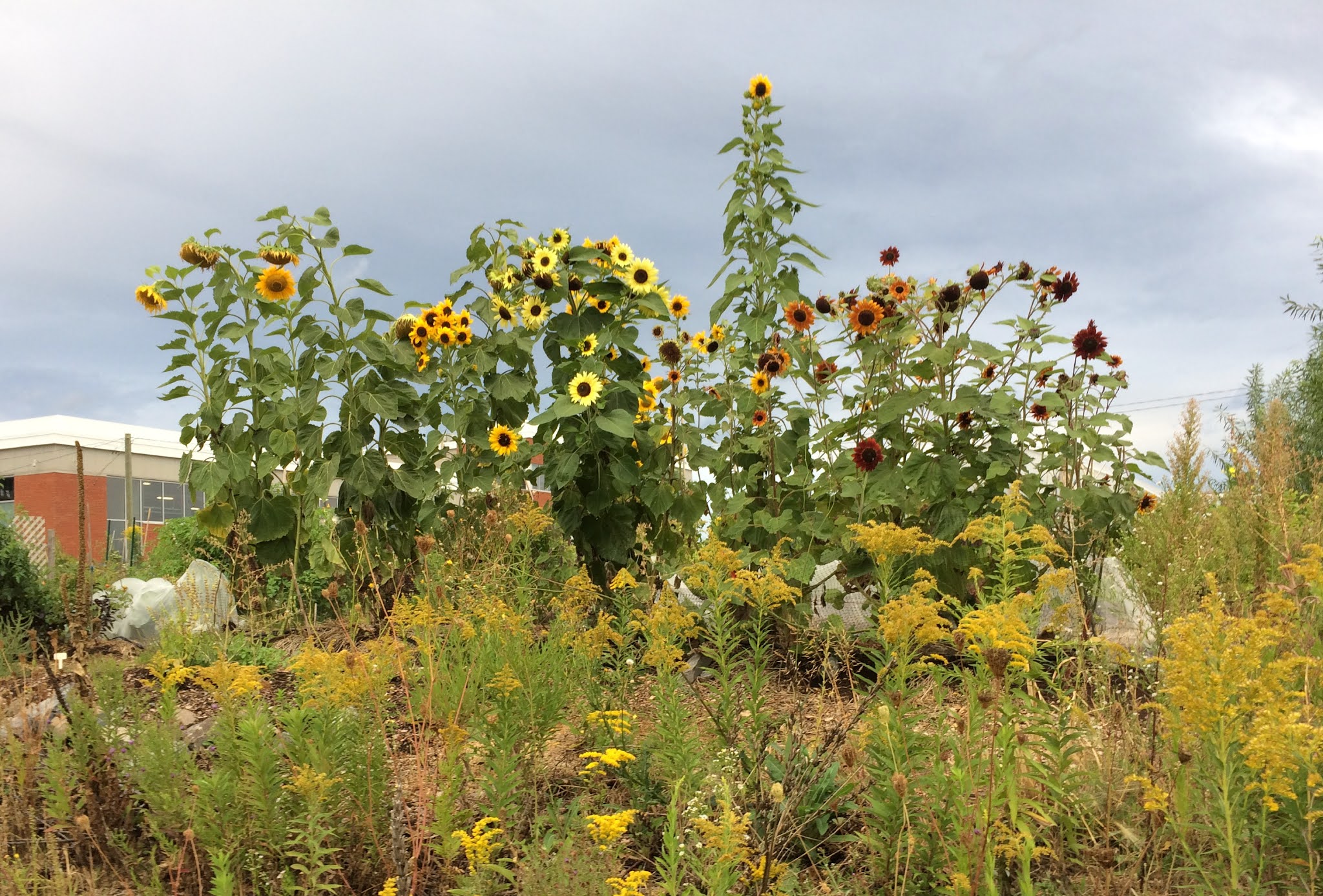
Saturday Photo: Summer's End But the Weather Continues Warm, Maybe Too Warm


 Like kids in a class portrait at the end of the school year, these sunflowers stood tall a week ago when I walked by them, enjoying the amazing summer-like weather.  This is the first weekend in fall, offiically, but it continues unusually warm. The temptation is to enjoy it, which I am, but also I worry just what this very slow end to summer means. We haven't had the crazy weather that the western part of North America suffered, but who know what climate change has in store for us next...

Saturday, 18 September 2021

Saturday Photo: The Salish Sea from Space...


The Salish Sea--the Puget Sound, Strait of Juan da Fuca, Georgia Strait area-- is one of the regions I look at carefully in my new book Against the Seas: Saving Civilizations from Rising Oceans.  

Getting closer to a contract, writing hard...

Saturday, 11 September 2021

Saturday Photo: Mangroves, Another Tool in the Fight against Rising Seas


 Glad to report that it looks like I'll be signing a contract very soon for my next book Against the Seas: Saving Civilizations from Rising Seas.  Details will follow, but in the meantime here is a photo of mangroves near Jakarta, Indonesia.  The tree is one of the natural tools that should be used more and more as we learn to live with climate change.

Saturday, 4 September 2021

Saturday Photo: Salt Marsh: the Answer to Our Problems?


 It looks like I'll be getting a contract for Against the Seas: Saving Civilizatins from Rising Oceans rather soon, so I thought I'd share another photo from our trip to the Bas St-Laurent.  This is the "sea" side of the batture at St. Alexandre de Kamouraska: at high tide it is flooded with salt water from the St. Lawrence estuary.

Although storm surges can cause damage along this stretch, the gradual slope of the flats and teh plentiful vegetation mean that much of the waves' energy is harmlessly expended.

Turning other seaside landscapes into tide flats may well be a key technique in cutting down damage caused be rising sea levels.

Saturday, 28 August 2021

Saturday Photo: School Starts, Summer Was Too Hot and Dry

This is not this year's batch of kids going to school: you can see that there's not a mask in the lot.  But school started in Montreal this week, and will start in the rest of the province next week.  

Summer was unusually hot and sunny here--not as dry or as hot as other places, but nevertheless the weather is enough to worry about.

At the moment though it is coolish and I have decided that sometimes the better path is live for the moment...
 

Saturday, 21 August 2021

Saturday Photo: The Batture at Saint-André de Kamouraska


Note: this was such a good trip I'm posting it twice!


 Down in the Bas St-Laurent recently to see how people there cope with rising sea levels.  This is the walkway on the top of a dike built to protect some very fertile fields--in other words, an aboiteau.

Had a great walk, and was much impressed by the way it was built.  Much to think about here.

Sunday, 15 August 2021

Saturday Photo: Batture or a Walk on the Tamed Side

Spent a great few days in the Lower St. Laurent, including walks on the batturethe dikes constructed to keep back the tides and make the Kamouraska lowlands ready for planting.

It was very hot, but that meant there were few people, and we had this great landscape mostly to ourselves.  It is indeed a tamed landscaped, but very thought-provoking as the techniques used here might be used elsewhere against the rising seas the climate change will bring us.

Saturday, 7 August 2021

Saturday Photo: Middens on Vancouver Island

The New Yorker had an interesting read this week about  ways to save us from rising sea levels.  The basic idea is the encouragement of artificial reefs that would be home to many sea creatures and also take the brunt of pounding waves.  Oysters will grow on them, so it's said, and I was reminded of the middens we saw on Vancouver Islands a few years ago.  The bounty from the sea can be considerable.  We just have to be better stewards.

Saturday, 31 July 2021

Saturday Photo: To Bee or Not to Bee...


The bees are out, thank goodness.  In this time of so many things not going right, it's a pleasure to see them at work in the 'hood.

It helps that there are several bee hives hidden around, so in addition to the native bees we have some honey bees.  It also helps that gardens tend to be of two types.  One has no pesticides because the owners don't care for their yards.  The other has none either, because the owners more or less have bought into organic gardening. 


Saturday, 24 July 2021

Saturday Photo: In Memory of Everyone Who Died before Their Time

My sister Laurie died suddenly in July 2002.  She was beautiful, as well as being smart and exceedingly concerned about justice.  Here is the day Lee and I got married: a good memory.

In this period of far too many premature deaths, I offer my condolences to those who loved, and who now continue living.  The hole in the heart never fills...

Saturday, 17 July 2021

Saturday Photo: The Rapids Where the Going Gets Tough, If Not Impossible


 Spent a lovely few hours last Sunday at the Parc des rapides on the St. Lawrence.  These rapids and the St. Mary's rapid to the east effectively blocked sailing ships from going up the great river.  The first canal around the rapids was built in the late 18th century, and since the 1950s all ships have avoided them by using the St. Lawrence Seaway.

Living in the middle of the island of Montreal, it's easy to forget just how powerful the river is.  Standing next to the rapids and watching the terns fish in them was a good reminder of that.  There are forces bigger than us, even if we try to get around them.

Saturday, 10 July 2021

Saturday Photo: Wayward Grass....


 The view at the Technoparc last Sunday: grasses and clouds and birds.  There was a time that we did a lo of bird-watching, but kids and dogs got in the way.  Now that we have neither in the house, we've gone back to a little low key bird-watching, which has led to the discovery of a number of interesting places that we wouldn't have visited otherwise.

The Technoparc is a a parcel of land that some would like to develop but which so far has lain fallow.  It's tucked right up next to Trudeau airport, which would at first glance seem to be not the best place for a bird santuary.  What's more, there must have been times in the not to distant past when parts of the ponds were partially drained for some kind of project.  But at the moment, the 215 hectares are a refuge for a wealth of bird life.  Some animals also call it home: we saw a lot of rabbits last week, so many that I wonder if the ecosystem couldn't use a fox or two.

The grass and reeds are as tall as I am right now, and the mosquitos are as big as my fist--no, that's an exaggeration included only to warn the wary. Great space to spend a few hours on a Sunday morning.

Saturday, 3 July 2021

Saturday Unphoto: From Bloomberg Green on Wild Fire


By Linda Poon

The worst day for human-caused fires in the U.S. is July 4. That’s a particular problem this year, as a historic heat wave and record drought have exacerbated the risk of wildfires.

That’s why more than 150 fire scientists signed a letter this week urging people in the West to skip fireworks this Independence Day, just as the U.S. enters peak wildfire season. Blazes are already raging in several states, with some spreading through tens of thousands of acres in California, Colorado and Arizona. 

In response, some cities and counties in California, Oregon, Arizona and Utah have canceled public displays, and imposed restrictions or outright bans on the use of personal fireworks. But it won’t be easy to tamp down that bombastic American tradition.

Some places like Aspen, Colorado, are trying out alternative flashy displays. At the popular “Old Fashioned Fourth of July'' festival, the Aspen Chamber Resort Association is hoping to dazzle attendees with a laser show instead of traditional fireworks. In 2018, the association tried a choreographed drone display. “You have to evolve,” a spokesperson told Bloomberg CityLab that year — but smoke from a wildfire that broke out just a day before the holiday canceled that show, too. 

Other places are cracking down on personal use, which can be especially risky and became a more popular hobby during the pandemic. In the San Francisco Bay Area, sheriffs confiscated 15,000 pounds of illegal fireworks, along with $1 million in cash, from two residents who were also operating illegal sales out of a warehouse in Oakland. In a dramatic twist of events in Los Angeles Wednesday night, police who were seizing homemade fireworks caused an accidental explosion as they were attempting to safely detonate the explosives. Seventeen people were injured, including police, in the blast that destroyed the specialized bomb truck containing the fireworks. 

L.A. is also using incentives to dissuade people from setting off their own fireworks. The police department launched a buyback program on Wednesday, receiving some 500 pounds of fireworks in exchange for gift cards. And police are sending cease-and-desist letters to online marketplaces like Craigslist that were hosting illegal sales.

Fires are not the only environmental concern. Cities in China have banned fireworks before to prevent spikes in air pollution. In the U.S., fireworks release 42% more pollutants into the air than on a normal day, according to a 2020 study.

But as the effects of climate change worsen, wildfires loom large as an urgent reason to rethink the explosive pastime. “We're getting to the point where we need to think seriously about restricting the use of fireworks,” says Jennifer Balch, a fire ecologist at the University of Colorado, Boulder. “Frankly, we're asking too much of our firefighters who are probably hunkered down waiting to see where the wildfires are going to start.”

Between 1992 and 2015, humans started 7,000 wildfires on July 4, according to Balch. Of all the fires reported that day from 2014 to 2018, more than half were sparked by fireworks, according to a separate analysis from the National Fire Prevention Association. Experts warn that extreme hot and dry conditions enable sparks and falling embers to more easily ignite trees, shrubs and other vegetation. The slightest breeze can carry that fire far and wide.

In 2017, a teen sparked the massive Eagle Creek Fire by throwing two fireworks into the Columbia River Gorge in Oregon. It raged for three months, blowing some into Portland and burning through nearly 50,000 acres of land. And in 2020, a smoke-generating “pyrotechnic device” set off during a baby gender reveal party ignited the El Dorado fire, which tore through more than 22,000 acres of San Bernardino County, California.

The percent of wildfires caused by humans has inched up over the last few years. “That's something that's also very much related to our development patterns and our settlement, in that we are building more and more homes into flammable landscapes," Balch says. 

Despite the warnings, the show must go on for some Americans — with some calling the city bans “anti-American” and at least one state’s legislative leaders refraining from any statewide action. South Dakota Governor Kristi Noem, a Republican, has been pushing the Biden administration to allow fireworks at Mount Rushmore, after the National Parks Service denied the state’s request in March. Fireworks there have been halted since 2009 due to safety concerns, including fire hazards. They resumed for the first time last year under Donald Trump’s presidency. 

But with large swaths of America already on fire, and 2021 setting the perfect conditions for yet another intense wildfire season, perhaps the most patriotic thing for those in the American West to do is lay off the pyrotechnics. 

Saturday, 26 June 2021

Saturday Photo: Gate to Where?

Lots of changes in the world.  Sad news about the past coming out.  Pandemic easing here, but raging elsewhere.  All of this, plus drought and heat waves  come to mind as I wander my neighbourhood.  This is part of the lovely installation off Van Horne boulevard where sculptor Glen LeMesurier displays some of his works made from the castoffs of industrialization.

The gate in the photo is closed, and who knows what lies on the other side?  Not I.  Like everyone else, I go forward, hoping for the best.

Saturday, 19 June 2021

Saturday Photo: Gypsy Moths....


 This week I went for a walk in one of my favourite places, the Mount Royal Cemetery.  This time of year it usually is full of flowers and fruit like crabapples setting on.  But, to my great dismay, great swaths of the trees were completely denuded of leaves.

The culprit is the Gypsy Moth caterpillar.  We saw them all over the pavement, and jogging friends have said they've been covered with them after running through stretches where the beasts are munching away.  


Dreadful things, but, I'm told, not quite the disaster that they appear to be.  Most of the trees will survive, many will leaf out again, and this kind of infestation cyclical.  Not quite the 17 year cycle of the cicada, but nevertheless something that comes around every 5 to 10 years.

The fact that we're in a very dry spell won't help the trees' recovery.  Rain last night was encouraging, but the jury is still out.  So is my desire to go walking in the cemetery--just too disturbing to see, perhaps.
