Wednesday, 5 March 2014
Edith Laperle: Wouldn't It Be Great If the Third Time Was the Charm!
Well, the Quebec general election is definitely going to be held April 7, 2014. Given the Parti Québécois's attempts to appeal to the most enthocentric part of the electorate, hopes aren't high for a good campaign. The leaders of the other two parties, Philippe Couillard of the Liberals and François Legault of the inelegantly named Coalition pour l'avenir du Québec, CAQ--certainly don't promise to raise the tone.
But Québec Solidaire, the left-wing, strongly principled fourth party, has some excellent candidates. Edith Laperle is one of them. A trade unionist, she'll be running for the third time in the Outremont riding which also include the less toney neighborhoods of Mile End and Côte des Neiges. She got 32 per cent of the vote last fall when Couillard ran in a bye-election, which was a terrific result.
Couillard isn't running in Outremont this time, since he promised to run in the Northern Quebec riding of Roberval during his campaign for the Liberal leadership: the Outremont foray was designed to give him a safe seat after he became leader. He probably should be congratulated on not going back on that promise in order to stay in Outremont, but the fact that he made it in the first place says worlds about his frequently shakey political judgment.
Not that the Liberals aren't aware of the appeal of QS and Ms. Laperle among Outremont voters. It looks like they want to muddy the ideological waters since they're running the sister of Françoise David, the QS co-spokesman and one of two QS members of the National Assembly. As in many political families --think Bob Ray and his brother John during the former's NDP phase, and Daniel and Pierre-Marc Johnson, respectively Liberal and PQ premiers of Quebec--families can see deep divisions.
What will be interesting to watch is how Ms. Laperle, whose face and ideas are now pretty well known in the riding, approaches the campaign. Does she have a chance to win? I'd love to think so.
But Québec Solidaire, the left-wing, strongly principled fourth party, has some excellent candidates. Edith Laperle is one of them. A trade unionist, she'll be running for the third time in the Outremont riding which also include the less toney neighborhoods of Mile End and Côte des Neiges. She got 32 per cent of the vote last fall when Couillard ran in a bye-election, which was a terrific result.
Couillard isn't running in Outremont this time, since he promised to run in the Northern Quebec riding of Roberval during his campaign for the Liberal leadership: the Outremont foray was designed to give him a safe seat after he became leader. He probably should be congratulated on not going back on that promise in order to stay in Outremont, but the fact that he made it in the first place says worlds about his frequently shakey political judgment.
Not that the Liberals aren't aware of the appeal of QS and Ms. Laperle among Outremont voters. It looks like they want to muddy the ideological waters since they're running the sister of Françoise David, the QS co-spokesman and one of two QS members of the National Assembly. As in many political families --think Bob Ray and his brother John during the former's NDP phase, and Daniel and Pierre-Marc Johnson, respectively Liberal and PQ premiers of Quebec--families can see deep divisions.
What will be interesting to watch is how Ms. Laperle, whose face and ideas are now pretty well known in the riding, approaches the campaign. Does she have a chance to win? I'd love to think so.
Sunday, 2 March 2014
Saturday Photo: Thinking about Travels
Many years, the sap has already started to run in the maple trees by now. Not the case this year, but people around us are getting itchy feet, thinking about interesting places to go on their holidays.
It helps that many schools are taking breaks about now. Jeanne's cousin Marie and her father were visiting last week from France, Sophie's school is out next week, neighbors are off to exotic places.
Since our travels are still months away, I've gone back to look at the photos I took last summer. This is one of several taken at low tide on Vancouver Island in August. I can almost smell the salt...
It helps that many schools are taking breaks about now. Jeanne's cousin Marie and her father were visiting last week from France, Sophie's school is out next week, neighbors are off to exotic places.
Since our travels are still months away, I've gone back to look at the photos I took last summer. This is one of several taken at low tide on Vancouver Island in August. I can almost smell the salt...
Friday, 28 February 2014
Rain in California, Cold in Montreal
My West Coast friends are posting happy news about much-needed rain.
Good on them, since the drought there is bad for all concerned.
As for me, I'm steeling to go out this morning at -18 C (0F)--this cold is getting old.
Good on them, since the drought there is bad for all concerned.
As for me, I'm steeling to go out this morning at -18 C (0F)--this cold is getting old.
Wednesday, 26 February 2014
More on Energy: When Too Much Hydro Is Too Much Hydro
Le Devoir leaked a report from a government commission this week on the future of energy in Quebec, a report that has been making waves. In short, it says that contnuing to build hydro projects and to support windmill electricity generation is costing too much and that current electric capacity is more than enough for the province's needs. If the projects now underway continue, taxpayers will be out a lot of money, and Quebec's economy will not benefit in the least from the outlay of billions of dollars.
Not surprisingly, the PQ government pooh-poohs the conclusions, although it can't deny them. Nor can it ignore recently released information about the sweetheart deals between Hydro Quebec and aluminum plants. The pay peanuts for their electricity, and even got a break when they locked out their workers last year. Rather, say government spokepersons, providing low cost power is important for the province's industry.Future capacity is designed to take care of future needs.
The report comes as the economic health of various oil projects, including the pipelines that are supposed to carry Alberta tar sands oil to (take your pick) the US, Atlantic Canada or British Columbia, is up in the air.
We seem to be in a situation where all bets are off on the supply of energy, given the sudden increased availability of natural gas from frakking and the like.
Where are we going? What do we really need?
Not surprisingly, the PQ government pooh-poohs the conclusions, although it can't deny them. Nor can it ignore recently released information about the sweetheart deals between Hydro Quebec and aluminum plants. The pay peanuts for their electricity, and even got a break when they locked out their workers last year. Rather, say government spokepersons, providing low cost power is important for the province's industry.Future capacity is designed to take care of future needs.
The report comes as the economic health of various oil projects, including the pipelines that are supposed to carry Alberta tar sands oil to (take your pick) the US, Atlantic Canada or British Columbia, is up in the air.
We seem to be in a situation where all bets are off on the supply of energy, given the sudden increased availability of natural gas from frakking and the like.
Where are we going? What do we really need?
Tuesday, 25 February 2014
Energy Debate: Nuclear and Other Forms of Electricity
Last week the Globe and Mail contained the most recent issue of Corporate Knights, a magazine that calls itself "The Company for Clean Capitalism." Rarely have I come across such a series of informative, thought-provoking articles about where we are going in terms of our use of energy.

Among the articles are an evaluation of the various costs of electricity generation, which contains this startling statement about nuclear power:
"Given the rapidly falling cost and potential of efficiency and renewables, the speed with which they can be deployed, as well as the availability of gas as a transition and complementary resource, the economically rational path for the next quarter century is crystal clear: New nukes aren’t necessary."
In other words, going for better energy efficiency and using other sorts of low-carbon, renewable eneergy is going to be a lot cheaper for the forseeable future.
Definitely worth reading.

Among the articles are an evaluation of the various costs of electricity generation, which contains this startling statement about nuclear power:
"Given the rapidly falling cost and potential of efficiency and renewables, the speed with which they can be deployed, as well as the availability of gas as a transition and complementary resource, the economically rational path for the next quarter century is crystal clear: New nukes aren’t necessary."
In other words, going for better energy efficiency and using other sorts of low-carbon, renewable eneergy is going to be a lot cheaper for the forseeable future.
Definitely worth reading.
Sunday, 23 February 2014
Saturday Photo: Sun on Winter Leaves
This is the winter sun shining on one of my plants that do well inside. It'll be a long time before anything is green outside, so I like to have a reminder that the season isn't always winter.
Friday, 21 February 2014
Going in the Wrong Directon: PQ Budget and Krugman's Take-Down of Austerity Memasures
As usual Paul Krugman is worth reading today. His analysis of why stimulus in the US hasn't done what it should have is clear: there should have been more, not less, and things would be much worse if there hadn't been the stimulus package in 2009.
He writes that the "huge natural experiment Europe has provided on the effects of sharp changes in government spending.... If stimulus opponents had been right about the way the world works, these austerity programs wouldn’t have had severe adverse economic effects, because cuts in government spending would have been offset by rising private spending. In fact, austerity led to nasty, in some cases catastrophic, declines in output and employment."
The message about the adverse effects of austerity hasn't been heard in Quebec City (or Ottawa, for that matter), given the budget that Pauline Maurois's PQ government brought down Thursday. Lots of talk about fiscal responsiblity and zero deficit, and no recognition of the important role government should play in supporting public programs and putting the emphasis of full employment.
We're headed for an election here, and certainly the PQ, the provincial Liberals and the right of centre Coalition pour l'avenir du Québec aren't going to talk about the need for stimulus. Thank goodness Québec solidaire is around to raise some important questions. "The old model is broken down," commented Amir Khadir, one of the two QS members of the National Assembly.
He writes that the "huge natural experiment Europe has provided on the effects of sharp changes in government spending.... If stimulus opponents had been right about the way the world works, these austerity programs wouldn’t have had severe adverse economic effects, because cuts in government spending would have been offset by rising private spending. In fact, austerity led to nasty, in some cases catastrophic, declines in output and employment."
The message about the adverse effects of austerity hasn't been heard in Quebec City (or Ottawa, for that matter), given the budget that Pauline Maurois's PQ government brought down Thursday. Lots of talk about fiscal responsiblity and zero deficit, and no recognition of the important role government should play in supporting public programs and putting the emphasis of full employment.
We're headed for an election here, and certainly the PQ, the provincial Liberals and the right of centre Coalition pour l'avenir du Québec aren't going to talk about the need for stimulus. Thank goodness Québec solidaire is around to raise some important questions. "The old model is broken down," commented Amir Khadir, one of the two QS members of the National Assembly.
Wednesday, 19 February 2014
Paris, Because Mavis Gallant Loved the City
The recent death of Mavis Gallant reminds me of how deeply seductive Paris is. After Montreal, it is a place I'd like to live.
What a pleasure that we have Gallant's stories about the two cities to enjoy. That is the legacy of writing, particularly when it crosses to line and becomes literature.
Tuesday, 18 February 2014
Big Money to Fight Elections against Climate Change Nay-sayers
I remember back in the 1970s when the environmental movement was beginning around here and I realized that it was going to be a long row to hoe to get 1) better water pollution control, 2) air quality emissions standards, 3) recycling and 4) everything else that was necessary to make the world liveable.
The problem was that the eco-guys and gals (not that we/they were called that then) just didn't have the money to get their message across. The companies that stood to profit from pollution could advertise their spin on things in every media, but we had to slog it out in the trenches. This meant that even when there was a victory (as in the fight to remove phosphates from detergent) it could be subverted by clever campaigns. (See my post about this from 2007.)
But maybe some of the big money has wised up. The New York Times has a very interesting story to day about hedge fund billionaire Tom Steyer who has set up a huge fund to fight elections against climate change nay-sayers.
The NYT reports that he "is rallying other deep-pocketed donors, seeking to build a war chest that would make his political organization, NextGen Climate Action, among the largest outside groups in the country, similar in scale to the conservative political network overseen by Charles and David Koch.
"In early February, Mr. Steyer gathered two dozen of the country’s leading liberal donors and environmental philanthropists to his 1,800-acre ranch in Pescadero, Calif. — which raises prime grass-fed beef — to ask them to join his efforts. People involved in the discussions say Mr. Steyer is seeking to raise $50 million from other donors to match $50 million of his own.
"The money would move through Mr. Steyer’s fast-growing, San Francisco-based political apparatus into select 2014 races."
A good thing, maybe, although the question of how big a role money should play in a democracy looms behind. Certainly worth following. And certainly would be interesting to see if any big money in Canada would be interested in following Steyer's example here.
The problem was that the eco-guys and gals (not that we/they were called that then) just didn't have the money to get their message across. The companies that stood to profit from pollution could advertise their spin on things in every media, but we had to slog it out in the trenches. This meant that even when there was a victory (as in the fight to remove phosphates from detergent) it could be subverted by clever campaigns. (See my post about this from 2007.)
But maybe some of the big money has wised up. The New York Times has a very interesting story to day about hedge fund billionaire Tom Steyer who has set up a huge fund to fight elections against climate change nay-sayers.
The NYT reports that he "is rallying other deep-pocketed donors, seeking to build a war chest that would make his political organization, NextGen Climate Action, among the largest outside groups in the country, similar in scale to the conservative political network overseen by Charles and David Koch.
"In early February, Mr. Steyer gathered two dozen of the country’s leading liberal donors and environmental philanthropists to his 1,800-acre ranch in Pescadero, Calif. — which raises prime grass-fed beef — to ask them to join his efforts. People involved in the discussions say Mr. Steyer is seeking to raise $50 million from other donors to match $50 million of his own.
"The money would move through Mr. Steyer’s fast-growing, San Francisco-based political apparatus into select 2014 races."
A good thing, maybe, although the question of how big a role money should play in a democracy looms behind. Certainly worth following. And certainly would be interesting to see if any big money in Canada would be interested in following Steyer's example here.
Monday, 17 February 2014
Advice from Pete That Should Be As Unforgettable As He Was
Too often we don't say what we think to people we expect won't agree with us. But that's a mistake, as Pete Seeger used to say.
And just for good measure, here's a song about talking.
Saturday, 15 February 2014
Saturday Photo: Snow Removal
The picture was taken a while ago, but that's what we're doing these days around here. A long winter, but made bearble by some lovely sunny days, and frequent sbowfalls that make everything lovely.
Friday, 14 February 2014
Well, What It Was, Was Herpes Zoster...
This morning I started a regime of cortisone type and anti-viral, anti-stomach upset drugs. Seems those excruciating pain and the rash that I thought were back-related and due to a reaction to acetominophen were actually due to shingles.
Not your typical shingles--the resurgence of the virus that causes chickenpox decades later--because the rash didn't itch, and the nerve where the virus attacked were was in my hip and leg, not my torso. Neverthless it all is a drag, literally. My left foot is numb and I'm not using it properly: the hope is that with the drugs, the nerve function will return quickly.
The pain is still there, but not as intense, thank goodness And thank goodness for physio Christine Gibson who told me I should have a doctor look at what was going on in my body. It's not a case for exercise, she said in effect.
One of the drugs has excitability as a possible side-effect, and I'm almost looking forward to that after two weeks of feeling the pits.
Not your typical shingles--the resurgence of the virus that causes chickenpox decades later--because the rash didn't itch, and the nerve where the virus attacked were was in my hip and leg, not my torso. Neverthless it all is a drag, literally. My left foot is numb and I'm not using it properly: the hope is that with the drugs, the nerve function will return quickly.
The pain is still there, but not as intense, thank goodness And thank goodness for physio Christine Gibson who told me I should have a doctor look at what was going on in my body. It's not a case for exercise, she said in effect.
One of the drugs has excitability as a possible side-effect, and I'm almost looking forward to that after two weeks of feeling the pits.
Thursday, 13 February 2014
Cold Day: Warm Food: Chili
As I wait to go to the doc (may not have been an acetomiophen reaction I had last week, but shingles) I'm thinking of what might taste good for dinner.
Chili sounds just right, but I don't have any cooked red beans. Never fear, though, The New York Times says today, real Texas chili doesn't have beans. Just a mixture of various meats, spices and peppers.
Don't know abou that, but here's a good recipe on this morning when I don't feel up to thinking of much else.
1 pound lean beef, chopped into small pieces
6 slices of bacon
Salt and pepper to taste
1/2 cup red wine vinegar
5 cups of dark red kidney beans, cooked until soft
1 number 2 can of tomatoes
2 tablespoons chili powder
1 teaspoon ground cumin
1 teaspoon dried oregano
Directions
In a large skillet over medium-high heat, cook meat until evenly browned. Season to taste with salt and pepper.
Add vinegar, beans, chili powder and vinegar.
In a slow cooker, combine the cooked beef, kidney beans, tomatoes, celery, red bell pepper, and red wine vinegar. Season with chili powder, cumin, parsley, basil and Worcestershire sauce. Stir to distribute ingredients evenly.
Cook for one hour over low heat on stove, or bake in oven from 2-3 hours at 300 F.
Serve with tortillas
Chili sounds just right, but I don't have any cooked red beans. Never fear, though, The New York Times says today, real Texas chili doesn't have beans. Just a mixture of various meats, spices and peppers.
Don't know abou that, but here's a good recipe on this morning when I don't feel up to thinking of much else.
1 pound lean beef, chopped into small pieces
6 slices of bacon
Salt and pepper to taste
1/2 cup red wine vinegar
5 cups of dark red kidney beans, cooked until soft
1 number 2 can of tomatoes
2 tablespoons chili powder
1 teaspoon ground cumin
1 teaspoon dried oregano
Directions
In a large skillet over medium-high heat, cook meat until evenly browned. Season to taste with salt and pepper.
Add vinegar, beans, chili powder and vinegar.
In a slow cooker, combine the cooked beef, kidney beans, tomatoes, celery, red bell pepper, and red wine vinegar. Season with chili powder, cumin, parsley, basil and Worcestershire sauce. Stir to distribute ingredients evenly.
Cook for one hour over low heat on stove, or bake in oven from 2-3 hours at 300 F.
Serve with tortillas
Wednesday, 12 February 2014
That Routinue Mammogram Could Be Not What the Doctor Needed to Order
Eight years ago, just about now, I got a call telling me that a routinue mammorgram had showed suspicious tissue, and it looked like I had ductal carcinoma in situ (DCIS.) By the end of the summer, I'd been biopsied, excised and radiated, and was telling people how important mammograms were.
Since then I've become more skeptical, Even then it was clear that DCIS the majority of time doesn't into real cancer, and there was a big question whether tamoxifen should be given as a follow up. One study reported in The Lancet of North American women said yes, but another, also in The Lancet, of women in Australia, New Zealand and the UK counseled against giving the drug to post-menopausal women because now benefit was found. (Had a fight with my surgeon about that, and changed doctors, actually.)
Now it looks like the tool used to find my DCIS is really unnecessary. A new, very large Canadian study shows no benefit to mammography. It "found that the death rates from breast cancer and from all causes were the same in women who got mammograms and those who did not. And the screening had harms: One in five cancers found with mammography and treated was not a threat to the woman’s health and did not need treatment such as chemotherapy, surgery or radiation."
Interestingly, Enbridge, the questionable pipeline and fossil fuel group, is sponsoring a benefit concert for cancer research in Montreal Feb. 28. Who's going to really benefit?
Since then I've become more skeptical, Even then it was clear that DCIS the majority of time doesn't into real cancer, and there was a big question whether tamoxifen should be given as a follow up. One study reported in The Lancet of North American women said yes, but another, also in The Lancet, of women in Australia, New Zealand and the UK counseled against giving the drug to post-menopausal women because now benefit was found. (Had a fight with my surgeon about that, and changed doctors, actually.)
Now it looks like the tool used to find my DCIS is really unnecessary. A new, very large Canadian study shows no benefit to mammography. It "found that the death rates from breast cancer and from all causes were the same in women who got mammograms and those who did not. And the screening had harms: One in five cancers found with mammography and treated was not a threat to the woman’s health and did not need treatment such as chemotherapy, surgery or radiation."
Interestingly, Enbridge, the questionable pipeline and fossil fuel group, is sponsoring a benefit concert for cancer research in Montreal Feb. 28. Who's going to really benefit?
Tuesday, 11 February 2014
Important Interview with Elizabeth Kolbert
This is an interview worth reading and a book that might have a big impact.
Elizabeth Kolbert on the Sixth Extinction, coming up whether you like it or not.
Monday, 10 February 2014
Saturday Photo: Mile End's Secret Forest
I know, I know, this is not one of my photos, and it's Monday, not Saturday. But this morning was the first in a week that I've been out walking, so I went ot check out the lovely "Secret Forest" that some Mile End residents put up a couple of weeks ago.
The idea was to liberate Christmas trees put out for recycling by "planting" in the disused space near the railroad tracks in Mile End that has become an very special sort of urban park. For a while I thought our tree, put on Jan. 6 and gone the next morning a week before the regular recyclers came around, might figure among the trees which line a desire line across the space. But they were all too small (and besides one of my contacts says that they went tree rustling after Jan. 6) The result is quite delightful, and I'd like to think that there is perhaps a really "secret forest" somewhere in which our trees is spending the winter.
Friday, 7 February 2014
Careful with Acetominophen...
Update, 14/02/2014 (a palindrom!)
So it was shingles that was causing my pain--and it was/is intense. The rash appears to have been merely coincidental with the acetominophen use. But the warning holds: don't take too much!
Original post:
Okay everyone, back at work after several days away from the computer because of back/leg problems. Physio seems to have help a lot, as it has in the past. But I also took too much acetominophen it seems, and have developed an allergic reaction. Not the end of the world, but a reminder that there are no free lunches, and no drugs without occasional side effects.
And it seems that acetominophen can have serious ones. Here's a link to the FDA warning about taking too much/possible reactions.
It reads in part:
"Although rare, possible reactions to acetaminophen include three serious skin diseases whose symptoms can include rash, blisters and, in the worst case, widespread damage to the surface of skin. If you are taking acetaminophen and develop a rash or other skin reaction, stop taking the product immediately and seek medical attention right away."
My consult with 811 says to take Benedryl and to go to a doctor if things don't get better in 48 hours. Just checked in our medecine chest: yep, we had some, with an expiry date of 2007. Obviously we don't get this kind of thing very often!
So it was shingles that was causing my pain--and it was/is intense. The rash appears to have been merely coincidental with the acetominophen use. But the warning holds: don't take too much!
Original post:
Okay everyone, back at work after several days away from the computer because of back/leg problems. Physio seems to have help a lot, as it has in the past. But I also took too much acetominophen it seems, and have developed an allergic reaction. Not the end of the world, but a reminder that there are no free lunches, and no drugs without occasional side effects.
And it seems that acetominophen can have serious ones. Here's a link to the FDA warning about taking too much/possible reactions.
It reads in part:
"Although rare, possible reactions to acetaminophen include three serious skin diseases whose symptoms can include rash, blisters and, in the worst case, widespread damage to the surface of skin. If you are taking acetaminophen and develop a rash or other skin reaction, stop taking the product immediately and seek medical attention right away."
My consult with 811 says to take Benedryl and to go to a doctor if things don't get better in 48 hours. Just checked in our medecine chest: yep, we had some, with an expiry date of 2007. Obviously we don't get this kind of thing very often!
Monday, 3 February 2014
Friday, 31 January 2014
Getting Rid of Hydrocarbons: Good News from Denmark
Today's La Presse has an excellent and thought-provoking story about Denmark and its long term plans to quite using fossil fuels by 2050. And this in a country which has profited recently from oil production!
In brief, here's what the Danes are doing:
In 2012, 95 per cent of the legislators from all parties voted to adopt policies which aim at having 100 per cent of all energy consumed coming from renewal sources. Currently 30 per cent of electricity comes from wind power, with a goal of 50 per cent by 2020. And it would seem that they're well on the way: in December 2013 60 per cent came from wind power with some days where 100 cent was.
They're opting for green energy as an economic motor: the wind sector has already created 30,000 jobs.
Most conventional electrical plants now have been converted from oil to coal, which will be gradually changed to biogas. Heat from these plants heat houses, while cold water from the sea provides air conditioning.
The big challenge is transport, but the Danes plan on using taxes breaks to favour electric and bio-gaz vehicules. The Metro in Copenhagen has been expanded, and 40 per cent of all travel to work and school is done by bike.
Food for thought, certainlly.
In brief, here's what the Danes are doing:
They're opting for green energy as an economic motor: the wind sector has already created 30,000 jobs.
Most conventional electrical plants now have been converted from oil to coal, which will be gradually changed to biogas. Heat from these plants heat houses, while cold water from the sea provides air conditioning.
The big challenge is transport, but the Danes plan on using taxes breaks to favour electric and bio-gaz vehicules. The Metro in Copenhagen has been expanded, and 40 per cent of all travel to work and school is done by bike.
Food for thought, certainlly.
Wednesday, 29 January 2014
A Novel That Is As Counter-Cultural as Pete Seeger
This is probably the most engaging novel I've read in more than a year. A multi-layered story, it has a rather conventional plot: couple of dreamers find their unsuccessful record store about to be overwhelmed by competition while their wives face problems, plying their trade as midwives. Turns out one of the guys--the younger, African American one--has a 14 old son who shows up out of the blue. The other--Jewish, with severe psychological problems--also has a son, who falls in love with other boy. Along the way there are malpractice cases and "liberation" of a Zeppelin, as well as great riffs about music and life.

But it;s the journey that matters, and Chabon conveys us with splendor and
It happens that I know a lot of the territory covered, and I remember another legendary record store on Telegraph Avenue, this one just across from the UC Berkeley campus. That probably adds to the charm of the book for me, but I also was sometimes breathless at the images Chabon uses. One, both apt and hilarious, chosen at random, about suburbs beyond the Oakland hill: " "Sprinklers chittered. Titlesists traced white rainbows aginst the blue Contra Costa sky. Along the forearms of hard-shopping women in tennis skirts, sunshine lit the bolden down."
There are several loose ends, like the parrot named 58 who flies away after the death of his master. The reason for the name is never given, although it seems that 58 sounds like "sure to prosper" in one dialect of Chinese. On the other hand, in Feng Shui numerology 58 means "no money." Does this mean hat the world is impossibly difficult to understand and basically contradictory? Or are we just to take flight with the bird as it soars over 10 pages toward an improbable wild santuary?
Then there is the manner of a white guy assuming the voices of people of colour. I haven't yet gone looking to see what kind of reviews the book received from those who might be upset by Chabon's appropriation of voice. There are some, I imagine, who would be insulted by his audacity at trying to get inside the heads of his mixed-raee characters. The voices sound good to me, just as good as his description of child birth. The man is a good observer, for sure, and his soul is full empathy.
The photo, by the way, was taken almost 50 years ago during the Free Speech Movement: the crowd was marching off campus toward Telegraph Avenue. Long time ago.
Tuesday, 28 January 2014
Pete Seeger: A Model for Us All (Turn,turn,turn)
Sometime when the Ingerman kids were young and the Soderstrom kids were only a hope, Doris and I took the gang down the Hudson to Albany (I think) to see Pete Seeger on The Clearwater, in the beginning of the campaign to clean up the Hudson.
Here's to him, all his good music and good causes. He leaves this world the better for his actions.
Monday, 27 January 2014
The Paranoia of the Plutocrats
The rich are different from you and me department: as usual Krugman nails it in today's New York Times. He comments about the out-of-the-ballpark criticism by the 1 per cent of attacks on what they have and receive:
"We are...talking about wheeler-dealers, men who push money around and get rich by skimming some off the top as it sloshes by. They may boast that they are job creators, the people who make the economy work, but are they really adding value? Many of us doubt it — and so, I suspect, do some of the wealthy themselves, a form of self-doubt that causes them to lash out even more furiously at their critics."
He adds:
"We are...talking about wheeler-dealers, men who push money around and get rich by skimming some off the top as it sloshes by. They may boast that they are job creators, the people who make the economy work, but are they really adding value? Many of us doubt it — and so, I suspect, do some of the wealthy themselves, a form of self-doubt that causes them to lash out even more furiously at their critics."
He adds:
"Anyway,
we’ve been here before. It’s impossible to read screeds like (these) without thinking of F.D.R.’s famous 1936
Madison Square Garden speech, in which he spoke of the hatred he faced from the forces of “organized money,” and declared, “I welcome their hatred.”
"President
Obama has not, unfortunately, done nearly as much as F.D.R. to earn the
hatred of the undeserving rich. But he has done more than many
progressives give him credit for — and like F.D.R., both he and
progressives in general should welcome that hatred, because it’s a sign
that they’re doing something right."
Sunday, 26 January 2014
Saturday Photo: Skating Lessons
The picture isn't of Jeanne and me, but we had a similar and delightful session Saturday morning when she tried out skating for the first time.
I'd come prepared with a Plan B in case she found the challenge of staying on her three-year-old feet just too much. But she loved it, particularly when she got the hang of using one of those supports that you can push ahead of yourself. We were out two hours that passed extremely quickly and she's ready to go try it again next weekend!
Now Grandma, who learned to skate after a fashion as an adult, will have to dig out her skates to keep up. (On the outdoor rink I thought it wiser to keep my boots on for stability's sake.)
I'd come prepared with a Plan B in case she found the challenge of staying on her three-year-old feet just too much. But she loved it, particularly when she got the hang of using one of those supports that you can push ahead of yourself. We were out two hours that passed extremely quickly and she's ready to go try it again next weekend!
Now Grandma, who learned to skate after a fashion as an adult, will have to dig out her skates to keep up. (On the outdoor rink I thought it wiser to keep my boots on for stability's sake.)
Friday, 24 January 2014
Mac Turns 30, Our First Mac Is 29
In January 1985 we bought our first Mac, a 512. With all accessories, including printer, it cost well over $4,000, which was a lot of money.
I've been thinking of that purchase today, which is touted as being Mac's 30th anniversary. I hadn't realized just what early adopters were in this case. But the time had come to get some kind of machine to do word processing and the Kaypro, which The Writers' Union of Canada was recommending for writers at the time, had one of those terrible yellow on green screens that I knew would give me migraines.
So, after much humming and hawing--and some arguing too about where we'd put it: Lee's office or mine--we went Macintosh. The compromise location was our bedroom, where it stayed until we got our second Mac two years later and we could each have one in our individual space.
We've stayed Mac ever since, largely because of its ease of use. We don't have any other Apple devices however--no iPhone or iPad, not even an iPod. Don't have a cell phone at all in fact, which says something about my attitude toward technology. If it can make your work simpler, go for it. If not, why waste money?
I've been thinking of that purchase today, which is touted as being Mac's 30th anniversary. I hadn't realized just what early adopters were in this case. But the time had come to get some kind of machine to do word processing and the Kaypro, which The Writers' Union of Canada was recommending for writers at the time, had one of those terrible yellow on green screens that I knew would give me migraines.
So, after much humming and hawing--and some arguing too about where we'd put it: Lee's office or mine--we went Macintosh. The compromise location was our bedroom, where it stayed until we got our second Mac two years later and we could each have one in our individual space.
We've stayed Mac ever since, largely because of its ease of use. We don't have any other Apple devices however--no iPhone or iPad, not even an iPod. Don't have a cell phone at all in fact, which says something about my attitude toward technology. If it can make your work simpler, go for it. If not, why waste money?
Thursday, 23 January 2014
The Days Grow Longer and (Maybe) Warmer
As I write this at 4:30 p.m., the sun in now longer shining in the living room, but for the last several days, it has blazed away.
This is good winter weather in my book: it may be cold, but the sun is out and there is enough snow to make everything blaze with light.
And light is continuing longer and longer. A month ago it would have been dark at this hour, but the sky is still light since the sun won't disappear below the horizon for another 15 minutes.
Gonna be cold again tonight (it's currently -18 C or 0' F) but who cares, really, when you've got good heating and the prospect of spring in not too many months! We're lucky, I think....
This is good winter weather in my book: it may be cold, but the sun is out and there is enough snow to make everything blaze with light.
And light is continuing longer and longer. A month ago it would have been dark at this hour, but the sky is still light since the sun won't disappear below the horizon for another 15 minutes.
Gonna be cold again tonight (it's currently -18 C or 0' F) but who cares, really, when you've got good heating and the prospect of spring in not too many months! We're lucky, I think....
Tuesday, 21 January 2014
Something's Got to Give: Hydrocarbon Risks Abound, and Bixi on the Brink of Bankruptcy
If anybody thought there was a crisis underlying how we live now, the new these days should convince them.

In addition to increasing concern about the state of our highway infrastructure, pipelines and trains transporting petroleum products, the one truly innovative North American response to problems of transportation in cities, Montreal's Bixi, is asked for protection from bankruptcy.
The problems are real and complicated, and partly due to the fact that the bicycle rental system was set up as a private, supposedly profit-making firm, when it should have been integrated in the public transportation system from the beginning. And that is what should be done, a number of people are saying including Richard Bergeron, leader of the Projet Montreal opposition on Montreal's city council and François Cardinal, editorial writer for La Presse.
The basic problem is that we live too spread out and rely too much on cars to get around. It's about time that we understood that, and did something about it.
The economic repercussions of rebulding our transportation system and getting our aging infrastructure up to date would be enormous, and much more healthy that putting public money into petroleum exploration and tar sands exploitation.
.

In addition to increasing concern about the state of our highway infrastructure, pipelines and trains transporting petroleum products, the one truly innovative North American response to problems of transportation in cities, Montreal's Bixi, is asked for protection from bankruptcy.
The problems are real and complicated, and partly due to the fact that the bicycle rental system was set up as a private, supposedly profit-making firm, when it should have been integrated in the public transportation system from the beginning. And that is what should be done, a number of people are saying including Richard Bergeron, leader of the Projet Montreal opposition on Montreal's city council and François Cardinal, editorial writer for La Presse.
The basic problem is that we live too spread out and rely too much on cars to get around. It's about time that we understood that, and did something about it.
The economic repercussions of rebulding our transportation system and getting our aging infrastructure up to date would be enormous, and much more healthy that putting public money into petroleum exploration and tar sands exploitation.
.
Monday, 20 January 2014
Cultural Misunderstanding: From "How are You?" to Body Language
What do you expect to hear when you say "How are you?" Most of the time in North Amreica's it's "Fine."
But in Russia, apparently, what you'll get is a litany of what is wrong. Alina Simone reports on this cultural clash:
"It
feels as if I’ve spent half my life trying to smooth over the
bafflement of my American friends and the hurt feelings of my Russian
expat family as a result of this innocuous inquiry. “ ‘Fine’ makes
Russians think that Americans have no soul,” I explained recently to an
American-born friend. “That they just want to go home, eat a frozen
dinner in front of the TV, and wait out the hours before going to work
to make money again.”
He laughed, then quickly sobered. “You know, there’s something to that.”
But there are other things that vary between cultures which can be either funny or disconcerting. Here's a great montageof three HSBC commercials that outline some of them. (This is not an endorsement of the bank, by the way, just in case your culture thinks that a mention is tantamount ot that.)
Sunday, 19 January 2014
Saturday Photo: Summer, Summer, Summertime....
Bridges are great symbols, connecting and separating, promising things to come, inviting daydreaming. These two bridges are particularly interesting to me now because they are harbingers of our plans for the summer.
On top is the 25 de Abril bridge across the Tagus river at Lisbon. It looks very much like the Golden Gate, which stirs up many pleasant associations in the first place. But it also is a landmark of one of my favourite cities, which Lee and I will visit in July if all goes well.
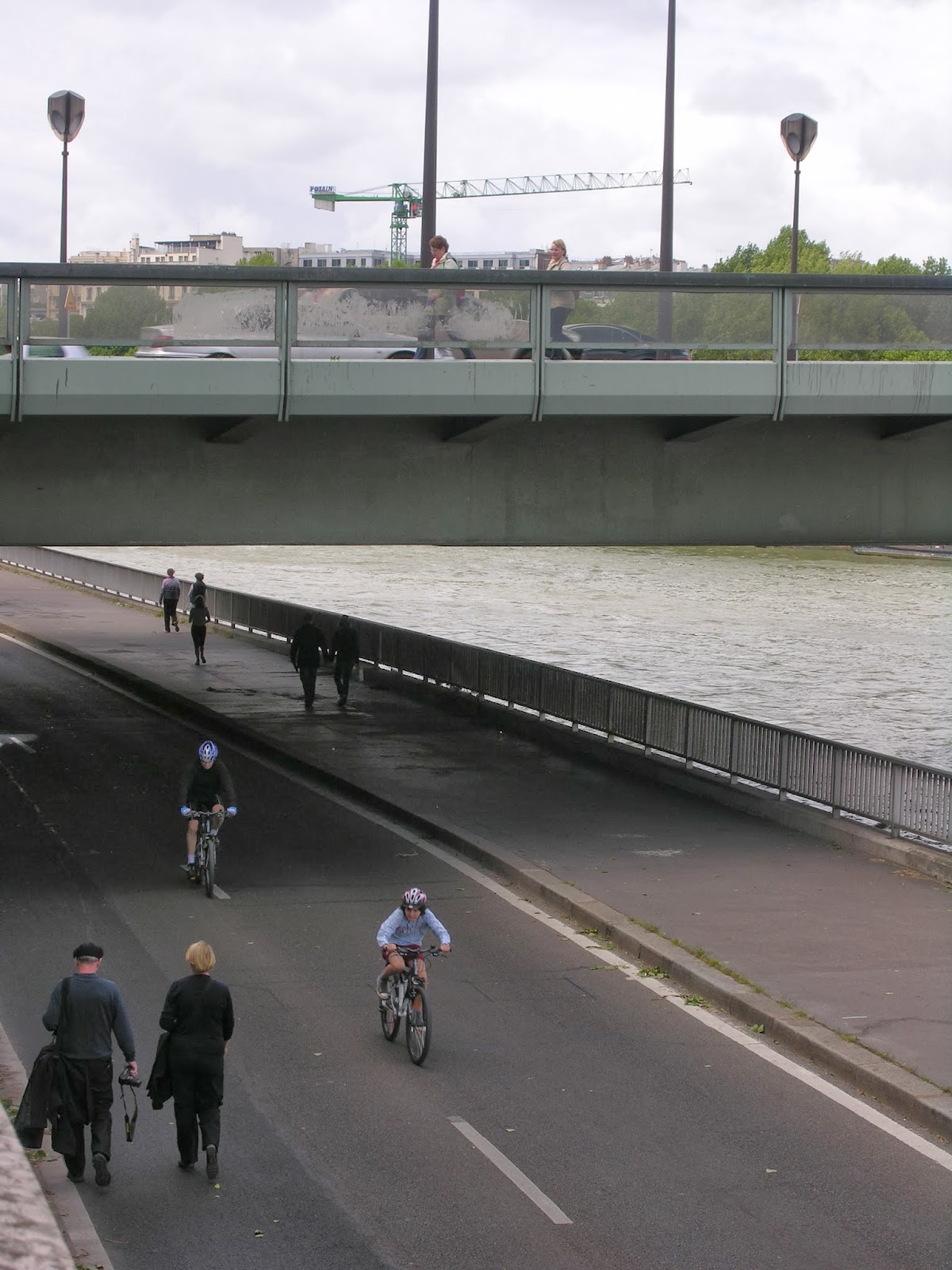
The second photo was taken of a Sunday on the Seine during our last trip to Paris. No vehicular traffic, just pedestrians and bicycles. We'll be going there too, for two week before the Portuguese jaunt.
Really looking forward to this summer.
The second photo was taken of a Sunday on the Seine during our last trip to Paris. No vehicular traffic, just pedestrians and bicycles. We'll be going there too, for two week before the Portuguese jaunt.
Really looking forward to this summer.
Friday, 17 January 2014
The Failure of Centre-Left Politics in Europe: Krugman on the Scandal in France (Canadian Papers Please Copy)
Forget the dallying with dollies, Paul Kruman says that François Hollande's behavior is scandalous. The French president has just announced increased austerity measures which have been discredited, and will make things worse.
Where are the center-left voices criticizing this stupidity not only in France but also in other European countries Krugman asks.
" Given the hardship these policies have inflicted, you might have expected left-of-center politicians to argue strenuously for a change in course. Yet everywhere in Europe, the center-left has at best (for example, in Britain) offered weak, halfhearted criticism, and often simply cringed in submission.
Where are the center-left voices criticizing this stupidity not only in France but also in other European countries Krugman asks.
" Given the hardship these policies have inflicted, you might have expected left-of-center politicians to argue strenuously for a change in course. Yet everywhere in Europe, the center-left has at best (for example, in Britain) offered weak, halfhearted criticism, and often simply cringed in submission.
"When
Mr. Hollande became leader of the second-ranked euro economy, some of
us hoped that he might take a stand. Instead, he fell into the usual
cringe — a cringe that has now turned into intellectual collapse. And
Europe’s second depression goes on and on."
And where, we should ask, is the vigorous criticism of Stephen Harper's economic policies from our own center-left politicians? Lots about the Senate, a bit about the savaging of employment insurance changes, but very, very little talk about the need for an agressive, pro-employment economic policies from either Tom Mulcair or Justin Trudeau.
It's not too lalte guys. "Jobs, jobs, jobs" and "it's the economy, stupid" have won more than one election--and made the lot of us all better.
Wednesday, 15 January 2014
No to Charging for Private Rooms at Montreal's Super Hospitals
Update: Looks like this was beaten back, at least in part, by general outcry! Sometimes making a fuss does get something done, and underscores the need for constant vigilance.
Original post:
The idea of superhospitals was ill-considered, in my opinion. Not enough thought was given to what closing down major medical establishments in the centre of the city would do to the city's fabric, nor to the repercussions of putting most of the high tech interventions in one place.
What about the danger of cross-infections? a few people asked. The response was: well, we'll have a lot of private rooms to cut down them.
Now it seems that the two hospitals (one affliated with McGill, the other with the Université de Montréal) want to charge for these private rooms. Currently, all hospitals here have a mix of private, semi-private and multiple patient rooms, and unless you request a private or semi-private room and agree to pay a premium you get whatever happens to be available.
But to ask everyone to pay for private rooms is a breach in the social contract that lies behind our health system. The ministry spokespeople say there would be a sliding scale based on patient income, but that just underscores the two tier aspect of this new idea. Besides, anyone who has ever looked at administrative costs knows that doing the paper work for sliding scales is going to eat up a lot of any "profit" that would be gained by charging the fees.
Original post:
The idea of superhospitals was ill-considered, in my opinion. Not enough thought was given to what closing down major medical establishments in the centre of the city would do to the city's fabric, nor to the repercussions of putting most of the high tech interventions in one place.
What about the danger of cross-infections? a few people asked. The response was: well, we'll have a lot of private rooms to cut down them.
Now it seems that the two hospitals (one affliated with McGill, the other with the Université de Montréal) want to charge for these private rooms. Currently, all hospitals here have a mix of private, semi-private and multiple patient rooms, and unless you request a private or semi-private room and agree to pay a premium you get whatever happens to be available.
But to ask everyone to pay for private rooms is a breach in the social contract that lies behind our health system. The ministry spokespeople say there would be a sliding scale based on patient income, but that just underscores the two tier aspect of this new idea. Besides, anyone who has ever looked at administrative costs knows that doing the paper work for sliding scales is going to eat up a lot of any "profit" that would be gained by charging the fees.
Tuesday, 14 January 2014
I Knew There Was a Reason Dept: Sleep Is the Cleaner
Give me a chance and I'll go to sleep. There have been times in my life when I've slept badly--waking up at the time one of the kids should be home and waiting until I heard them come in--or fitfully--even earlier, when they were waking in the night for food or comfort. But usually if I haven't drunk coffee or alcohol, I can sleep restfully any place.And my memory is good. That's not bragging, that's just a fact. So I was extremely interested in reading a piece in the Sunday New York Times about sleep and the role it serves to maintain cerebral health by allowing the physical removal of the waste products of brain function.
Chronic insomnia or sleep deprivation appears to cause long term problems including frequently "the degeneration of key neurons involved in alertness and proper cortical function and a buildup of proteins associated with aging and neural degeneration," writes Maria Konnakova.
Neuroscientists are thinking about several ways to attack the problem, either by providing an alternative to sound sleep where the brain's natural cleansing system could be simulated or by removing the brain's waste by pharmaceutical means, she writes.
In the meantime, I'll try to catch the ZZZs when I can, even if it means falling asleep occasionally on the bus.
Monday, 13 January 2014
The Poor Are Always with Us: The Trap of Charity
The Pope has just named 18 new cardinals. His choices supposedly show how he is refocussing the Roman Catholic Church's energies on its mission to help the poor.
Seeing as how that was Jesus was all about, the new guy's discourse and some of his actions do seem to be in tune with the best points of Christianity. But whenever anyone starts talking about helping the poor, I get nervous.
To be sure that kind of concern is better than blaming the poor for their plight, the way a large portion of the Right Wing in North America likes to do. Paul Krugman today once again points out how the Republicans may have begun to see that the blame game they've been playing is going to hurt them electorally. "Republicans are in a deep sense enemies of America’s poor," he writes. "A party committed to small government and low taxes on the rich is, more or less necessarily, a party committed to hurting, not helping, the poor."
Here in Canada we have a government that gets tough with the unemployed while spending $2.5 million to advertise a "job" program that never existed. That kind of thing is unexcusable, and another reason to get rid of the Conservatives as quickly as possible.
But on the other hand programs and policies that address poverty and inequity shouldn't be touted as a balm on the woes of the less fortunate, something that makes us shine in the eyes of the Lord. They should be designed to support the dignity of their recipients, and be aimed at giving them their due as full members of our society.
Not charity, but justice, is what's needed.
Seeing as how that was Jesus was all about, the new guy's discourse and some of his actions do seem to be in tune with the best points of Christianity. But whenever anyone starts talking about helping the poor, I get nervous.
To be sure that kind of concern is better than blaming the poor for their plight, the way a large portion of the Right Wing in North America likes to do. Paul Krugman today once again points out how the Republicans may have begun to see that the blame game they've been playing is going to hurt them electorally. "Republicans are in a deep sense enemies of America’s poor," he writes. "A party committed to small government and low taxes on the rich is, more or less necessarily, a party committed to hurting, not helping, the poor."
Here in Canada we have a government that gets tough with the unemployed while spending $2.5 million to advertise a "job" program that never existed. That kind of thing is unexcusable, and another reason to get rid of the Conservatives as quickly as possible.
But on the other hand programs and policies that address poverty and inequity shouldn't be touted as a balm on the woes of the less fortunate, something that makes us shine in the eyes of the Lord. They should be designed to support the dignity of their recipients, and be aimed at giving them their due as full members of our society.
Not charity, but justice, is what's needed.
Saturday, 11 January 2014
Saturday Photo: Full Moon in July
This week there will be a full moon, but the weather forecast suggests that we won't be able to see it here.
So here's flashback to a summer full moon for those who miss both the light of the eyes of night and the mild weather that the shadowy trees attest to.
Friday, 10 January 2014
Reason 105 Not to Have Your Kids Young: You May Have More Time to Spend with THEIR Kids
As I went off to see an ailing Thomas and his family this morning, I began to see the wisdom in not having kids until your 30s. We have much more time to enjoy and help out with our kids' kids (and they were a little late in producing too) than our friends who had their progeny earlier in life. In other words, retired or semi-retired grandparents can be useful and have fun too.
Just in case you're wondering, there's a whole group of anthopologists and ethnographers who argue that grandparents (and grandmothers have been studied the most) have a positive effect on the survival of their grandchildren. This is called the grandmother effec, but I'd call it the grandparent effect, because Grandpas are great to have around too.
Wednesday, 8 January 2014
Something More to Worry about: A Big Solar Flare
So the cold is supposedly going to moderate in North America over the next few days, but The Washington Post reports that there's a big storm on the sun. A good-sized solar flare has erupted which means incrased soalr radiation arriving in the neighborhood of the earth. Not good wether for a space walk, it seems. And sometimes solar flare can cause manetic storms that interfere with power grids.
In 1989 such a flare caused a massive power outage in Quebec. The surge from the flare "created
electrical currents in the ground beneath much of North America. Just
after 2:44 a.m. on March 13, the currents found a weakness in the
electrical power grid of Quebec," NASA says on its web site. "In less than 2 minutes, the entire
Quebec power grid lost power. During the 12-hour blackout that followed,
millions of people suddenly found themselves in dark office buildings
and underground pedestrian tunnels, and in stalled elevators. Most
people woke up to cold homes for breakfast. The blackout also closed
schools and businesses, kept the Montreal Metro shut during the morning
rush hour, and closed Dorval Airport."
I've tried to trackdown something I heard about how the Hydro Quebec grid is now protected against such surges, but I can't find it. The only consolation, if this storm causes power problems, is that all that solar energy can produce amazing Northern Lights.
In 1989 such a flare caused a massive power outage in Quebec. The surge from the flare "created
electrical currents in the ground beneath much of North America. Just
after 2:44 a.m. on March 13, the currents found a weakness in the
electrical power grid of Quebec," NASA says on its web site. "In less than 2 minutes, the entire
Quebec power grid lost power. During the 12-hour blackout that followed,
millions of people suddenly found themselves in dark office buildings
and underground pedestrian tunnels, and in stalled elevators. Most
people woke up to cold homes for breakfast. The blackout also closed
schools and businesses, kept the Montreal Metro shut during the morning
rush hour, and closed Dorval Airport." I've tried to trackdown something I heard about how the Hydro Quebec grid is now protected against such surges, but I can't find it. The only consolation, if this storm causes power problems, is that all that solar energy can produce amazing Northern Lights.
Tuesday, 7 January 2014
And in Fact, Climate Change Maybe behind the Cold Weather
The Scientific American goes further and says that the "Polar Vortex" incursion is usually associated with warmer temperatures in the Arctic during the summer and less ice in the ice cap..
"Although the extent of summer sea ice in the Arctic varies year to year, overall it has been disappearing to a notable degree since 2007 and it is forecast to continue to vanish even further. That could mean more trouble for the polar vortex, and more frigid outbreaks—a seeming contradiction to “global warming,” perhaps, but not for “global weirding,” also known as climate change."
Baby It's Cold Outside, and Might Be Even Worse without Climate Change
A fascinating analysis from the Washington Post about the current cold wave across North America. Isn't the first time, and won't be the last time, but it has nothing to do with climate change.
Jason Samenow writes: "Were it not for the build-up of manmade greenhouse gases in the atmosphere, I’d posit the extreme cold events we witness now would be even colder. In other words, take these same cold air outbreaks and project them on the climate of the 1800s, and they’d be more severe. We’d need a model to test that, but it’s an educated guess.)
The truth is that increasing greenhouse gases act to warm the globe and, on average over time, should take an edge off the cold. But the planet is a really big, complicated place and the weather changes fast and randomly. Conversely, the climate changes very gradually. Taking all of this together, cold shouldn’t come as a shock, nor should it have anyone second-guessing the reality of climate warming."
Jason Samenow writes: "Were it not for the build-up of manmade greenhouse gases in the atmosphere, I’d posit the extreme cold events we witness now would be even colder. In other words, take these same cold air outbreaks and project them on the climate of the 1800s, and they’d be more severe. We’d need a model to test that, but it’s an educated guess.)
The truth is that increasing greenhouse gases act to warm the globe and, on average over time, should take an edge off the cold. But the planet is a really big, complicated place and the weather changes fast and randomly. Conversely, the climate changes very gradually. Taking all of this together, cold shouldn’t come as a shock, nor should it have anyone second-guessing the reality of climate warming."
Monday, 6 January 2014
The Gospel of Malcom: Sowing Seeds of Change without Seeming to
It took me a while to figure out where Malcolm Gladwell's new book David and Goliath fits
into the brilliant populizer's world view. The book documents through
the stories of several interesting people just how advantages are not
necessarily what we think they are.
It has its roots in an article that Galdwell wrote for The New Yorker four years ago about a geeky Silicon Valley dad who coached his daughter's basketball team to victory by insisting on a full-court press every time. By playing in-your-face ball, the "little blonde girls" overcame teams who were more talented but who didn't keep up the pressure. Davids, Gladwell shows, beats Goliaths nearly three-quarters of the time if he plays the unexpected, and plays it hard.
This uplifting message sounds like vintage Gladwell, but the book also deals with such questions as (according to the bumph on Gladwell's webpage) "When is a traumatic childhood a good thing? When does a disability leave someone better off? Do you really want your child to go to the best school he or she can get into? Why are the childhoods of people at the top of one profession after another marked by deprivation and struggle?"
The question these questions prompt is: has Gladwell written a self-help book, a companion to the many volumes about the good habits of the rich and successful?
The book also contains a fair amount of Biblical quotations, and at first I was inclined to think the answer to the queston was "Yes." But neither this book nor many of his lectures are addressed at people like me. As with his other books, he has markets other than that of leftish intellectuals.
His first book The Tipping Point started out as “The Cool Hunt,” a New Yorker piece examining how trends start, how styles race through society like epidemics. “A must read for any marketing professional,” according to its lead review on Amazon.com, the book can be read as a guide to getting people to buy or to act: small groups work best, pick plugged-in spokesmen, work to make your message “sticky.”
His second book, Blink, considers how we’re hard-wired to react instantaneously, which was great for our ancestors back on the savannah when a lion might suddenly roar nearby. In our fast-paced life today that’s not so good: culturally-engrained prejudices can trump reasoned evaluations in tight situations. Social contexts should be changed so we’re not forced to rely on first impressions, he writes. That’s good for creativity—and also social justice.
In Outliers he argues that success itself is based on a mixture of chance and hard work. Change the rules to make the playing field more level — don’t throw all the kids born in a calendar year together when they start a sport, for example, because that gives the ones born in January a big leg up over those born in December. Then tweak the cultural context to value hard work, and you increase the chance of success exponentially. The result will be more “outliers,” people whose accomplishment is extraordinarily high.
Here he has take-home messages for rich folk who worry about their kids--too much money can be as bad as too little--as well as those who want to punish crime. agressively. Forgiveness is more effective than vindictiveness, he says: after a certain point being tougher makes things worth.And maybe--this point just floats there without being hammered home--some people make just too damn much money and we'd all be better off in a more egalitarian economic system.
None of that is news to me, but it may be for some of the people who pick up the book because they want the real story behind David and Goliath or advice on how to pick a university for your kid (the top school is not always the best one.) If so Gladwell will have succeeded again sowing the seeds for social change without seeming to try to do so.
It has its roots in an article that Galdwell wrote for The New Yorker four years ago about a geeky Silicon Valley dad who coached his daughter's basketball team to victory by insisting on a full-court press every time. By playing in-your-face ball, the "little blonde girls" overcame teams who were more talented but who didn't keep up the pressure. Davids, Gladwell shows, beats Goliaths nearly three-quarters of the time if he plays the unexpected, and plays it hard.
This uplifting message sounds like vintage Gladwell, but the book also deals with such questions as (according to the bumph on Gladwell's webpage) "When is a traumatic childhood a good thing? When does a disability leave someone better off? Do you really want your child to go to the best school he or she can get into? Why are the childhoods of people at the top of one profession after another marked by deprivation and struggle?"
The question these questions prompt is: has Gladwell written a self-help book, a companion to the many volumes about the good habits of the rich and successful?
The book also contains a fair amount of Biblical quotations, and at first I was inclined to think the answer to the queston was "Yes." But neither this book nor many of his lectures are addressed at people like me. As with his other books, he has markets other than that of leftish intellectuals.
His first book The Tipping Point started out as “The Cool Hunt,” a New Yorker piece examining how trends start, how styles race through society like epidemics. “A must read for any marketing professional,” according to its lead review on Amazon.com, the book can be read as a guide to getting people to buy or to act: small groups work best, pick plugged-in spokesmen, work to make your message “sticky.”
His second book, Blink, considers how we’re hard-wired to react instantaneously, which was great for our ancestors back on the savannah when a lion might suddenly roar nearby. In our fast-paced life today that’s not so good: culturally-engrained prejudices can trump reasoned evaluations in tight situations. Social contexts should be changed so we’re not forced to rely on first impressions, he writes. That’s good for creativity—and also social justice.
In Outliers he argues that success itself is based on a mixture of chance and hard work. Change the rules to make the playing field more level — don’t throw all the kids born in a calendar year together when they start a sport, for example, because that gives the ones born in January a big leg up over those born in December. Then tweak the cultural context to value hard work, and you increase the chance of success exponentially. The result will be more “outliers,” people whose accomplishment is extraordinarily high.
Here he has take-home messages for rich folk who worry about their kids--too much money can be as bad as too little--as well as those who want to punish crime. agressively. Forgiveness is more effective than vindictiveness, he says: after a certain point being tougher makes things worth.And maybe--this point just floats there without being hammered home--some people make just too damn much money and we'd all be better off in a more egalitarian economic system.
None of that is news to me, but it may be for some of the people who pick up the book because they want the real story behind David and Goliath or advice on how to pick a university for your kid (the top school is not always the best one.) If so Gladwell will have succeeded again sowing the seeds for social change without seeming to try to do so.
Sunday, 5 January 2014
Saturday Photo: Magnificent Resistance
Grass growing in paving at the Oscar Neimeyer Museum in Curitiba, with display of jacaranda petals.
Let 2014 be a year in which our resistance to what's wrong be just as strong.
Friday, 3 January 2014
Cold and Heat: Burning Hydrocarbons
It's cold all over the country right now, weather that usually comes in February here, but which has been with us for more or less two weeks. I'm not one to complain too much--a sunny, icy day after a snow fall is quite beautiful--but as the furnace slurps up oil in the basement, I can't help thinking of what that means in the larger picture.
The air is cleaner now in winter than it was when we came to Montreal. At the time there still were coal furnaces, fewer restrictions on burning (our first apartment had a trash shoot that went to the basement where the super regularly burned our garbage), oil refineries off-gassing in the middle of the night, and no anti-pollution measures for cars.
But there are more cars, more people, and probably more furnaces than then. Small particulate matter from fireplaces and wood stoves has become a problem, and measures are afoot to replace existing ones while you can't put one in new construction.
And on days like today, we want our oil or our natural gas, or our electricity to keep up warm.
Where that energy is coming from is a big question. From the Bakken fields in North Dakota where oil from schist is full of inflammable contaminants (see the explosions in Lac Mégantic and Casselton, ND) in some cases. In all cases, the methods of extraction and transport are far from cost-less.
Okay. So what do we do? Building more densely is certainly part of the answer since not only do dense neighborhoods cut down on transportation cost for people, they also mean more heat conservation because attached or semi-detached buildings have fewer surfaces through which to lose heat.
There's more to say, but right now I think I'll warm up my hands on the radiator.
NB: the photo is of the ice on a double window. Baby, it's cold outside.
The air is cleaner now in winter than it was when we came to Montreal. At the time there still were coal furnaces, fewer restrictions on burning (our first apartment had a trash shoot that went to the basement where the super regularly burned our garbage), oil refineries off-gassing in the middle of the night, and no anti-pollution measures for cars.
But there are more cars, more people, and probably more furnaces than then. Small particulate matter from fireplaces and wood stoves has become a problem, and measures are afoot to replace existing ones while you can't put one in new construction.
And on days like today, we want our oil or our natural gas, or our electricity to keep up warm.
Where that energy is coming from is a big question. From the Bakken fields in North Dakota where oil from schist is full of inflammable contaminants (see the explosions in Lac Mégantic and Casselton, ND) in some cases. In all cases, the methods of extraction and transport are far from cost-less.
Okay. So what do we do? Building more densely is certainly part of the answer since not only do dense neighborhoods cut down on transportation cost for people, they also mean more heat conservation because attached or semi-detached buildings have fewer surfaces through which to lose heat.
There's more to say, but right now I think I'll warm up my hands on the radiator.
NB: the photo is of the ice on a double window. Baby, it's cold outside.
Wednesday, 1 January 2014
The Sun in 2014!
The sun is shining on the snow on this New Year's morning 2014.
Best wishes to you all.
If you missed this, here's the blog with our holiday news.
Best wishes to you all.
If you missed this, here's the blog with our holiday news.
Monday, 23 December 2013
Signing off for the Holiday: See You in the New Year
Barring the unforeseen, I expect to be too busy having fun to doing any posting. So here's a link to our Christmas blog in the meantime.Saturday, 21 December 2013
Saturday Photo: Celebrating in Cuzco
This was taken in a Cuzco grocery store, which a month ago was already decked out for Christmas. Love the idea of locals dancing to Andean harps while it's summer outside.
Music that Goes Beyond the Season
Okay, this seems to be an ad for a supermarket chain, wrapped in a tribute to Nelson Mandela, but it really is lovely.
Wednesday, 18 December 2013
Educating Kids in Science, Math and Reading--and Making Sure They Get a Good Start from the Beginning
The New York Times analyzes why American school kids performed in such a mediocre fashion on the recnet OECD school success rankings. Three regions are singled out for comment: Shanghai where an effort is being made to equalize opportunitiy for kids, Canada where many provinces don't use property taxes to fund schools, but provincial revenues, and Finland, which seems to be doing just about everything right.
The take-home lesson is that giving schools equal fiunding and making sure that every kid has access to decent schools are important. Income inequality is deadly. Residential segregation doesn't help the overall performance of a nation's young. Investing in common goals produce results.
One of the things that is not mentioned is the way that Finland looks out for its offspring from the very begininng. For 75 years Finnish families have been receiving a "baby box" which provides just about everything a small child needs in its earliest days--."bodysuits, a sleeping bag, outdoor gear, bathing products for the baby, as well as nappies, bedding and a small mattress.
"With the mattress in the bottom, the box becomes a baby's first bed. Many children, from all social backgrounds, have their first naps within the safety of the box's four cardboard walls.
"Mothers have a choice between taking the box, or a cash grant, currently set at 140 euros, but 95% opt for the box as it's worth much more."
And, as the mother in this clip from the BBC notes, little kids are often dressed in the same clothes which helps even things out. The items are of good quality too: she says that her mother saved her baby box, and the sheets are still good enough to use for a new baby today.
The take-home lesson is that giving schools equal fiunding and making sure that every kid has access to decent schools are important. Income inequality is deadly. Residential segregation doesn't help the overall performance of a nation's young. Investing in common goals produce results.
One of the things that is not mentioned is the way that Finland looks out for its offspring from the very begininng. For 75 years Finnish families have been receiving a "baby box" which provides just about everything a small child needs in its earliest days--."bodysuits, a sleeping bag, outdoor gear, bathing products for the baby, as well as nappies, bedding and a small mattress.
"With the mattress in the bottom, the box becomes a baby's first bed. Many children, from all social backgrounds, have their first naps within the safety of the box's four cardboard walls.
"Mothers have a choice between taking the box, or a cash grant, currently set at 140 euros, but 95% opt for the box as it's worth much more."
And, as the mother in this clip from the BBC notes, little kids are often dressed in the same clothes which helps even things out. The items are of good quality too: she says that her mother saved her baby box, and the sheets are still good enough to use for a new baby today.
Tuesday, 17 December 2013
Christmas Songs from Brazil...
As I try to get back to work, how about this for the run up to Christmas
Monday, 16 December 2013
Not Politics, Just Pastry Today
Sunday, 15 December 2013
Saturday Photo: Looking Back in Brasília...
There will be more photos and comments from my South American trip, but here's something to start things off: two images that made me laugh.
The first is the big statue by Brazilian artist Roberto
Ceschiatti that has pride of place in the second floor open air garden
at the Palacio do Itamarty. The ample charms of the two women fit very
well in the sumptuous space.
The second is of a mannequin used in an open air shop. It was not the first time I'd seen one of these forms with a very prominent rear, but it was the first time I'd had an opportunity to take a picture. Compare and contrast with the skinny forms that are used to display clothes in North America.
Friday, 13 December 2013
Requiem for the Postie
The Canada Post announcement that it will be doing away with home mail delivery over the next five years is just another example of the mess the Conservatives have led us into.
Why should a service like the post office break even? It is something that we ought to support with our taxes. And when it comes to forward-looking business models, cutting out parcel delivery is a non-starter.
That's where the growth in mail service is going to come...but of course the private courier service will take up the slack to the joy of Stephen Harper's business-friendly supporters.
In the meantime,while opposition organizes take a look at a delightful short novel by Quebec writer Denis Thériault, The Postman's Rounds. It takes place a few years ago when the postman actually delivered the mail and was a part of everyone's life.
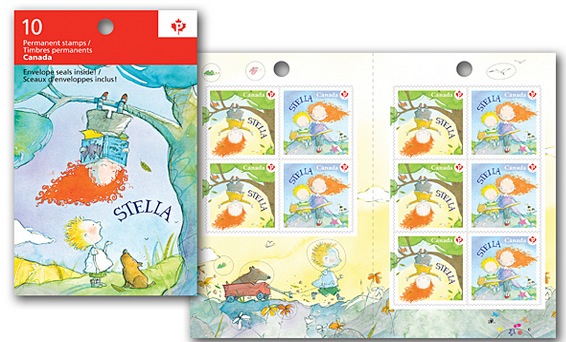
By the way, I went looking for stamps featuring Marie-Louise Gay's children's books for our Christmas mailings to discover that there were none. Canada Post has withdrawn its permanent stamps, of course, because they want to boost the price of letter mail.
Why should a service like the post office break even? It is something that we ought to support with our taxes. And when it comes to forward-looking business models, cutting out parcel delivery is a non-starter.
That's where the growth in mail service is going to come...but of course the private courier service will take up the slack to the joy of Stephen Harper's business-friendly supporters.
In the meantime,while opposition organizes take a look at a delightful short novel by Quebec writer Denis Thériault, The Postman's Rounds. It takes place a few years ago when the postman actually delivered the mail and was a part of everyone's life.
By the way, I went looking for stamps featuring Marie-Louise Gay's children's books for our Christmas mailings to discover that there were none. Canada Post has withdrawn its permanent stamps, of course, because they want to boost the price of letter mail.
Get Desire Lines in Time for Christmas!
There are just three days left to enter the Goodreads Giveaway of two copies of Desire Lines: Stories of Love and Geography.
Goodreads will tell me Monday morning who won and I'll get the books in the mail that day. With any luck the winners should have them before Christmas.
Tuesday, 10 December 2013
Sometimes the Right Things Get Done: The Positive Benefits of Protecting the Ozone Layer
Global warming would be a lot worse than it is, were it not for a protocol agreed to in 1989 that cut back the cloroflurocarbons that attack the earth's ozone later. That's what The New York Times is reporting today about the Montreal Protocol, which it calls "The Little Treaty That Could."
It banned about 100 subtances, many of which, besides destroying the ozone layer, "also happen to be exceedingly powerful greenhouse gases," Justin Gillis writes.
"If production had been allowed to continue, a batch of scientific
studies show, the planet would most likely be warming a lot faster than
it is. The latest of these studies came out only a few weeks ago... In fact, the evidence suggests the protocol has done far more to limit
global warming than the better-known treaty adopted for that purpose,
the Kyoto Protocol."
Now changes to the treaty to ban some replacement gases which also are green house gases are under considertion, which leads Gillis to quote Durwood Zaelke. He heads a Washington advocacy group that is pushing for
the treaty amendment, and says that "the drew a simple lesson from all this:
However overwhelming global warming may seem at times, we are not
powerless in the face of it."
That's worth remembering when the fight seems impossible.
Monday, 9 December 2013
Merry Christmas: Analyses to Chill Your Holiday Spirit from Krugman and the Toronto Star
Paul Krugman can be counted on for setting things straight, and in his column today he talks about the holiday present that the US is preparing to give the long term unemployed on Jan. 1, 2014: "1.3 million American workers, many of them in desperate financial straits, are set to lose unemployment benefits at the end of December."
"Merry Christmas," he adds.
The culprits, as usual, are those right wing politicos who combine a vindictive spirit with bad economics, he says. "The point is that employment in today’s American economy is limited by demand, not supply. Businesses aren’t failing to hire because they can’t find willing workers; they’re failing to hire because they can’t find enough customers. And slashing unemployment benefits — which would have the side effect of reducing incomes and hence consumer spending — would just make the situation worse."
But don't think this attitude is confined to the US. The Toronto Star today has a tabulation of all the programs that the Stephen Harper Conservatives have cut since they came to office. The story quotes former Saskatchewan premier Roy Romanow:
“It is changing Canada,” he says of the current federal approach to social and economic policy.
"Social programs long valued by Canadians are in the Conservatives’ crosshairs.
"Federal health-care spending is to be reined in. Canadians in future will have to work two years longer before receiving old age security — a measure Harper said was meant to address Canadians’ disproportionate focus on “our services and entitlements.”
"And at a time when 1.3 million are without jobs, the federal government has toughened the criteria that employment insurance recipients must meet to hang on to their benefits. In all, only 37 per cent of jobless Canadians are eligible for EI benefits."
Ironic, isn't it, that right after Black Friday when we were exhorted to buy, buy, buy, it's getting harder and harder for millions to keep food on the table and shoes on their kids' feet.
"Merry Christmas," he adds.
The culprits, as usual, are those right wing politicos who combine a vindictive spirit with bad economics, he says. "The point is that employment in today’s American economy is limited by demand, not supply. Businesses aren’t failing to hire because they can’t find willing workers; they’re failing to hire because they can’t find enough customers. And slashing unemployment benefits — which would have the side effect of reducing incomes and hence consumer spending — would just make the situation worse."
But don't think this attitude is confined to the US. The Toronto Star today has a tabulation of all the programs that the Stephen Harper Conservatives have cut since they came to office. The story quotes former Saskatchewan premier Roy Romanow:
“It is changing Canada,” he says of the current federal approach to social and economic policy.
“Unchecked, if we
continue down this path, the big danger is a more regionalized and more
unequal nation,” Romanow, who headed a royal commission on the future of
health care in 2002, told the Star.
"Social programs long valued by Canadians are in the Conservatives’ crosshairs.
"Federal health-care spending is to be reined in. Canadians in future will have to work two years longer before receiving old age security — a measure Harper said was meant to address Canadians’ disproportionate focus on “our services and entitlements.”
"And at a time when 1.3 million are without jobs, the federal government has toughened the criteria that employment insurance recipients must meet to hang on to their benefits. In all, only 37 per cent of jobless Canadians are eligible for EI benefits."
Ironic, isn't it, that right after Black Friday when we were exhorted to buy, buy, buy, it's getting harder and harder for millions to keep food on the table and shoes on their kids' feet.
Saturday, 7 December 2013
Saturday Photo: Cuzco Rooftops
The 254 photos I took on my trip have been whittled down to 85, I've transcribed 49 pages of notes, and there's a Power Point made to show unsuspecting friends and relations. Guess that means I must return to regular llife.
Here's one of the pictures I like particularly. Taken from the open staircase in the small hotel where I stayed in Cuzco, it echoes tile roofs around the world. It rained a hard while I was there, and the efficiency of the way the tiles channeled the run off was impressive.
Friday, 6 December 2013
When Nelson Mandela Visited Montreal: When Canada Made a Difference (Are You Listening Stephen Harper?)
In June 1990, only a few months after Nelson Mandela was released from prison, he came to Canada to thank Canadians for their support in the fight against apartheid.
This was not a simple goodwill turn: Canadians and Canadian politicians played a crucial role in pressuring the South African government to end the cruel and discriminatory system. Two of the most influential politicos were Progressive Conservatives: John Diefenbaker who led the fight to get South Africa expelled from the Commonwealth and Brian Mulroney who was a leader in maintaining economics sanctions against the country.
Apparently Mandela was scheduled to visit Toronto and Ottawa, but not Montreal, until city officials with the help of Mulroney and company, arranged a lightning appearance on the Champs de Mars on 36 hour's notice. Some 15,000 or more showed up to welcome him, and we were among them. It was Lukas's idea that we go. Then 10, he had already formed very definite ideas of what was right and who merited being considered heros.
I don't remember a lot about the event, aside from it being a beautiful late afternoon and early evening and the atmosphere was exhultant. In retrospect it seems even more important because I can't imagine the current version of Canadian Conservatives going out on a limb for decades on a princple as initially unpopular as fighting apartheid.
Stephen Harper, are you listening?
The tiny picture, by the way, is among the few I could find on the web. Seems that the even was not as mediatized as it should have been.
This was not a simple goodwill turn: Canadians and Canadian politicians played a crucial role in pressuring the South African government to end the cruel and discriminatory system. Two of the most influential politicos were Progressive Conservatives: John Diefenbaker who led the fight to get South Africa expelled from the Commonwealth and Brian Mulroney who was a leader in maintaining economics sanctions against the country.
Apparently Mandela was scheduled to visit Toronto and Ottawa, but not Montreal, until city officials with the help of Mulroney and company, arranged a lightning appearance on the Champs de Mars on 36 hour's notice. Some 15,000 or more showed up to welcome him, and we were among them. It was Lukas's idea that we go. Then 10, he had already formed very definite ideas of what was right and who merited being considered heros.
I don't remember a lot about the event, aside from it being a beautiful late afternoon and early evening and the atmosphere was exhultant. In retrospect it seems even more important because I can't imagine the current version of Canadian Conservatives going out on a limb for decades on a princple as initially unpopular as fighting apartheid.
Stephen Harper, are you listening?
The tiny picture, by the way, is among the few I could find on the web. Seems that the even was not as mediatized as it should have been.
Monday, 2 December 2013
Working through the Trip
Today I started working through the photos and began transcribing the pages and pages of notes that I took on my trip (No laptop when I travel: it's just one more thing to keep track of, and I was travelling by myself.)
Here's a shot through the front window of the bus I took from Cuzco to Puerto Maldonaldo in Peru. We are approaching the second pass on the route across the Andes, and should be about 4,500 meters high. The mountains of the cordillera are still snow covered even though it is late spring--but, after all, they're 5,000 meters or higher.
More later when I get more of the grut work done.
Here's a shot through the front window of the bus I took from Cuzco to Puerto Maldonaldo in Peru. We are approaching the second pass on the route across the Andes, and should be about 4,500 meters high. The mountains of the cordillera are still snow covered even though it is late spring--but, after all, they're 5,000 meters or higher.
More later when I get more of the grut work done.
Sunday, 1 December 2013
Thursday, 14 November 2013
Signing Off for a While!
Lee's holding down the fort, the freezer is full of suppers, tomorrow I'll water the plants, and then I'm off.
I'll be back in about two weeks with pictures of my great South American adventure.
Wednesday, 13 November 2013
Tuesday, 12 November 2013
Another Launch Party!
So tonight it's out to Pointe Claire on Montreal's West Island to celebrate Desire Lines: Stories of Love and Geography. Should be fun!
Monday, 11 November 2013
The Lesson for Today: Give Peace a Chance
Yes, I know that we are not to forget the Great War and the other ones because we don't want to repeat earlier mistakes. That at least is the official line. But when the jets flew low over Montreal at 11 a.m. this morning this is what I thought of:
Sunday, 10 November 2013
Saturday Photo: At the Launch..
My friend Jack Ruttan took this at the launch of Desire Lines: Stories of Love and Geography last Wednesday. It was a good party!
We'll have another good time on Tuesday at Librairie Clio in Pointe Claire, too, I suspect. Here's the link to the details.
And while you're at it, here are the links to two good reviews/interviews.
The Montreal Review of Books
"Soderstrom offers sensitive, attentive, and compelling portraits of relationships...It is precisely this “press of emotion” that is so beautifully expressed in these stories. The emotional tension makes the release of narrative conflict brought about by skilfully written endings all the more satisfying."
And The Gazette: "Love in all its forms"
We'll have another good time on Tuesday at Librairie Clio in Pointe Claire, too, I suspect. Here's the link to the details.
And while you're at it, here are the links to two good reviews/interviews.
The Montreal Review of Books
"Soderstrom offers sensitive, attentive, and compelling portraits of relationships...It is precisely this “press of emotion” that is so beautifully expressed in these stories. The emotional tension makes the release of narrative conflict brought about by skilfully written endings all the more satisfying."
And The Gazette: "Love in all its forms"
Friday, 8 November 2013
Another Index of Climate Change: No Snow by Nov. 8
In the 45 years I've lived in Montreal, there has always been snow before Nov. 8 and the leaves have been swept from the trees.
Not so this year, which leads me to believe that all those Climate Change deniers have got it all wrong. (As if I didn't already think that!)
Thursday, 7 November 2013
Good Bad News: Desire LInes Is Sold Out at First Launch

Sold out! Every single copy of Desire Lines went out the door last
night at the Montreal launch in Librairie Drawn and Quaterly. Thanks
to all the friends who came to hear me talk about the book, and who (I
hope) had a good time.More good news: the bookstore received another shipment of books this morning (a box had gone to Edmonton) so come on by 211 Bernard West to pick a copy up at the same 10 per cent discount they were offering last night.
Thanks to Jack Ruttan who took the picutre of me with Dina Sakali, and to Edwin Holgate who painted the nude 90 years ago or so.
Wednesday, 6 November 2013
Tuesday, 5 November 2013
The World of BD, or How Cartoons Go Serious
This morning Le Devoir has turned over the entire paper to cartoonists. The occasion is the opening of a new show of graphic illustration at the Musée des Beaux arts de Montréal, but it also is a sly way of commenting on the recent municipal election.
Instead of the usual photos accompanying news stories, the newspaper has asked the cream of Quebec's bédéistes (from bandes dessinées, the French term for cartoonists) to illustrate the news. Some of them are right on, indeed. And some of them are suitably méchant like the one above which shows mayor-elect Denis Coderre as the somewhat buffonish Asterix from the famous series of "comic books."
In the French-speaking world, illustrated books have long been considered seriously. I remember being aghast when an artist friend suggested a book group I belong to read BDs for one of our monthly meetings. But she presented a number of beautifully drawn and produced books with story lines no more silly than many literary novels, and explained how the art work was of very high quality.
Since then I've taken "graphic novels," as they're called in the English-speaking world, far more seriously. It's clear that the books frequently treat themes of substance, and are far from being the refuge of the semi-literate. (Drawn and Quarterly, in whose bookstore I'll have my book launch Wednesday night, is a very successuly publisher of this kind of book.) But the genre also always for much very interesting comment on the state of the world. Check out Le Devoir for sure today.
Instead of the usual photos accompanying news stories, the newspaper has asked the cream of Quebec's bédéistes (from bandes dessinées, the French term for cartoonists) to illustrate the news. Some of them are right on, indeed. And some of them are suitably méchant like the one above which shows mayor-elect Denis Coderre as the somewhat buffonish Asterix from the famous series of "comic books."
In the French-speaking world, illustrated books have long been considered seriously. I remember being aghast when an artist friend suggested a book group I belong to read BDs for one of our monthly meetings. But she presented a number of beautifully drawn and produced books with story lines no more silly than many literary novels, and explained how the art work was of very high quality.
Since then I've taken "graphic novels," as they're called in the English-speaking world, far more seriously. It's clear that the books frequently treat themes of substance, and are far from being the refuge of the semi-literate. (Drawn and Quarterly, in whose bookstore I'll have my book launch Wednesday night, is a very successuly publisher of this kind of book.) But the genre also always for much very interesting comment on the state of the world. Check out Le Devoir for sure today.
Monday, 4 November 2013
Stories of Love and Geography: One about Linnaeus
Another one of the photos behind Desire Lines: Stories of Love and Desire. This is Sara Elisabeth Morea at the time that she married Carl Linnaeus.
Not such a pretty face, but today's standards, but apparently she was attractive for Linnaeus to pine over her when he was away for two years in Leiden at the Hortus Botanicus, working on his system for classifying the world.
Their romance lies behind the story "On the Prelude to the Wedding of the Plants."
Not such a pretty face, but today's standards, but apparently she was attractive for Linnaeus to pine over her when he was away for two years in Leiden at the Hortus Botanicus, working on his system for classifying the world.
Their romance lies behind the story "On the Prelude to the Wedding of the Plants."
Sunday, 3 November 2013
Saturday Photo: What's Behind a Story
Ordinarily I use only pictures that I've taken for this feature, but today I'm pirating (well not really, they're bot WikiCommons pix) two photos taken by other people as the launch of my new collection of short stories Desire Lines: Stories of Love and Geography approached.
The longest story is one about the friendship of two women, set against some massive geological events. These include the eruption of Mount St. Helens, and volcanic activity in Hawaii that creates the sort of spun glass-like rock called Pele's Hair.
What to find out what the connection is? Come to the book launch at 7 p.m. Wednesday, Nov. 6 at Drawn and Quarterly Bookstore, 211 Bernard West, Montreal. or 7 p.m., Tuesday, Nov. 12, at Librairie Clio in Pointe Claire Centre.
Friday, 1 November 2013
First Copies of Desire Lines Arrive!
And there is singing and dancing chez les Soderstrom! Lee, who hadn't seen the cover, says, somewhat hopefully, that maybe it will be considered pornographic and will sell well.
I reply that since the image is from a painting by Group of Seven artist Edwin Holgate, it's high culture, not sleaze. But I'd like it to sell well too!
Subscribe to:
Posts (Atom)