Saturday, 5 May 2018

Saturday Photo: Years of Contestation...

There's been a lot in the press here about the fiftieth anniversary of the uprising in Paris. Certainly 1968 was a year of unrest, particularly among the young there and elsewhere. 

But that's not the whole story. We were in Berkeley in 1964, where things got really started.  At issue were a number of things: the increasingly hot American War in Vietnam, the Civil Rights movement, and on the campus the Free Speech Movement which protested university restrictions on who could speak on campus.

And then there were other fights there, here in Montreal and in Paris again.  The photo was taken 15 years ago during a conflict over retirement rules, a battle that continues.  We went looking for the demonstration, and found these teachers preparing to march near the Jardin de Luxembourg. We could see when we arrived that this was only a gathering point, not the place where the demonstrations would begin, and when we asked where the starting point was, people looked at us in astonishment.  Seemed everyone knew it was la Place de la République. Only tourists had to ask...

Things still are hot in France.  I found a website that lists all the demonstrations this week, for those of you who might like to participate.  Today it's:

 Samedi 5 mai 2018
- Manifestation contre la politique d’Emmanuel Macron le samedi 5 mai 2018 pour faire "la fête à Macron", à l’appel de François Ruffin / La France Insoumise. Rassemblement à 12h à Opéra puis manifestation à 14h en direction de Bastille.

Monday, 30 April 2018

Before Its Time? Manifest Destiny, a Short Story

The story below appeared in my short story collection, Finding the Enemy, published in 1999 by Oberon Press.  Given the news today of a caravan of refugees at the US/Mexico border, it seems "déjà vu all over again.

Manifest Destiny


The car doors were locked.  Even from where she stood at the edge of the embankment, Lucy could see that the buttons were pushed down. Her mother would be all right.  She had the radio on, there was no one around besides the park maintenance crew cleaning the bathrooms.  It wasn't too hot, it wasn't too cold. 
    Yes, her mother would be all right.  She had even agreed she would be.  "Go take your walk," she'd said.  "Don't worry about me."
    Nevertheless Lucy stifled the impulse to check again.  Bad conscience acting up.  But for Lord's sake, she ought to take advantage of this.  When was the last time she'd taken a walk by herself?
    She turned to look for a path that led to the beach.  Too long, was the answer.  Two weeks at least.
    That was when she caught sight of the seal, swimming north.  At least she thought it was a seal:  a dark sleek form just beyond the breakers, barely visible through the morning fog, still hanging over the water.
    She found herself smiling for the first time in a while.  The last time she and Gordon and the kids had been down to San Diego, they'd watched a harbor seal basking on the deck of a small sail boat.  A thief who took bait off fishermen's lines, who wouldn't be chased away, who appropriated any small boat it pleased, according to the man who ran the hot dog concession.  But the kids had wanted to come back and see it every afternoon.
    They still talked about it, four years later.  They'd wanted to come too, this time, but of course it was out of the question.  They were in school and Lucy had too much work to do, moving her mother.   The move into the residence was done now, Lucy would be going home in a few days, she would see them all. She shouldn't be resentful that her mother wanted to come with her this Sunday morning, too, when she'd promised herself one last walk on the beach.
    But this beach couldn't be a good place for seals, though, Lucy realized as she watched the animal rise and fall in the surf. The State Park was the most extreme south-western point in the Continental United States. Ocean  currents here swept sewage up from Tijuana, and from the embankment, Lucy could see that the beach was littered with black splotches of oil from off shore drilling.  She also white plastic bottles, small plastic tampon applicators, long strings of kelp, a pile of feathers that probably was a dead bird.
    Lucy shivered and not just from the fog remaining in the air.  She pulled her sweater tighter around her shoulders, and held her car keys so they projected through her fingers like the spikes on brass knuckles.  She was sure there was no reason to be afraid,  this was a well-patrolled State Park, there was absolutely no other car around, nobody would walk two miles from the road  in Southern California even to get a beach.  Maybe even especially to get to a beach, since there were so many of them.
    Which of course brought up the question why she had chosen this beach to come to. 
    Partly to annoy her mother, she had to admit, because she had really wanted to go to the beach by herself.  But her mother had assumed she was going too, and Lucy had given in without arguing.    Certainly, if her mother's aim had been to annoy, she'd succeeded.  Moreover, as soon as the woman had seen the freeway signs for the south county towns, she'd started in again about how Ava had deserted her, how you couldn't trust people like that, how the country would be better off without any of them, how it was bad enough in towns but down here near the border....
    Lucy, however, was not going to think about Ava or her mother right now.  She started down the path that lead to the beach.  No, it was not a deserted path, obviously people used it a lot.  Not only was it well worn but also it was littered with soft drink cans and the bright scraps of corn chip bags...
    Lucy avoided looking at the litter and concentrated on the other sensations.  The air smelled of licorice and rot.  The first came from the foliage, the second from the river which the road into the park had followed, past barren strawberry fields, past places where water pooled in the river bed.  Some water must flow all year round. 
    That surprised her.  Growing up, the place had always seemed dry.   The tap water, imported from Colorado over 200 miles, tasted of magnesium.  She remembered gasping at the taste the first time she came back.  But she also remembered seeing the names of streams on the map: the Otay,  San Diego, San Dieguito, Santa Margarita and San Luis Rey rivers.  All those streams  coming out of the dry hills, stream beds lined with greenery even in the summer.  Ending at the bay, which here owed its existence to the sediments deposited by the streams and which formed a long barrier peninsula.  She had a sudden vision of how inviting the land must have looked two hundred years ago when Spaniards set up their missions, when the Indians hunted and gathered. 
    She pushed on.  The plants muffled the boom of the surf, and when the sun broke momentarily through the fog, she felt the heat un-tempered by a breeze off the water.  Suddenly, just when she wondered how long the path could go on, she found herself at the edge of a bulwark of rocks.  Below  lay a short stretch of beach.  Beyond that: the breakers.  Where a head still bobbed, half hidden by a swirl of fog.  The seal?
    No, no, not a seal, but somebody body-surfing, she told herself.  Somebody who couldn't resist the long expanse of sand, running northwards so beautifully.   But even as she began to invent the idea of such a somebody, she thought of sewage in the water.    She would have gagged, but the rustle in the reeds stopped her.   She froze.  She searched with her eyes, suddenly too afraid to move.
    There was a man was watching her.  There, over there, half hidden in the reeds.  His hair was black, and so was his skin except around his eyes, where his real color showed through,  The pupils were dark too, but the whites glowed.   He wasn't as tall as she was, and he was hunched over as if trying to make himself smaller.  He was bare foot and wearing only  a black tee shirt and jeans..  His arms had been greased like his face: camouflage, she thought.  What you did when you didn't want to be seen at night.
    It was daylight, though.
    Someone shouted, louder than the roar of the breakers.   She looked toward the noise, south, toward.  One of the maintenance crew was waving his arms, calling something she couldn't understand.
    She tried to see what he was calling too, but she heard another rustle in the grass, saw the glint of the knife as it was drawn.  The blackened face split in the middle as the man stepped toward her, grimacing. 
    She wanted to scream, but she couldn't.  All she could think of was what her mother would say about her being killed on a beach near the border.  Her mother would find it either embarassing or ridiculous, would blame her for doing something that reflected badly on the family,  or on some standard of behavior that no one had been able to define in 30 years.
    Poor old woman, Gordon said after Ava left and Lucy's mother had telephoned in a panic. Ava had come to clean and cook only three days a week, but without her help the old woman was locked inside her arthritis and her memories. Poor Ava, too, he added; too bad she never got her immigration status fixed. But, he added, your mother needs your help, go and get her settled in some place decent.  I'll hold down the fort. 
    Lucy had already decided she wouldn't tell him about everything her mother said: how she called his father an old drunk (true enough but never said aloud), how she accused him, Gordon, of instability because he'd changed jobs a half dozen times, how she railed against Ava for deserting her, even though it seemed pretty clear Ava had only left because Immigration was after her and her husband.
    Lucy wasn't going to say anything about the underwear either.  She had found mounds of it when she began to pack her mother's things.   Three dresser drawers were filled with pants and slips and camisoles which her father had given her mother over the years, some of it still wrapped in tissue paper.  Beautiful stuff but there was no point in keeping it, Lucy decided.  None of it would fit because her mother was  a shadow of what she'd been.  Besides she doubted if her mother even realized it was there: Ava had done the laundry for the last three years, Ava put the every day things in one drawer that Lucy's mother could reach without getting out of bed.  
    So Lucy wrapped it all up with sweaters and old blouses and what remained of her father's clothes and gave them to Ava's church for its next rummage sale.  Ava was gone, nobody admitted knowing where she and her husband were hiding, but Lucy knew of no better place to get rid of the stuff. 
    The night before the move, however,  Lucy heard a noise well after midnight.  When she got to the doorway of her mother's bedroom, she saw her standing, crying, holding on to the edge of the dresser as if she would fall otherwise.  "My things," she said, "my pretty things."  She looked up as Lucy entered.  "That slut took my pretty things."
    "What slut? What things?" Lucy said.  She knew, though, but she couldn't bring herself to explain just yet.
    "Ava, the Mexican slut," her mother said.  "She ran away, she deserted me. And she took my things."
    It was pathetic.  Even after Lucy explained what she'd done, her mother didn't understand.  But then maybe being old was pathetic.  This was not the time to reflect on the pathos of age, however.  She had the man in front of her now.  And his knife.
    She took a deep breath.  "You don't want to hurt me," she said.   She took a step backward, trying to decide which way to run.  Back to the parking lot was sure safety but she would have to go through the weeds again.  As long as the workman was up there, looking at the ocean, she'd be better off going toward the water where she'd be seen. 
    The man in front of her said nothing, and she realized that probably he didn't know much English.  An illegal, a wet back: what else could he be?  Same thing for the seal, the supposed-surfer out there in the water, she reaslized suddenly.  Not a seal at all, another one trying to slip across the imaginary line out there, the border between the two countries.  Greased up like Channel swimmers, they must have started down the coast, and swum north.  
    Lucy stood up straighter.  She reached out her hand to the man.   "Give it to me," she said.  She saw she probably could not win a fight with him because, although he was thin and obviously exhausted, he was desparate, and she wasn't.   Neverthless, she kept her hand held out and repeated; "You don't want to hurt me.  Give it to me." 
    On the little bluff, the man from the park crew was screaming something.  One of the other crew members was hurrying toward the edge too.  She looked toward them, her concentration disturbed.    The man in front of her shifted his weight, as he saw her distraction.  "No," she said firmly as soon as she perceived his movement.  "Don't do it."
    The man's eyes held hers.  Dark brown eyes with flecks of green in the irises.  Tired eyes.  She sensed just how much he resented her clean clothes, her well-fed aspect, her English, her perfectly legitimate right to be in this country, on this beach, part of the Anglo world.  To demand that he give her something, as if it were her right to take.
    The workmen had begun to jump from the low bluff down the beach, however, and the man looked over at them.  This time she moved in the moment of distraction. She stepped forward on her left foot and brought her right knee up hard! into his groin.  He bent over, still holding the knife, but she turned and ran toward the beach.
    The sand was soft, and she stumbled.  She gasped for breath, and willed her legs to thrash forward because she was sure the man was behind her, ready to attack her.  It was not until she reached the hard, wet sand where it was easier going, not until she was nearly even with the park workmen, that she realized the man was not likely to move out of his shelter.  Especially not if he could see what was happening at the water's edge.
    There the black thing she had thought was a seal washed back and forth where the waves, having broken their backs on the sandy bottom, beat raggedly on the shore.  The taller of the two workmen was sitting down on the sand, taking off his boots, and rolling up his trousers.  The other man was yelling something at him. 
    But he had been swimming, she told herself.   The thing I saw was moving northward,  was alive.  Unless she had seen it just in its last minutes of exhaustion, just before it gave itself up to the currents and the waves, just yards away from its destination.  Now it floated face downwards, and nothing moved except when rocked by the rising and falling water.
    The tall workman waded out and pulled the body from the water.  He and his partner stood for a moment, looking at it.  The body looked short and dark haired and greased black just like the other man in the reeds.  It also looked quite dead; the taller worker nudged it slightly in the ribs with his foot.
    Lucy knew, and she assumed the workers knew that when a person is drowning, you're supposed to turn him on the back, pull out the tongue and breathe rhythmically into the mouth.  But the men stood there, looking at the body, as if too ashamed or disgusted to touch this person, to put mouth to mouth, even though they had hurried to try to save him.
    The illogic of that annoyed her.  She started across the sand again.  Before she realized it, she was kneeling next to the man, fishing his tongue out, pinching his nostrils shut and breathing into his mouth. 
    "Hey, cool it, lady," the taller workman began.
    She looked up, and as she did the man on the ground choked, and vomitted up a quantity of saltwater.  Then, it was clear, he started breathing.
    For a second she continued to kneel next to the man.  Her hands were covered with grease and the front of her  blouse was soaking wet.  Poor guy.  Like Ava's husband.  Like Ava.  No chance at the American dream.
    She stood up, and suddenly she found herself shaking: her legs, her hands, her teeth.  She was cold, she was exhausted, she realized that probably she was very lucky.  "He had a friend, hiding in the reeds over there," she nodded her head toward the bottom land.  "He tried to jump me."  The words were hard to say.  She seemed to have lost control of part of her body: she couldn't stop shaking.
    She had to wait while the Border Patrol looked for the man in the reeds (he was gone, as Lucy was sure it would be), and then they did the paperwork.   She wondered what would happen to the other man.  Paramedics took him away, but it wasn't clear if a hospital would admit him, or if he'd just be dumped across the border.
    Twice during the wait Lucy went over to check on her mother, standing where the woman wouldn't be able to see her.   Her mother sat  staring out at the stretch of sea and sky directly in front of her, her head no higher above the door frame than that of a child. Safe behind the locked doors.
     Two brown pelicans patrolled the waves.  The tide began to turn and after a while Lucy realized the beach was growing wider and dirtier as the receding water  left behind more garbage on the sand.   Then, a half hour later, the officers were through and she could go.
    "Where have you been?" her mother said when she unlocked the door.  "I was dying in here of the heat.  I hope you got enough excercise to last  a while, because I don't intend to wait again."
    Lucy nodded. "Of course," she said, not trusting herself to say anything more.  It was only when she was behind the wheel with the key in the ignition that she looked over at her mother.
    The woman was crying silently.  Then she felt Lucy's eyes on her and she turned abruptly away.  "Don't look,"  she said.  "Don't remember me this way.  I wasn't always like this."     
    They took  I-5 up the coast on the way back, then cut over at Palomar Road.   The residence was out in what still was almost country.  Even on Sunday there were men in the fields, planting gladiolas, potting poinsettias, and, in one place wearing white contamination suits, goggles and hoods, spraying tomatoes.
    The trip took longer than Lucy expected; the traffic coming back from the beaches was heavy.  The road passed El Camino Real, passed the sign for the San Luis Rey Mission, passed a group of men waiting for the bus to take them home from the fields.  Small, dark men, of course. 
    The afternoon smog had settled in, but Lucy still could see how the upland rolled off north and south, cut by the streams she'd seen on the map running down from the mountains to the sea.:  San Dieguito, Santa Margarita and San Luis Rey rivers, San Marcos creek, Agua Hedionda.  All names, she noted, left by the Spaniards, who must have traveled the uplands when they went from one mission, one estancia to another.  Long, long ago.   
     They arrived in time for her mother to have a little nap before Lucy took her down to dinner in the dining room. 
    Her mother walked slowly, but she was out of breath before they reached the door to the dining room.  She stopped, although not (Lucy knew), not only because her old body needed to.  She looked around the room: at the polished oak plank floor, the white stucco walls, the dark beams spanning the space end to end.  At the potted plants in the corners, the yellow chrysanthemums on the tables, the white napkins, the 35 women and the three men waiting to be served their dinner.  At the white hair and walkers, the stooped shoulders and shaking hands.  And  at the small dark women who would serve them.
    Then Lucy's mother straightened up and started into the room as if she owned it.  The waitress for her table smiled.  Lucy smiled back.  It was the least she could do.
Saturday, 28 April 2018

Saturday Photo: Blue Grass, Sort of, on a Foggy Mountain...

The photo actually is one I took several years ago in Chicago of scylla blooming in a park.  But my front yard looks similar right now as the lovely little blue flowers--the second ones that bloom in my garden each spring--have made their appearance in force.

This is what Kentucky bluegrass is like, pretty but not at all the same thing. 


And this is what Blue Grass sounds like: the inimitable Earl Scruggs and Foggy Mountain Breakdown.

Sunday, 22 April 2018

Saturday Photo: Two Takes on a Pepper

I've always admired the sensual photographs of fruit and vegetables by Edward Weston.  He did a number of lovely photos of nudes and rocks, but nothing quite beats his peppers and pears.  Apparently he got in trouble once because one of his stilllifes looked far too much like  the backside of a woman so that his photo was removed from a show...

Be that as it may, I was delighted when two red peppers that I roasted in the oven in order to use them later as pimento in cooking turned out to look so much like Weston peppers that had aged. The slightly sagging bottom, the wrinkled skin, the age spots--I can relate to that these days.  But beauty and pleasure is where you find it, one must remember...

Saturday, 14 April 2018

Saturday Photo: Trying to Get a Jade Plant to Bloom in a Difficult World

There are some plants I can get to bloom year after year.  The various sorts of Christmas cactus are one, and recently I've been having pretty good luck with hibiscus.  But Jade Plant, also called crassula, is one I would love to see blooming, but which is resisting my attempts to recreate the circumstances in which it flowers naturally.

Thalassa Cruso in her classic guide to indoor gardening, Making Things Grow, talks about hers rewarding her with fragrant flowers every spring. My mother--never much of a gardener--had  big one that bloomed occasionally when I was a kid in San Diego.  But I've never got a flower.

Apparently the plant is a native to a coastal Mediterranean-type climate, so I'm trying to imitate the conditions.  It's not easy, as you can see in the photo which shows the snow outside.  But I'll keep trying.

Of course, it's an insignificant challenge considered against the problems of the world.  But sometimes finding solutions to small things gives one the energy to go to bigger ones...

Saturday, 7 April 2018

Saturday Photo: Brasília....

Sad news from Brazil about the right wing campaign to stamp out any politician to the right of centre.  Lula (former president Luiz Inacio Lula da Silva)  this morning still seems to be holding out, but we shall see...

In the meantime, read this by Mark Weisbrot. A sample:

"If Mr. da Silva is barred from the presidential election, the result could have very little legitimacy, as in the Honduran election in November that was widely seen as stolen. A poll last year found that 42.7 percent of Brazilians believed that Mr. da Silva was being persecuted by the news media and the judiciary. A noncredible election could be politically destabilizing.
Perhaps most important, Brazil will have reconstituted itself as a much more limited form of electoral democracy, in which a politicized judiciary can exclude a popular political leader from running for office. That would be a calamity for Brazilians, the region and the world."

The photo was one I took four years ago in Brasília from the gorgeous Ministry of Foreign Affairs building, designed by Oscar Niemeyer.  Note the big Brazilian flag in the background.  Things appeared better then, with Dilma Rouseff poised to win re-election.  How times have changed.  Wonder if the view has. 

Saturday, 31 March 2018

Saturday Photo: Marmalade from Ornamental Oranges!

Last Sunday Jeanne, Thomas and I harvested the bumper crop of little oranges that our ornamental orange tree had this year.  There must have been 40-50 (I forgot to count.)  We planted several in three little pots; one for each of them, and one for little Louis who didn't get the idea but will probably be old enough to be pleased to have a little tree whenever the seeds germinate.

Then I made marmalade with a little help from them, although they wanted to go out to play in the snow that remained.  The result was pretty good, if not enormous in quantity!

The second photo is of the tree at its most abundant.

Saturday, 24 March 2018

Road through Time is an Indies Prize Finalist!


Great way to start a Saturday:  An email announcing that Road through Time: The Story of Humanity on the Move (University of Regina Press) has been short-listed for the 2017 Indies Book of the Year Award in the History category!

Hosted by Foreword Reviews, these awards highlight the best books from university and indie publishers across the U.S. and Canada and were chosen from more than 2000 entries across 68 genres. The winners will be announced June 15, 2018. Got my fingers crossed! 

The photo, by the way, is of one of the many roads I traveled researching the book, the new highway across the Andes from Peru to Brazil. That's the bus we traveled on from Cuzco to Rio Branco.

Saturday Photo: When Will the Winter End?

The little deer have been out in the cold all winter, part of a Christmas installation, I think.  But right now even they must be wondering when the winter will be over.

Spring came last week, we're told.  Certainly the sun is higher in the sky. Yet the temperatures around here don't feel like the season has changed.

At least I don't have to stand around in the cold, though...

Saturday, 17 March 2018

Saturday Photo: March Sun..

Spring doesn't come until the end of next week, but the sun is already quite high in the sky.

We're back in the deep freeze for a few days, with fresh snow on the ground, but the spring light is blinding.

Of course, if you look at the progress of the sun  through the year, it currently is at the point it is near the end of September, which frequently is still summer-like. 

So for the moment, it's blue skies, nothing but blue skies.

Saturday, 10 March 2018

Saturday Photo: Drowning in Concrete

There are days when I feel like I'm trapped in concrete.  This book about the marvelous material is taking up more and more of my head space...

Goal: get a draft done by the end of April.  Probability?  Well, I've never missed a deadline yet.

Deformation professional, I guess.

Saturday, 3 March 2018

Saturday Photo: Borderline Behaviour, Why Places That Should Be Alike Aren't.

It looks like we've got a title for my book about pairs of places that have much in common, but diverge in significant ways: Borderline Behaviour, Why Places That Should Be Alike Aren't.  The University of Regina Press will be bringing it out in the run-up to the 2020 US presidential elections, since one of the ten pairs of places I compare is the US and Canada.

Originally I had called it Unidentical Twins: Why Places That Should Alike Aren't Alike, but Bruce Walsh, the wizard who runs the shop, said that bookstores would shelve it with parenting books, and that's not at all what it was about.  I toyed with Different: Why Places That Should Alike Aren't Alike, but this week Sean Prpick, who does acquisitions, came up with this new one.

A winner, I think.

The other pairs of places I'll be looking at are: the (formerly) two Vietnams; Tunisia and Algeria;  the Indian states of Kerala and Tamil Nadu; Brazil and Spanish-speaking South America; Haiti and the Dominican Republic; Burundi and Rwanda;  Scotland and Ireland; Vermont and New Hampshire; and Alberta and Saskatchewan. The photo is a Wikipedia shot of Hai Van Pass which is the natural divide between north and south Vietnam, and near where the country was split after the French colonial war.

Saturday, 24 February 2018

Saturday Photo: Pot Hole Season...

Actually the ones this year are worse.  The photo was taken a couple of years ago after some of the pot holes were filled.  This year, though, we've had rock 'n' roll weather, with days of hard freeze followed by thaws followed by more hard freezes.

This means that water enters into every crack in pavement and then expands when it turns to ice.  Yesterday afternoon I found myself driving much below the speed limit on main streets in order not to break an axle.  What a mess!

When I was at World of Concrete in January there was some talk about what concrete works best when there's much freeze-and-thaw.  But I don't think anybody had a prescription for countering our cycles, which are much more frequent than elsewhere.

Saturday, 17 February 2018

Saturday Photo: Good Luck in Bad Luck or It Wasn't Raindrops Falling on My Head

Report from an optimist.

Last Saturday evening I was sitting in the living room when I began to hear drip! drip! drip!  A little investigation found water dripping from the ceiling in the dining room which was bulging downward. 

Quick work by my husband led piercing the sagging plaster, catching about two gallons of water in a big bucket, and, subsequently, pulling down a lot of wet lath and plaster. This is what things looked like on Monday morning.

What a mess, you might say.  One of the joys of home ownership, you might add.  We discovered a leak in the pipe leading from the reservoir of the toilet upstairs to the pipe leading to the sewer, which in turn led to an expensive visit from plumbers who replaced the pipe and the toilet, and discovered another leak in the bath tub drain.  All that is fixed now, only the holes remain.

The good thing about this is that it occurred when it did.  The night before we had a dinner party and at the same time the leak sprang forth on Saturday, on Friday we were just about to begin the cheese course.  The wine and the conversation  were flowing, we were having a lovely time.  So glad we didn't have to hustle everyone out so that water-rescue could begin!

Also since we were home and awake when the leak began, there was little if any collateral damage.  I shudder to think what would have happened to our books, hardwood floors (replaced seven years ago after our fire,) book and artwork if the water had flowed for a significant amount of time. 

Is there a lesson here? Maybe its that being optimistic doesn't stop life's glitches from happening, but it makes facing them a bit easier to deal with.

Saturday, 10 February 2018

Saturday Photo: Oranges Inside, and Out

At some point I acquired an ornamental orange tree.  It was probably 20  or more years ago, and each year I put it outside for the summer and brought it in October, where it might--or might not--bear one tiny orange.

This year I must have done something right, because it had a lot of blossoms when I brought it in, which have transformed into perhaps three dozen oranges.  Quite wonderful, I think.  Later on when they start to fall, I'll get the grandkids to plant some of their seeds so they can have their own little tree.

This comes just after I read a very interesting social history of California, Trees in Paradise by Jared Farmer.  The book  tells the stories of four sorts of trees in the Golden State, the Sequoia, Eucalyptus, orange and palm. Farmer uses these as points of departure for a detailed, pretty rigorous account of California since 1850, and for reflections on how people have remade the landscape, for good (a bit) or for ill (mostly.)

I found the method particularly interesting because I'm currently struggling to organize the vast amount of material I've been collecting about concrete for my next book Rock of Ages: How Concrete Built the World as We Know It.    Right now I'm wondering: Why not use the four elements the Ancients recognized--earth, fire, water and air--to tell this story? 

To be continued...

Sunday, 4 February 2018

Saturday Photo: Beauty, Fading But Beautiful

Looking for photos to illustrate a presentation I'm giving about concrete, I came across this one I took in Lisbon several years ago.  The stucco on these buildings with the elegant iron work is peeling, but the flowers are lovely and the open windows are inviting.

Beauty can be found in a lot of places, não é?

Sunday, 28 January 2018

Saturday Photo: Concrete...

The material that can last for thousands of years, frequently is falling down these days.  This is the Turcot Interchange in Montreal that is being destroyed for all kinds of reasons....

I'm headed off Saturday o learn the latest about concrete at the World of Concrete trade show in Las Vegas.  More later.

Saturday Photo: Big Machines at World of Concrete

Spent a very interesting few days in Las Vegas learning about concrete and construction at the World of Concrete trade show.  Several thousand attendees and 1500 exhibitors, plus folks like me.  This is a shot of some of the stuff they couldn't get in the exhibit halls.  Most impressive!

The reason for the trip was to research my next non-fiction project, Rock of Ages: How Concrete Built the World As We Know It.  It was definitely worth it.


Saturday, 13 January 2018

Saturday Photo: The Lantern Waste?

One of the delights of having children is revisiting books you've read as a child, or reading books that have been written since then.  The Chronicles of Narnia by C.S. Lewis are a case in point.  I'm sure I read at least one of them when I was about 12, but then read the whole series to Lukas and Elin.  (Lee may have read some of them, too, I think.)

"It will not go out of my mind that if we pass this post and lantern either we shall find strange adventures or else some great change in our fortunes," says one of the character in The Lion, the Witch and the Wardrobe.  And the spell that has fallen on Narnia is one that means winter forever but Christmas, never.

This scene in a Parc Beaubien reminded me of the stories this week.  The lamp post, the little house, the snow: all were evocative of the best things in the books, so I decided to share it this week.

But as I thought more and more about Lewis and Narnia, I realized that the series, while captivating, has many doubtful elements.  The Witch, for example, could be seen as just a very strong woman: why portray her so negatively?  Later in the series, a horde of brown, mounted adventurers from the South are the enemies for The Horse and His Boy: Arabs, Muslims, foreshadowing of  ISIS?  And there is Aislin who, Lewis said himself, is a Christ-like figure. 

I suppose an enlightened parent could use the reading of these parts as teachable moments.  I didn't, and I wonder if I should have even though the kids, by any measure are All Right. 

Sunday, 7 January 2018

Saturday Photo: Picnic Anyone?

The winter grinds on.  We were spared the Snow Bomb, but the temperatures have plunged again, and what snow fell in the last couple of days was whipped around yesterday.  It even came in under the front door, the first time that we can remember, although we've lived in this house more than 40 years.

All this to say that we must remember we're talking about "climate change," not "global warming."  Extreme weather in other words.  Don't know how we're going to get out of this one.

But I expect that some time--may in July--these picnic tables will be in use by people complaining about the heat.

Saturday, 30 December 2017

Saturday Photo: Waiting for 2018, But Not for Barbecue Season

The year isn't over but some people can't wait until the weather is better.  At the moment it's minus 24 C (about minus 13  F) and has been like that for days.  Supposed to continue for another week, too. 

But obviously these folks want to get a jump on summer...or maybe they just didn't get around to putting things away. 

Must point out though that it's possible to barbecue in this weather.  Lukas did it on Christmas Eve, turning out Swedish potato sausage cooked perfectly.

Friday, 22 December 2017

Saturday Photo: Merry Christmas and All That

I've posted this photo before I think, but it seems particularly appropriate as the year turns on its solstice hinge.

Supposedly there will be a few more seconds of daylight today than there was yesterday.  Good thing to know, even though we're not likely to seem much sun, given snow in the weather forecast.

But when the sun does come out, it will shine on sheets of white, multiplying its light.  And light is something that is sorely need, in both the literal and the figurative sense.

This is a winter of discontent, perhaps the worst in a long time.  Hard to keep the faith but we have to, or else the loathsome ones will win....

That said, let me wish everyone some pleasure over the next few days, as the year ends and a good part of the world celebrates--well, what does it celebrate, actually?  Our Jeanne says it is love, and I'll go along with that.

For more thoughts about 2017 and wishes for 2018, here's the link to my holiday blog.  Blessings on us everyone, as Tiny Tim said.

Saturday, 16 December 2017

Saturday Photo: Christmas Cactus as the Holidays Approach

I have two Christmas cactuses that have bloomed for at least 15 years, sometimes twice a winter in fact.  But I've never had such an abundance of blooms as this year, on the one that flowers in December.  (The other one blooms in November and maybe in March.)

Don't know what I did right this year, but it is a pleasure to see the flame-like flowers covering the plant.  An early holiday decoration.

Saturday, 9 December 2017

Saturday Photo: Sil, a Tradition

Must confess that the photo dates from a few years ago, but in the refrigerator right now are 24 salt herring, waiting for me to get my act together and make marinated herring, or sil.

This is one tradition that comes from Lee's family that I really like.  Takes about 10  days after you start the marinating process before the sill is (or is it are?) ready to eat. But the result is definitely worth waiting for.

In recent years I've had trouble finding salt herring around here.  Last year I persuaded a wholesaler to sell me some: quite a production as the company is run by a pair of Hassidic Jewish brothers who were amused by my plea that I needed salt herring for Christmas as was their staff that included a couple of very French Canadian office workers and several Muslim men who looked after the fish.  This year I tried to find a place closer to home, and did, finally.  The fish seem a little smaller than last year, but at least I didn't have to do as much running around...

So, while there's no snow on the ground, it is beginning to look a lot like Christmas, at least in my refrigerator...

Saturday, 2 December 2017

Saturday Photo: Sunrise, November 30, 2017

Well, actually the sun had been up officially for a good half an hour, but when I was out Thursday morning, it was just peeking around Mount Royal.  The leaves are finally off the trees, but there is no snow on the ground.  Just sere grass and light glancing across the little frost that collected over night.

There are many cities farther north than Montreal--London and Paris to name only two.  I don't know how I'd last in them: short days get to me.  Right now I'm hoping for snow soon, since what light there is on winter days is magnified when there's snow on the ground.

Saturday, 25 November 2017

Saturday Photo: Start of Construction

The photo was taken about a year ago when construction began in earnest for the new Université de Montréal satellite campus.  What I wanted to show was the concrete delivery in the background, because I was beginning to think about Rock of Ages: How Concrete Built the World as We Know It.

Happy to say that the writing has begun now: have a plan and about 20 pages written.  Will take a while longer, but it's nice to think that I'm on my way.

Saturday, 18 November 2017

Saturday Photo: November Skies, Meteors and Visual Pollution

There's been some talk about the possibility of a good meteor show from the Leonids tonight: here's the link to The New York Times story about meteors showers in general, with specific reference to the flurry of meteors that we might see during the period when the earth passes through the region of the solar system full of cosmic junk.

But it's become impossible to see much of anything in the night sky in our neighborhood as residents put up more and more outside lights. I remember seeing Orion on winter nights as I put the car away in the garage, but this week, while I thought I saw the brightest star in the constellation, I had to guess at the rest.  Thomas told me that he and his Dad had seen a planet last weekend--Venus, to hear him tell--but it's very hard for a little guy these days to wonder at the starry sky if he lives in a city.

The wintry wonder of skies like the one shown above are some consolation, I suppose.  With the leaves off the trees, the parade of clouds across the sky is more apparent.  But even scenes like this are menaced.  Earlier this week we had three days of air pollution alerts, occurrences that had become much less frequent when regulations against burning trash and fire places came into effect.  But the climate is changing, as we all know, and other factors have come into play....

Saturday, 11 November 2017

Saturday Photo: Concrete, the Material That Builds Our World

This week I really got rolling on the newest project, a new book to be called Rock of Ages: How Concrete Built the World As We Know It. Making plans to attend a big convention of concrete types, looking at the photos I've taken over the years, reading a lot of notes, and trying to start writing.

This is one of the more humble uses of concrete, improving somebody's parking space.  There are a millions more, and I'm trying to bring some order into my presentation.  Should be an interesting challenge!

Saturday, 4 November 2017

Saturday Photo: Full Moon, Clear Skies

The forecast is for rain but the full moon is hanging around just now.  Nice to see....

Saturday, 28 October 2017

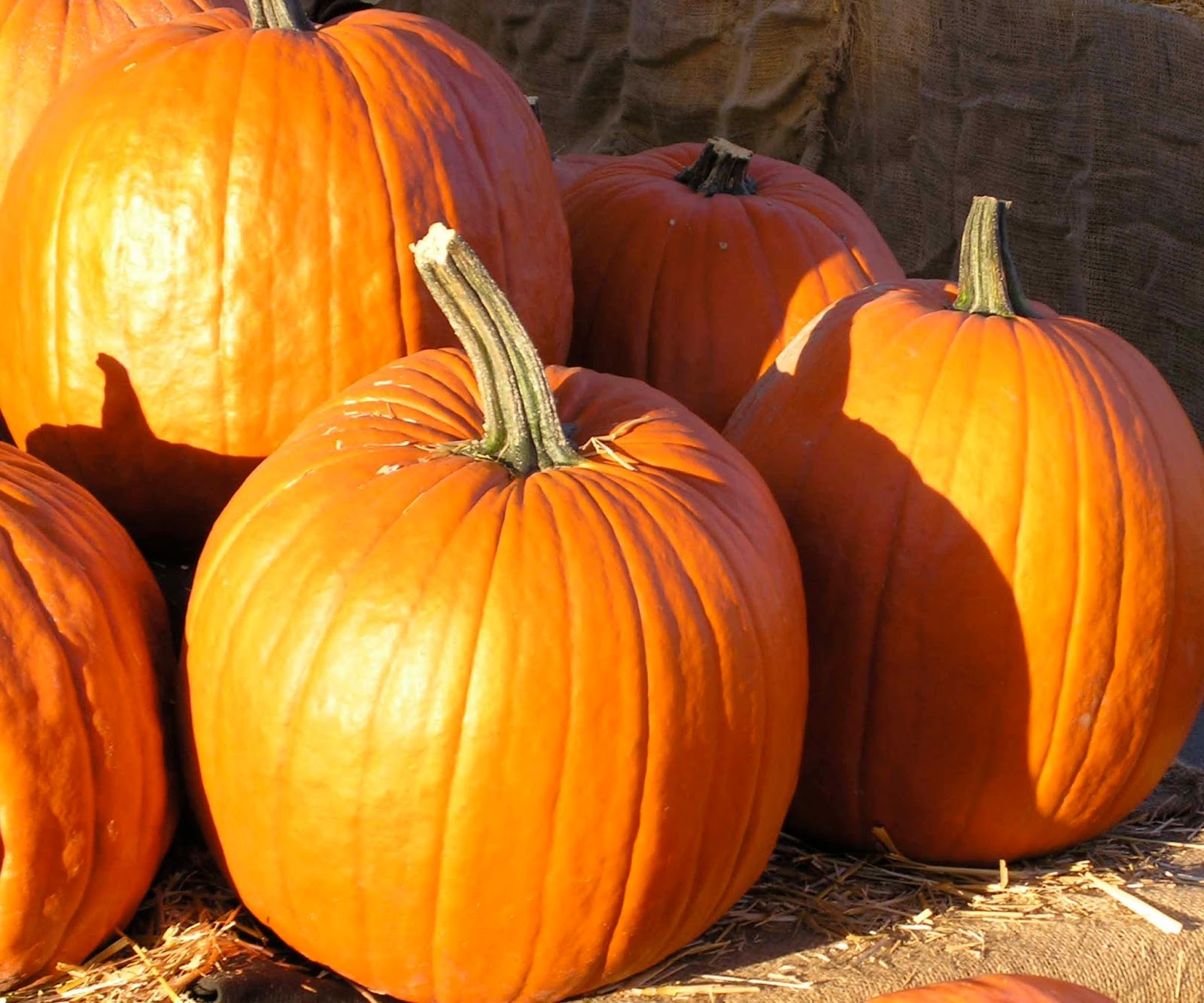
Saturday Photo: Pumpkins...and Pumpkin Pi

Just returned from scouting pumpkins.  Thomas and Louis (5 and 17 months) are coming over today and we're going to make a pumpkin, or maybe two.

We currently have two tiny ones and two small ones, chosen by Jeanne when she was here earlier in the week.  She left with three small ones for herself and her parents.  She also chose the ones we have: I was surprised that she wanted the smaller ones, but she was the one who got to decide.

Not sure what Thom will think though, hence the scouting trip.  Funnily, there seem to be very few medium sized ones around--a few tiny ones and several enormous ones in the stores. 

Well, we'll see what the boys decide.  And afterwards we'll have the prospect of several pumpkin pies, which are favourites around here. As is this terrific jack o'lantern carved a few years ago by some talented folk.

Saturday, 21 October 2017

Saturday Photo: Hibiscus in October II, Inside

The plants were brought in, there was a little frost Tuesday morning, but the temperatures shot up considerably at the end of the week.  Because of this--or despite it, take you pick--one of the hibiscus celebrated by sending forth another flower.

Should be interesting to see if the plant continues to be so colourful.  At the moment, we're just enjoying have the green inside, as the trees finally begin to turn colour. 

Climate change is really weird.  We haven't had to turn the furnace on yet this fall, and didn't run the air conditioner very much either this summer.  Maybe this Montreal is becoming a more temperate climate?


Saturday, 14 October 2017

Saturday Photo: Hibiscus in October


For years I've had two hibiscus bushes that have bloomed perhaps a half dozen times when the conditions were just right.  I put them outside in the summer, but even then blooms are rare. This year, however, things are different.  They've spent four months in their usual vacation place, in our shady little patch of front garden, and in the past few weeks they've been blooming.  At the moment, they have three flowers (I couldn't get them all in the photo) with a few more buds still to go.

Two things may account for this.  First, I did put some composted manure on them in early August, because their roots had begun to show, but I've done that before with no real results. 

The second factor is more important I think: for the first time ever I've kept them outside well in October, and the light coming through the overhanging tree branches is lower and  more intense. 
Is this one of the upsides of global warming?  Will we have other falls where the temperatures match or exceed those of July and August?  No idea, of course, although the prospect of climate change gives me chills.  What I will do is bring the plants in next week, before the frost which is forecast for Monday night.  In the meantime I'll enjoy the blossosm.

Tuesday, 10 October 2017

Coming Soon to the Atwater Library: Road through Time

Hope to see you at 12:30 p.m. Thursday October 12 at the Atwater Library when I'll be talking about  Road through Time: The Story of Humanity on the Move (University of Regina Press.) This image of Persian charioteers (as imagined in the 19th century) will be one of those I'll show as I talk about the first roads, warrior's roads, modern roads, and where they may be leading us now.


Saturday, 7 October 2017

Saturday Photo: Happy Thanksgiving...

A little fall in the air, finally, with some leaves turning colour!  Nice...

This weekend in Canadian Thanksgiving, a feast I like a lot.  The idea of giving thanks to some Supreme Being doesn't appeal to me, but I think it's good to occasionally stop and reflect on what one has.  We're lucky to live in peace in a country that is more good than otherwise, to have family and friends, and to be able to eat our fill.  Personally, I have been very lucky to be able to follow my star with the help of some wonderful people.  Thank you!

And tomorrow we'll all have a lovely meal chez Lukas and Sophie.  It's the first time they've hosted the feast.  It's great that they stepped up to plate when I hesitated because of uncertainty about a small health problem (which has more or less resolved itself, thank goodness again.) Merci and bisous à tous et toutes....

Saturday, 30 September 2017

Saturday Photo: Stars on Earth--Asters

Before the rain we had on Thursday, our little front yard was filled with bouquets of native asters.  The flowers are a lovely shade of mauve, and bloom at the very end of summer. 

They're part of my wild, Darwinian garden in which I strive to have something low-maintenance in bloom from the time the snow melts until a good freeze levels things.  For the week or two when the asters overlap with the best of the golden rod, the effect is quite wonderful, I think.

We'd gone through a long, hot dry spell after a wet spring and summer, and the flowers were thriving with a little watering from my soaker hoses.  But the temperature dropped Thursday night, and thunder storm blew in for a few hours.  A few of the clumps of asters suffered from the hard rain so the effect isn't quite what it was.  But the change in the weather is a good one, and long overdue....

Saturday, 23 September 2017

Saturday Photo: Belles dames Or Painted Ladies?

Somewhere in there are a couple of lovely butterflies.  At first, when they appeared in mass about a week ago, I thought they were Monarchs, but it turns out they are what are called Painted Ladies in English or Belles dames in French.  The differences are obvious, when you see them side by side, but if you're not a butterfly expert, they're hard to distinguish.

Needless to say, Montrealers have been delighted to see so many of the beautiful creatures flitting around in these amazingly warm last days of summer/first days of fall.  All very normal, we're told.  A spring and summer that led to great success for the butterflies when it came to reproduction, plus this unusually warm weather after a wet summer.

Okay, I'll accept that, and not let my climate paranoia lead me to worry that the reason I haven't seen anything like this before is not a harbinger of more damage to the planet.  So I'll keep my comment to a linguistic one.  The names for the butterfly in French and English say a lot about the cultures--or what the cultures were in the 19th century when many plants and animals were catalogued.  Quite simply, something lovely in French could easily be named Belle dame, but in English a moralizing quirk led to Painted Lady which we all know is up to no good.

Would that the French are right!


Saturday, 16 September 2017

Saturday Photo: Rock of Ages, How Concrete Built the World as We Know It


This is the week that I start work in earnest on my next book, tentatively titled Rock of Ages: How Concrete Built the World as We Know It. Now that the major revisions to Different: Places that Should be Alike That Aren't Alike  (due from University of Regina Press in Fall 2018, if all goes well)  have been sent off, it's time to change gears.

Not that I haven't been thinking about the topic for a long time.  During our trip this summer, one of the things I wanted to see was Grand Coulee dam on the Columbia River, which for a while was the biggest concrete construction in the world.  But one of the things I forgot when I was thinking about the hydroelectric potential of dams is the massive effect irrigation with water from the projects. 

Concrete is essential for getting water to the countryside.  Without canals lined with it, the water so carefully collected behind dams would simply sink into the earth without the desired effect. 

This is a photo of the outlet canal at Grand Coulee.  I haven't yet researched just how the irrigation system works in this part of Washington state, but you can see the kind of countryside the river and its channeled water runs through.

More later....

Saturday, 9 September 2017

Saturday Photo: Le Jardin botanique, Montreal's Jewel


A good friend is visiting from out of town and we did something we hadn't done in a long time: visit Montreal's Jardin botanique.  What a delight!

Our friend had spend some time around here in the early 1970s, but she said she'd never gone there then, and I realized, too, that until I was in my late 30s and had kids, I never went looking for the loveliness of gardens.  But when the children were small the garden was free, and one of our favourite winter outings was to spend an afternoon in the green houses.  Quite wonderful to be in a tropical atmosphere when it's snowing outside!

Since then we've gone through phases when we visited frequently, but lately the press of work and other projects have pushed the Jardin to the back of our schedules.  This visit has revived our interest, and I'm sure we'll be back soon. Here's a link.

Sunday, 3 September 2017

Saturday Photo: Or What Happens When the Internet Lets You Down

No picture this weekend, to show my profound disappointment that we didn't have internet for 24 hours this weekend.  Amazed at how much we have come to fit regular views of news sites, Facebook and e-mail into the fabric of our lives.

Things are back to normal, which means I can waste more time than I should following links to interesting sites....

Saturday, 26 August 2017

Saturday Photo: Bees....

My overgrown, mostly-indigenous garden of perennials has been hosting a bumper crop of bees this summer.  Glad to see that, given the current worry about the fate of bees in the wild.

But last night a few wasps decided to check out the sausages I was barbecueing.  Not so welcome visitors, but I guess all part of the web of life, or some such.

Saturday, 19 August 2017

Saturday Photo: Pear Harvest

It's been a wet, rather cool summer but the two pear trees in our backyard have loved it.  There are more pears than the squirrels can eat, and I harvested those I could reach this week.  Not that they're terribly tasty, but getting fruit like this in the middle of the city is pretty cool.

My neighbor Nicola, with whom we share our harvest particularly since they get a lot of down fruit on their side of the fence, said she makes a purée of the pears, freezes small portion,  and then uses them to make pear mousse.  Sounds like a winning idea.  As soon as the pears are ripe enough (and you have to pick them before they're ripe) I'll do just that.

Saturday, 12 August 2017

Saturday Photo: The Grand Antonio, and Electricity

One of the grandkids favourite stories is that of The Great Antonio, a Montreal strong man, by Elise Gravel.  He pulled buses with his teeth and other feats of strength.  Gravel's illustrations are delightful, and obviously made a big impact on not-quite-five Thomas.

When we were doing a little morning walk-about near Grand Coulee dam on our recent trip, he got very excited, pointing toward the hilltops and talking about the Grand Antonio.  The adults couldn't figure out what he meant, but then it dawned on us: the high tension pilons carrying electricity from the dam.  They look a little like someone flexing his muscles, I agree.

You could probably do a nice turn on that: how electricity makes the world run, and how it magnifies the strength of all of us.  But I think I'll just be delighted at a little boy's imagination. 

Saturday, 5 August 2017

Saturday Photo: Dry Falls and the Forces of the Earth

On our trip West in July, one of the most interesting places we stopped was at the Dry Falls State Park where the ancestral Columbia once ran.

Or maybe it wasn't the Columbia, exactly.  What is certain now is that  an enormous amount of water  surged over this precipice as the Ice Age ended and an ice dam burst, letting free the impounded waters of a massive meltwater lake.  The result was a catastrophic flood (or floods) and this dry, empty landscape which followed.  The dark rocks, by the way, were laid down in another geologic event that staggers the imagination: the great volcanic episode which saw lava spread over hundreds of thousands of acres for perhaps a million years.

All this puts our particular problems in  perspective.  We are screwing things up royally, but our presence on this planet is likely to be only fleeting.  The rocks remain.

Tuesday, 1 August 2017

This Just In: Full Page, Back Cover Ad for Road through Tiime in the NYReview of Books!

It was a quiet evening yesterday until my husband shouted from upstairs that I had to take a look at the new New York Review of Books.  So I scurried up to find a full page, back page ad for Road through Time: The Story of Humanity on the Move!

Wow!  I had thought maybe there'd be a little publicity some place, but I certainly didn't expect this! Do hope that it introduces the book to a much wider audience.

Saturday, 29 July 2017

Saturday Photo: Fiat Lux at Grand Coulee Dam

Back from nearly two weeks in British Columbia and Washington State with kids and grandkids.  Many excellent adventures, you can be sure...

This photo was taken just as the sun was rising on Wednesday downstream from the dam itself.  I like the combination of the sun and the power lines: truly fiat lux. both solar and electric.

The Columbia River and it dams are under threat from interests that want to privatize them.  Terrible idea!  Here's the link to a good story from The New York Times about the situation.

Saturday, 8 July 2017

Saturday Photo: The Western Edge of the Continent

Summer is vacation time, and I'm thinking of the trip we took to the West Coast a few years ago.  This is photo taken on Vancouver Island, showing the abundance of the sea.

We're headed out that way soon, and I can hardly wait!