

Very interesting article in Le Devoir this morning by Jean-Marc Leger, the guru of polling in Quebec. It's worth trotting out your high school French if you're not bilingual to read what he says about the reliability of internet polling.
Among other things, he says that the rates of response are much higher on internet polls, that a public that telephone surveys are not reaching (the growing percentage who don't have landlines) can be polled, the rate of undecideds is much lower because people can answer when they want and are the respondants are paid, not the pollsters.
This last is particularly important: Leger Marketing has 315,000 on its "panel" of people who have agreed to answer their polls. Not everyone is polled all the time, but because the people on the larger panel have provided certain demographic data, groups can be pulled from it to be questioned on different subjects. And the respondants answer because they get something out of it, not because they've been bugged to respond to a telephone call.
Leger ends his piece by saying that comparisons of results obtained by electronic polling has proved more accurate than telephone polling when it comes predicting election results.
Don't know quite what this means for the democratic process. Certainly there will be fewer telephone solicitor jobs available in the future. Can one volunteer for these polls, I wonder. A file to be watched as we move deeper into the cyber age.
Friday, 9 April 2010


Thursday, 8 April 2010
No Time to Stop Marching Toward Complete Elimination of Nuclear Weapons: Get Rid of Them
Further to yesterday's posts about over-armored warriors: the news this morning is full of Obama and Russian President Dmitry Medvedev signing a nuclear non-proliferation pact which forsees a graduated reduction in the amount of nuclear weapons in the world over the next couple of decades.
We are 20 years after the end of the Cold War and it's taken this long to start eliminating nuclear arms. During that brief period when it appeared the world might actually have a little peace, I had hoped that we'd be rid of the threat of nuclear war by now. But we haven't, we've had two major wars, and a whole lot of little conflicts. Some of the players in the Realpolitik are not part of the treaty: for example, Israel isn't although The Jerusalem Post says it is thought to have about 200 nuclear warheads.
We haven't had a nuclear war, or even a nuclear skirmish, which is all to the good. But rather than rest on the laurels of this new step, the world should push on toward complete elimination of nuclear weapons.
Heaven knows we've proved over and over again that we're quite good at killing each other with much lower tech stuff, from machetes to "smart" bombs.
We are 20 years after the end of the Cold War and it's taken this long to start eliminating nuclear arms. During that brief period when it appeared the world might actually have a little peace, I had hoped that we'd be rid of the threat of nuclear war by now. But we haven't, we've had two major wars, and a whole lot of little conflicts. Some of the players in the Realpolitik are not part of the treaty: for example, Israel isn't although The Jerusalem Post says it is thought to have about 200 nuclear warheads.
We haven't had a nuclear war, or even a nuclear skirmish, which is all to the good. But rather than rest on the laurels of this new step, the world should push on toward complete elimination of nuclear weapons.
Heaven knows we've proved over and over again that we're quite good at killing each other with much lower tech stuff, from machetes to "smart" bombs.
Wednesday, 7 April 2010
Heavy Weapons Aren't the Way to Go: Agincourt, Aljubarrato and Obama
While I put the finishing touches on Making Waves, I was struck by the similarity between the decisive battle of Aljubarrato (1385), in which the Spanish and the French were decisively beaten by the Portuguese supported by English archers, and that famous battle at Agincourt 30 years later. Here's the trailer from a Portuguese movie about the former, plus Kenneth Branagh giving a hair-raising reading of the St. Crispin's Day speech from Henry V.
In both cases, the heavily armored mounted knights had their horses shot from underneath them and were slaughtered by troops on foot. There is a message here, particularly coming right after Obama begins to back away from the nuclear deterrent. The only shelter is peace, maybe?
In both cases, the heavily armored mounted knights had their horses shot from underneath them and were slaughtered by troops on foot. There is a message here, particularly coming right after Obama begins to back away from the nuclear deterrent. The only shelter is peace, maybe?
Tuesday, 6 April 2010
Woman Who's Been Typing for Decades Laughs at Woman Who Returns to Work after 40 Years
It's the home stretch on Making Waves, so here's a quick laugh. Now back to work
Monday, 5 April 2010
"Faces of America:" More Reasons Why the Idea of "Any Known Blood" Is Ridiculous
As I begin the wrap up on the manuscript of Making Waves: The Portuguese Adventure, I've delved back again into the complicated vision of race. One of the things that is most striking is the difference between the attutide toward racial mixing in Brazil and in North America, particularly in the United States. While discrimination on colour lines exists in Brazil, what doesn't exist is the idea that "any known blood" makes someone Black, or a person of colour or Afro-whatever.
Nowhere does that show up more strikingly than in a comparison of Elizabeth Alexander, the distinguished African-American scholar who was invited to read a poem at Barak Obama's inaugaration, and former Brazilian president Fernando Henrique Cardoso.
There is no doubt that Alexander would be considered an African-American, even though it turns out that she has more white ancestors than black and that's she's a descendant of King John of England (1167 – 1216) who sealed the Magna Charta. Cardoso, on the other hand, was considered by 70 per cent of Brazilians to be white even though he called himself a "mulatino" with "one foot in the kitchen."
It would help a lot if we recognized that we are mixtures, that there is no such thing as "racial purity," and that skin colour is merely an adaptation that has developed in many forms in many places with little relation to any other trait.
Nowhere does that show up more strikingly than in a comparison of Elizabeth Alexander, the distinguished African-American scholar who was invited to read a poem at Barak Obama's inaugaration, and former Brazilian president Fernando Henrique Cardoso.
There is no doubt that Alexander would be considered an African-American, even though it turns out that she has more white ancestors than black and that's she's a descendant of King John of England (1167 – 1216) who sealed the Magna Charta. Cardoso, on the other hand, was considered by 70 per cent of Brazilians to be white even though he called himself a "mulatino" with "one foot in the kitchen."
It would help a lot if we recognized that we are mixtures, that there is no such thing as "racial purity," and that skin colour is merely an adaptation that has developed in many forms in many places with little relation to any other trait.
Saturday, 3 April 2010
Saturday Photo: Daffodils for a Spring Day
 Update on Sunday, April 4: There is one daffodil in bloom, in fact. Beautiful weather, scarily so.
Original post: No, they're not in bloom here yet, but with temperatures in the mid-twenties (high 70s F) this weekend the spring flowers are bound to leap ahead of themselves.
Here's William Wordsworth's poem too, I'll think of it and the flowers next week when it's supposed to rain.
Daffodils
I wandered lonely as a cloud
That floats on high o'er vales and hills,
When all at once I saw a crowd,
A host, of golden daffodils;
Beside the lake, beneath the trees,
Fluttering and dancing in the breeze. Continuous as the stars that shine
And twinkle on the milky way,
They stretched in never-ending line
Along the margin of a bay:
Ten thousand saw I at a glance,
Tossing their heads in sprightly dance.
The waves beside them danced; but they
Out-did the sparkling waves in glee:
A poet could not but be gay,
In such a jocund company:
I gazed - and gazed - but little thought
What wealth the show to me had brought:
For oft, when on my couch I lie
In vacant or in pensive mood,
They flash upon that inward eye
Which is the bliss of solitude;
And then my heart with pleasure fills,
And dances with the daffodils.
Friday, 2 April 2010
The Lighter Side of Economics, Because We Need Some after the Quebec Budget This Week
Yoram Baumman, everybody's favorite stand-up economist, is taking to the road this spring. Check this out to see if he'll be near you.
If not try this:
If not try this:
Thursday, 1 April 2010
April Fool, Poisson d'avril: Once upon a Time the Cod Were Plentiful
In French today is the day you try to pin a cut out fish on someone's back, as an April Fool's joke. What follows is far from a joke, but an eloquent tribute to the Portuguese men who fished for cod from small boats by hand.
The quality of the YouTube video isn't good, but the film is easily available for purchase from the NFB.
The quality of the YouTube video isn't good, but the film is easily available for purchase from the NFB.
Wednesday, 31 March 2010
The Zombie Returns: Quebec Wants to Charge Health Care User Fees
 This just in : big demonstration Thursday, with more action to follow:
This morning we read in the media that Quebec is going to impose a "ticket modérateur" on medical visits beginning in 2012, that this is not a trial balloon, and that discussions are under way with the Federal government about how the Canada Health Act will treat this.
Finance Minister Raymond Bachand, who announced the plan in his budget yesterday, says this is all part of a great plan to put the province's financial house in order, of making the user pay.
This is nonsense, particularly since a number of studies have shown that user fees don't save any money. They also contravene the Canada Health Act which supposedly guarantees universally accessible medical care in Canada, which in turn means that there should be no economic barriers to getting care.
For some time, I've been agitating among the groups I belong to for campaigns to actually enforce the Canada Health Act. But there has been sorrowfully little action, even among my friends at the NDP who should be in the front rows of such a campaign.
Pity. Let us hope that there is vociferous protest to this part of Bachand's right wing budget.
Let us not forget either that major reasons why Canada has come out of the global financial meltdown so well are outgrowths of policies light years away from the philosophy of Bachand, Charest, Harper and company--a good social safety net that kept purchasing power up, public investment in infrastructure projects begun before the trouble began, and better regulation of financial institutions.
Thanks to UBC health economist Robert Evans for his comparison of health care user fees with zombies, BTW.
Tuesday, 30 March 2010
Books: Obama Writes, But Harper Doesn't, and Yann Martel Hands Off the Book Club for a Few Months
Yann Martel is still waiting for Stephen Harper to get involved in the little "book club" that Martel began nearly three years ago--you'll remember that he's been sending a short book every two weeks to the PM since he noticed that Harper appeared to lack "stillness" in his life.
But at least one North American head of government thinks that Martel is great: Barack Obama sent a little hand written note a couple of weeks ago, thanking Martel for writing The Life of Pi which the American President and his daughter had enjoyed reading. What a class act! As Martel notes, Obama isn't going to get any political mileage out the gesture, but it means the world to a writer.
Martel himself is taking four months off from the book club, as it turns out. He's going to be travelling to promote his new novel shortly so he's asking some writer- friends to help out. Stephen Galloway kicked it off by sending King Leary by Paul Quarrington, while Charles Foran has just sent Ray Smith's Century.
I can understand Martel wanting to step back from the project that has taken on a life of its own, and I have great respect for Galloway, Foran, Quarrington and Smith. But I do hope there will be some women included in the pinch hitters.
Now back to work on my own manuscript.
But at least one North American head of government thinks that Martel is great: Barack Obama sent a little hand written note a couple of weeks ago, thanking Martel for writing The Life of Pi which the American President and his daughter had enjoyed reading. What a class act! As Martel notes, Obama isn't going to get any political mileage out the gesture, but it means the world to a writer.
Martel himself is taking four months off from the book club, as it turns out. He's going to be travelling to promote his new novel shortly so he's asking some writer- friends to help out. Stephen Galloway kicked it off by sending King Leary by Paul Quarrington, while Charles Foran has just sent Ray Smith's Century.
I can understand Martel wanting to step back from the project that has taken on a life of its own, and I have great respect for Galloway, Foran, Quarrington and Smith. But I do hope there will be some women included in the pinch hitters.
Now back to work on my own manuscript.
Monday, 29 March 2010
The Up Side of Chocolate, Or When What You Eat Affects How You Feel
It's always nice to wake up happy, although at 4 a.m. Sunday morning I couldn't figure out what was going on. It was only as I lay in bed, not able to sleep but not fretting about anything, that I realized what the problem was: chocolate mousse.
The gang was over for Sophie's birthday on Saturday night, and dessert was chocolate mousse which we finished eating about 11 p.m. The chocolate high didn't kick in right away, but by the early hours of the morning it certainly had. I was reminded of Lukas's first experience with chocolate cake at a year and a half: he woke up about 1:30 a.m. and sang to himself in his bed for half an hour.
I didn't sing, exactly, but about 5 a.m. I cheerfully went down stairs to do the dishes. The cheerful, sleepless mood continued until the middle of the afternoon when suddenly I collapsed. No matter: it was a lovely dinner.
Here's the recipe, in case you're interested.
Make a crème anglaise by melting with 4 tablespoons of butter in a saucepan, and wisking in 2 tablespoons of flour. Add 1 cup of rich milk or cream, and stir until smooth and thick, about three or four minutes. Add 1/3 cup sugar.
Beat 5 egg whites until they form peaks
Then grind two cups of chocolate chips in a blender. Put in top of double boiler over hot water and add 1/3 cup of hot water, and 4 tablespoons of butter. Cook until melted, then beat in five egg yolks, stirring until thick and smooth.
Quickly stir crème anglaise into chocolate mixture. Then fold carefully into egg whites. Pour into small cups or wine glasses. Makes 6 to 8, depending on size of cup or glass.
Wake up happy.
The gang was over for Sophie's birthday on Saturday night, and dessert was chocolate mousse which we finished eating about 11 p.m. The chocolate high didn't kick in right away, but by the early hours of the morning it certainly had. I was reminded of Lukas's first experience with chocolate cake at a year and a half: he woke up about 1:30 a.m. and sang to himself in his bed for half an hour.
I didn't sing, exactly, but about 5 a.m. I cheerfully went down stairs to do the dishes. The cheerful, sleepless mood continued until the middle of the afternoon when suddenly I collapsed. No matter: it was a lovely dinner.
Here's the recipe, in case you're interested.
Make a crème anglaise by melting with 4 tablespoons of butter in a saucepan, and wisking in 2 tablespoons of flour. Add 1 cup of rich milk or cream, and stir until smooth and thick, about three or four minutes. Add 1/3 cup sugar.
Beat 5 egg whites until they form peaks
Then grind two cups of chocolate chips in a blender. Put in top of double boiler over hot water and add 1/3 cup of hot water, and 4 tablespoons of butter. Cook until melted, then beat in five egg yolks, stirring until thick and smooth.
Quickly stir crème anglaise into chocolate mixture. Then fold carefully into egg whites. Pour into small cups or wine glasses. Makes 6 to 8, depending on size of cup or glass.
Wake up happy.
Saturday, 27 March 2010
Saturday Photo: Cow Hazard on São Miguel
 As I enter the last week of work on Making Waves: The Portuguese Adventure I'm back reviewing photos I've taken over the last ten years to refresh my memories. This was taken on the highway that runs east along the south shore of São Miguel in the Azores. The island is a big producer of dairy products--when I was in Lisbon last spring, the supermarkets were full of Ultra High Temperature treated milk from São Miguel--and cows are everywhere.
A little farther down this road I had to brake suddenly when I came around a curve to see a herd of cows clopping along the road. It so unnerved me that I didn't even think to take a picture.
The flowering bushes on the hillside to the right are hydrangeas--hortensias in Portuguese--that were planted as hedges to divide fields decades ago and now have naturalized. Very lovely.
Note: I've promised Making Waves to Véhicule Press by Tuesday, April 5, but there certainly will be more work, so I'm bound to have more posts about it before the publication date which will be sometime next fall.
Friday, 26 March 2010
Thursday, 25 March 2010
The Jesuit Relations and Robot Reporting: An Argument for Printing Those Documents Out!
Interesting juxtaposition in Le Devoir today: a story about the increasing use of non-human tools to gather news, and one about the new Jesuit archives in Montreal.
The first begins by detailing Stats Monkey, a program developed at the Intelligent Information Laboratory at Northwestern University. It purports to be able to write an account of a baseball game, for example, using on-line information about box score and play by play that "captures the overall dynamic of the game and highlights the key plays and key players."
The second story is a visit to the center for Jesuit documentation, opened last fall. It includes "more than 300 items from New France in the 1600s, 18,000 books, 1,500 rare books" plus memoirs and official records. Jesuit missionaries were supposed to write annual letters back to their headquarters, and these Relations are some of the most detailed windows of the world where European explorers and conquerors were followed by priests. That they exist today in printed and manuscript form shows the importance of recording current life in something more permanent than electronic media.
Of course, notes the first story, using robot reporters to produce ordinary news stories could free flesh and blood journalists to do more in depth reporting. And it's true that some good stories have recently come to light by reporters who were given the time to do some digging, including some bombshells about questionable connections between the construction industry and the Quebec government.
But is anybody printing out these stories and making sure they're archived? It's not even clear whether newspapers are keeping hardcopies, and certainly radio and television aren't. If we don't there will be no documents like those in the Jesuit archives which will bear witness too our times.
The first begins by detailing Stats Monkey, a program developed at the Intelligent Information Laboratory at Northwestern University. It purports to be able to write an account of a baseball game, for example, using on-line information about box score and play by play that "captures the overall dynamic of the game and highlights the key plays and key players."
The second story is a visit to the center for Jesuit documentation, opened last fall. It includes "more than 300 items from New France in the 1600s, 18,000 books, 1,500 rare books" plus memoirs and official records. Jesuit missionaries were supposed to write annual letters back to their headquarters, and these Relations are some of the most detailed windows of the world where European explorers and conquerors were followed by priests. That they exist today in printed and manuscript form shows the importance of recording current life in something more permanent than electronic media.
Of course, notes the first story, using robot reporters to produce ordinary news stories could free flesh and blood journalists to do more in depth reporting. And it's true that some good stories have recently come to light by reporters who were given the time to do some digging, including some bombshells about questionable connections between the construction industry and the Quebec government.
But is anybody printing out these stories and making sure they're archived? It's not even clear whether newspapers are keeping hardcopies, and certainly radio and television aren't. If we don't there will be no documents like those in the Jesuit archives which will bear witness too our times.
Wednesday, 24 March 2010
Espace Musique Concert Features John Dowland and Michael Slattery, with Elin on Viola da Gamba
 St. Patrick's Day is past, but Elin has just drawn my attention to a concert now on Espace Classique, Radio Canada's internet presence "La Nef célèbres le St. Patrick." It features the music of 17th century Irish composer and luthier John Dowland played by the Montreal group La Nef with Irish counter tenor Michael Slattery.
Elin is also in the band, which recorded the concert last fall. Definitely worth listening too. But beware! when you click on the link, you'll get whatever happens to be playing on Espace Classique. To get to the concert, scroll down to "Ecoutez le concert" and click again.
Tuesday, 23 March 2010
Welcome to Montreal: Subsidies for First Time House Buyers of Modest Means
A couple of days ago a survey which showed that a sizeable percentage of Montreal municipal employees live outside the city, got me thinking about the problems people of modest means run into when buying a house here.
Obviously, I'm not the only one concerned because the city's has just announced increased subsidies to couples and families buying their first house in the city. The subsidies aren't a new thing--previously families with at least on child got a subsidy of $10,000 for first-time house buyers on houses including condos worth less than $265,000. Now, though, the subsidy goes up to $12,500 and the maximum to $295,00. Childless households are eligible for a one-time grant of $4,500 to buy homes worth a maximum of $235,000.
In addition, a bunch of measures designed to make the city more attractive to young families were announced. Among them is reserved parking places near parks and recreation facilities for families, and six months of free bus and Metro service for one person in the family who buys the basic Opus card.
"If you really calculate the investment that you have to make if you go to the suburbs, you gotta realize that you need a second or even a third car," Mayor Gérald Tremblay said at a news conference on Sunday. "If you calculate that, it means you could invest $80,000 more in the purchase of a property in Montreal." In February the median price of a single family home in the Montreal area was about $245,000, with higher prices in the center of the city.
Of course, there's a certain irony in calling these sort of prices, "housing for people of modest means." But unfortunately that's the way it is. A family or a couple need to have two salaries or one really good one to pay for decent housing. A good day care program is also needed if you want to put good housing within the reach of the young.
Obviously, I'm not the only one concerned because the city's has just announced increased subsidies to couples and families buying their first house in the city. The subsidies aren't a new thing--previously families with at least on child got a subsidy of $10,000 for first-time house buyers on houses including condos worth less than $265,000. Now, though, the subsidy goes up to $12,500 and the maximum to $295,00. Childless households are eligible for a one-time grant of $4,500 to buy homes worth a maximum of $235,000.
In addition, a bunch of measures designed to make the city more attractive to young families were announced. Among them is reserved parking places near parks and recreation facilities for families, and six months of free bus and Metro service for one person in the family who buys the basic Opus card.
"If you really calculate the investment that you have to make if you go to the suburbs, you gotta realize that you need a second or even a third car," Mayor Gérald Tremblay said at a news conference on Sunday. "If you calculate that, it means you could invest $80,000 more in the purchase of a property in Montreal." In February the median price of a single family home in the Montreal area was about $245,000, with higher prices in the center of the city.
Of course, there's a certain irony in calling these sort of prices, "housing for people of modest means." But unfortunately that's the way it is. A family or a couple need to have two salaries or one really good one to pay for decent housing. A good day care program is also needed if you want to put good housing within the reach of the young.
Monday, 22 March 2010
How Many Kilometres Did You Walk in Researching The Walkable City? And Other Things You Might Like to Know
It always nice when someone likes your work enough to ask you some intellligent questions. That happened recently when Susan Olding, a Kingston-based writer and reviewer, sent me a set of very interesting questions by e-mail. She said she did it because she had liked my Walkable City: "An original idea, gracefully executed, The Walkable City compels us to think harder about our own neighbourhoods and what we expect and hope from them."
Check it out!
Check it out!
Saturday, 20 March 2010
Saturday Photo: The Colours of Lisbon
 Work is progressing on Making Waves, and mentally at least I'm back on Lisbon today. Hence this picture I took last year on my visit on a lovely May afternoon.
Like Paris in the setting of San Francisco, I wrote to Lee as soon as I arrived. A lovely place to which I'd like to return. Well, maybe once the book is done...
Friday, 19 March 2010
Montreal City Workers Living Elsewhere: Figures Highlight Problems of Housing Supply and Wages
More than 80 per cent of Montreal's police and firefighters don't live in the city according to figures released yesterday by Richard Bergéron, head of the opposition municipal party Projet Montréal. The figure drops among other employees but more than 40 per cent of all city employees live elsewhere.
The most striking example comes from the bedroom community of Repentigny, north east of the city: 292 Montreal police officers live there, while that municipality itself has a police force of only 105 officers.
Bergéron's party got the figures through an access to information request. He's quick to say that he doesn't want to criticize the employees themselves, but he does want to question why the city gives free parking and car allowances to some employees. Providing free bus passes would be a better measure, as well as cheaper, he said.
City officials as well as spokepersons for the unions of workers involved questioned Bergéron's estimates of how much money would be saved, although none challenged the figures on out-of-city-residence.
But no one tackled two thorny questions which are linked to the choices people make when deciding where to live. Houses are cheaper to buy (although not necessarily cheaper to live in) in the suburbs, and many city workers simply can't qualify for financing to buy a house or a condo in the city. Part of the solution to this problem is related to making affordable housing available in the city, and making sure that the people who work for the city earn decent money.
The most striking example comes from the bedroom community of Repentigny, north east of the city: 292 Montreal police officers live there, while that municipality itself has a police force of only 105 officers.
Bergéron's party got the figures through an access to information request. He's quick to say that he doesn't want to criticize the employees themselves, but he does want to question why the city gives free parking and car allowances to some employees. Providing free bus passes would be a better measure, as well as cheaper, he said.
City officials as well as spokepersons for the unions of workers involved questioned Bergéron's estimates of how much money would be saved, although none challenged the figures on out-of-city-residence.
But no one tackled two thorny questions which are linked to the choices people make when deciding where to live. Houses are cheaper to buy (although not necessarily cheaper to live in) in the suburbs, and many city workers simply can't qualify for financing to buy a house or a condo in the city. Part of the solution to this problem is related to making affordable housing available in the city, and making sure that the people who work for the city earn decent money.
Thursday, 18 March 2010
News from the Soderstrom/Nivon Front, and Cute Baby Pix
 I've just spent a half hour of time I don't have trying to upload a picture that Elin has on her Facebook profile: check it out. The occasion is the announcment that she and Emmanuel are expecting a little one in mid-August. We've known since Christmas Eve, actually, but there is no way to go more public than on Facebook.
The picture that I was trying to post, though, is of her at about a year. She was the cutest thing, and so bright and cheerful. I only hope that Elin and Emmanuel's sweetie will be as marvelous as ours. (Lukas was great too, but I'll save an elegy to his infancy until he and Sophie get around to reproducing.)
Needless to say this will mean some changes in the lives of many people, not least of them Lee. He currently is the basement planing boards for a chest of drawers/changing table he's started for the Crevette/Shrimp, as they're calling it at the moment. I had hoped to get him to come to Portugal with me in May or June but he says he can't because he's got to finish the project by late July at the very latest.
Photo: The wood for the project drying in the basement.
Wednesday, 17 March 2010
Canada Geese Pass on a Day When Spring Beckons But I Must Work
Flocks of geese flying over this morning on their way north to nesting grounds. Life goes on. Work calls. More tomorrow.
Tuesday, 16 March 2010
Snowdrops= Spring

A sure sign of spring, even though the official beginning isn't until Saturday: snowdrops in the front yard. When theses started to show their heads a week ago, I was delighted to see that they've spread. Another triumph of Darwinian gardening! (That is: what will grow, will grow. Won't won't, we won't worry about.)
Monday, 15 March 2010
Haunting Music from Portugal for a Monday Morning
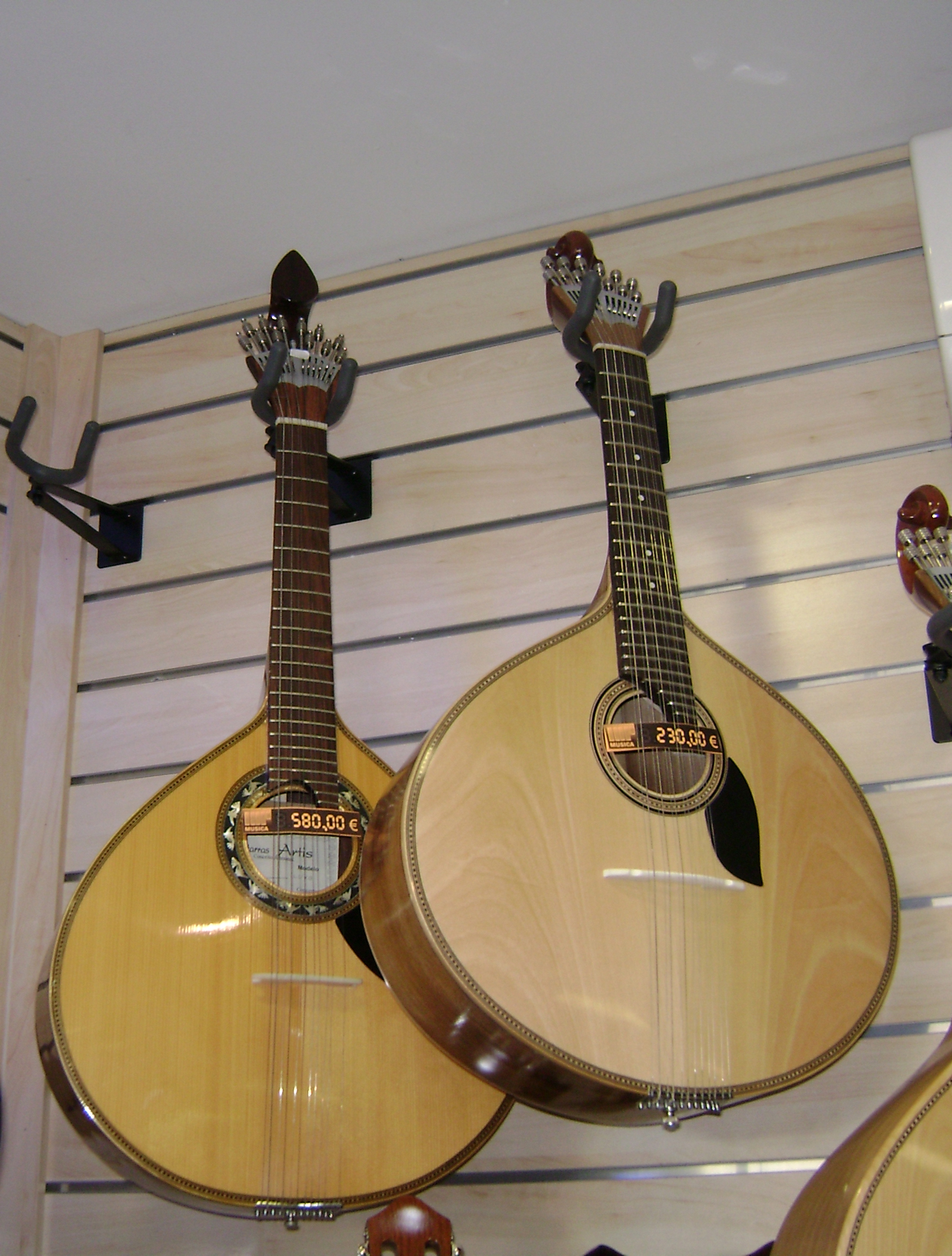 Today I'm working on the chapter of Making Waves which will deal with samba and fado as elements of the Brazilian and Portuguese soul. This means that I haven't much time for thinking about other things than music and this project. So today's post concentrates on them.
To the left is a picture of the Lisbon and Coimbra guitarra portuguesa, with their steel strings and their haunting sound. Below is a video of one of the masters play Canção do Mar.
Saturday, 13 March 2010
Saturday Photo: The Waters of March Bis
 Once upon a time this stream ran down the north side of Mount Royal to pool in Outremont, forming bogs which have since been transformed into Outremont and Saint Viateur parks. Now it runs through concrete pipe for some of its route, but in places it still sees the light of day.
The photo was taken in Mount Royal cemetery where it is allowed to meander a bit. This morning, despite temperatures below freezing, there was no ice on it as it burbled away. More signs of spring.
Friday, 12 March 2010
Blast from the Past: When Every Book Published in the US Was Sold
Next week, we'll be discussing Gwethalyn Graham's Earth and High Heaven at the Atwater Library, and I've been scouting around to see if I can update the information I have about the book. In doing so, I came across a great story from 1944, the year it was published, when Time reported on the amazing success publishing was having.
The story begins: "Asked how he was handling the...buying rush, the manager of Scribner's Manhattan bookshop replied...: "Oh, at 9 o'clock we just open the doors and jump out of the way." It continues: "Almost every published book was sold, and many a title would have sold far more copies if paper had been available to print them. Despite competition of movies, magazines and radio, more U.S. citizens were reading more books than ever before."
Probably most of the 1944 titles have been forgotten, but among the books that flew off the shelves were some very good ones including John Hersey's Bell for Adano, Lillian Smith's story of miscegenation in the South, Strange Fruit (475,000 copies), and "Graham's homely rebuff to Canadian antiSemitism, Earth and High Heaven (125,000 copies)."
Part of the boom, the story muses, is due to gasoline rationing which kept civilians at home and the lack of entertainment and masses of deadtime soldiers faced. I remember my father, WWII vet from the US Army, grumbling about how often he had to "hurry up and wait," while my brother-in-law's father, a British Marine enlisted man who served in Northern Africa and Burma, spoke fondly decades later of paperbacks that fit perfectly in the pocket of fatigues and could be pulled out whenever he had a few minutes free.
It would be interesting to know if paperbacks--or even Kindles--are readily available to the tens of thousands of troops in Iraq and Afghanistan. As Time notes "reading habits acquired by millions...are unlikely to be broken. And the public appetite is certain to be fed and stimulated by mass production and distribution of books on an unprecedented scale. "
The story begins: "Asked how he was handling the...buying rush, the manager of Scribner's Manhattan bookshop replied...: "Oh, at 9 o'clock we just open the doors and jump out of the way." It continues: "Almost every published book was sold, and many a title would have sold far more copies if paper had been available to print them. Despite competition of movies, magazines and radio, more U.S. citizens were reading more books than ever before."
Probably most of the 1944 titles have been forgotten, but among the books that flew off the shelves were some very good ones including John Hersey's Bell for Adano, Lillian Smith's story of miscegenation in the South, Strange Fruit (475,000 copies), and "Graham's homely rebuff to Canadian antiSemitism, Earth and High Heaven (125,000 copies)."
Part of the boom, the story muses, is due to gasoline rationing which kept civilians at home and the lack of entertainment and masses of deadtime soldiers faced. I remember my father, WWII vet from the US Army, grumbling about how often he had to "hurry up and wait," while my brother-in-law's father, a British Marine enlisted man who served in Northern Africa and Burma, spoke fondly decades later of paperbacks that fit perfectly in the pocket of fatigues and could be pulled out whenever he had a few minutes free.
It would be interesting to know if paperbacks--or even Kindles--are readily available to the tens of thousands of troops in Iraq and Afghanistan. As Time notes "reading habits acquired by millions...are unlikely to be broken. And the public appetite is certain to be fed and stimulated by mass production and distribution of books on an unprecedented scale. "
Thursday, 11 March 2010
Old Boys Network? Younger Boys Freedom from Tuition Problems? Lucien Bouchard Bills the Public Sector Lots
It's nice to know that the Bouchard boys, Alexandre and Simon, won't have to worry about paying tuition wherever they're in school (I've tried to track them down, but can't, and that's probably all to the good.) Montreal newspapers report that their father, former Quebec premier Lucien, who called out for massive tuition hikes for Quebec universities a little while ago, has brought in more than $5 million in business for the law firm he's working for, Davies, Ward, Phillips & Vineberg.
First, the electronic newspaper put out by locked-out Journal de Montréal writers, Rue Frontenac, noted that the Université of Québec à Montréal has paid the firm, with Bouchard as the point man, $2.7 million, as it tried to extricate itself from a deal with a developer involved in the excessively expensive new complex in downtown Montreal. Then today Le Devoir says that Montreal's transit authority has budgeted $2.5 million to the firm for the services of Bouchard and his team in the messy acquisition of Métro cars.
I have no idea how many hours Bouchard billed for the work, but he is very likely walking away with more than loose change. Certainly his boys won't have the same problems paying for their studies that a whole lot of others have.
First, the electronic newspaper put out by locked-out Journal de Montréal writers, Rue Frontenac, noted that the Université of Québec à Montréal has paid the firm, with Bouchard as the point man, $2.7 million, as it tried to extricate itself from a deal with a developer involved in the excessively expensive new complex in downtown Montreal. Then today Le Devoir says that Montreal's transit authority has budgeted $2.5 million to the firm for the services of Bouchard and his team in the messy acquisition of Métro cars.
I have no idea how many hours Bouchard billed for the work, but he is very likely walking away with more than loose change. Certainly his boys won't have the same problems paying for their studies that a whole lot of others have.
Wednesday, 10 March 2010
Saving Biodiversity Through Credits to Offset Damage: Good Ideas or Good-looking Scams?
Can't decide if this is good news or bad news. The Ecosystem Marketplace reports that there are 39 projects world wide which are trying to protect biodiversity by "making it possible for real estate developers to offset their damage to nature by paying for the creation or preservation of habitat." Among them are six active projects in Canada, mostly involving habitat banks. Another 25 projects, including one in Canada, are in development.
At first glance, these sound like initiatives that bear encouragement if development is going to allowed in the first place. Certainly the idea of "carbon credit" kind of support safeguarding ecosystems has precedent in such things as cleaning up acid rain. But there's a caveat: the report notes that 80 per cent of the projects are not "transparent" enough for the research team to tell how big the positive impact might be. And experience shows that it's wise to beware when there's a lack of transparency.
In December Philip Gourevitch reported for The New Yorker on one man's effort along these lines. The story "The Monkey and the Fish" tells about how philanthropist Greg Carr is trying to save Gorongosa National Park in Mozambique. Carr has hundreds of thousands of dollars to spend in his efforts, but Gourevitch shows just how tough the job is.
At first glance, these sound like initiatives that bear encouragement if development is going to allowed in the first place. Certainly the idea of "carbon credit" kind of support safeguarding ecosystems has precedent in such things as cleaning up acid rain. But there's a caveat: the report notes that 80 per cent of the projects are not "transparent" enough for the research team to tell how big the positive impact might be. And experience shows that it's wise to beware when there's a lack of transparency.
In December Philip Gourevitch reported for The New Yorker on one man's effort along these lines. The story "The Monkey and the Fish" tells about how philanthropist Greg Carr is trying to save Gorongosa National Park in Mozambique. Carr has hundreds of thousands of dollars to spend in his efforts, but Gourevitch shows just how tough the job is.
Tuesday, 9 March 2010
Righteous Anger, Psychiatry and Movement for Change: Not Prozac but Progressive Action?

Louis Menand has an interesting discussion about psychiatry in the March 1, 2010 New Yorker. At issue is the changing definitions of various mental problems and the lack of clear answers about how to treat them.
He begins with an all-too-common case: you lose your job and you're depressed. At what point does your sadness, inaction, repressed or vented rage and general unhappiness pass beyond what is normal to what should be treated chemically or therapy or both?
Do any of the treatments proposed actually work? If they do, should they be used since some things--like anger over an economic and political system that allow people's lives to be ruined--might be best handled by a whole lot of people, righteously angry and bent on demanding constructive change?
Menand has no ready answers, but the questions are important ones. The only thing that I think is clear is that anger over real problems, like unemployment, should not be channeled into blind reaction, as seems to be the case with the Tea Party Movment and their ilk.
Where's the Left in all this? Not shouting loudly enough for sure.
Cartoon from The New Yorker cartoon bank.
Monday, 8 March 2010
Would You Stand in Line to Vote When Polling Stations Were Being Bombed?
Who believes in democracy? Not some Americans, it seems, if the current wave of right wing wacko rhetoric is any indication (see the various scary articles about the Tea Party etc..) But amazingly somewhere around 60 per cent of Iraqi voters cared enough on Sunday to cast their votes in legislative elections, despite considerable violence aimed at voters. Forty people were killed by bombs and other attacks, but people stood in line and braved the danger nevertheless. The turnout apparently was down from elections in 2005, but that it was as high as it was is heartening.
One reason may be a certain hardness of attitude that comes from living with war for so long: when your number's up, your number's up, in other words. And also the fact that Sunni leaders urged their followers to vote helped turn out voters. They want to shore up their side as Iran and Iraq jockey for power in the region.
Whatever the reason, I admire the courage and commitment of Iraqi voters. Would that people here thought that casting ballots was so important.
One reason may be a certain hardness of attitude that comes from living with war for so long: when your number's up, your number's up, in other words. And also the fact that Sunni leaders urged their followers to vote helped turn out voters. They want to shore up their side as Iran and Iraq jockey for power in the region.
Whatever the reason, I admire the courage and commitment of Iraqi voters. Would that people here thought that casting ballots was so important.
Saturday, 6 March 2010
Saturday Photo: Melting Snow Means Interesting Changes
 The string of lovely late winter days continue, so this morning I went out to take some pictures. The snow family below were made during the last snow about 10 days ago: Dad, Mom and a child who were resplendent with scarves, parsnip noses, and eyes made from rounds of carrots.
As the melting advanced the vegetables disappeared--the squirrels are out!--and yesterday I noticed that the snowchild had disintegrated or been reduced to three snow kittens/balls/babies.
Further along in the park, the snow blocks that made up a snow fort have thinned out to be more window than wall. Very lovely as the rising sun slanted through them.

Friday, 5 March 2010
Good Maple Sugar Weather This Year: Maybe at Least One Agricultural Gamble Will Pay Off
 Spring is here! Yesterday Sophie and her Dad went down to St-Pie, the small town the Bousquets are from, to help out with the sugaring off. The sap has been running for a good ten days now, and syrup production was in full swing.
The sugar bush belongs to one of her uncles, now in his 70s. He was in charge, but he was assisted by relations of all ages. Among them was a grandson, now 16, who has been dreaming of becoming a dairy farmer since he was 6, and who now is trying to learn all he can about maple syrup so he can carry on the tradition.
Sugaring off requires days with temperatures above freezing but nights when it freezes well. The forecast for the next few days calls for just that kind of weather so perhaps it will be a good year. Tant mieux, particularly because a couple of years ago Sophie's uncle only had one day of good flow since the temperatures jumped from really frigid to balmy almost overnight.
Ah farming! You've got to be a gambler to get involved, and all the rest of us are endebted to you too.
Thursday, 4 March 2010
Better Times Mean Better Times for Recyclers, Too: Demand Is Higher Due to Economic Upturn
Last year was a disaster economically for a lot of people, among them those who run recycling services and companies. The bottom dropped out of the market for recycled waste in the Autumn 2008, with the price falling from $115 to $35 a ton. Prices remained low all last year, but, Louis-Gilles Francoeur reported in Wednesday's Le Devoir, things are looking up.
According to Ginette Bureau of Recyc-Québec , the price is now up to $85 a ton, which is enough to make the difference between survival or failure. During the several long months when recyclable waste piled up, none was thrown away by the recycling companies, and none of them went broke. The Quebec government helped out with finding places to store the collected waste, and some companies were able re-negociate contracts with municipalities in order to cut costs. Now the province is providing funds to upgrade sorting facilities, with the hope that better sorting will produce more valuable waste and better prices.
That's all to the good, but I'm wondering if there has been an actual decline in the amount of post-consumer waste in recent months. If people buy less, they have fewer cardboard boxes etc. And certainly there has been a sea change around here when it comes to plastic shopping bags. The provincial agency which sells beer, wine and spirits hasn't had them for more than a year, and several of the supermarket chains are charging 5 cents a bag.
Reminds me: I must do a really big grocery shopping today, so I'll have to dig out all my canvas bags. Last time I didn't have enough.
According to Ginette Bureau of Recyc-Québec , the price is now up to $85 a ton, which is enough to make the difference between survival or failure. During the several long months when recyclable waste piled up, none was thrown away by the recycling companies, and none of them went broke. The Quebec government helped out with finding places to store the collected waste, and some companies were able re-negociate contracts with municipalities in order to cut costs. Now the province is providing funds to upgrade sorting facilities, with the hope that better sorting will produce more valuable waste and better prices.
That's all to the good, but I'm wondering if there has been an actual decline in the amount of post-consumer waste in recent months. If people buy less, they have fewer cardboard boxes etc. And certainly there has been a sea change around here when it comes to plastic shopping bags. The provincial agency which sells beer, wine and spirits hasn't had them for more than a year, and several of the supermarket chains are charging 5 cents a bag.
Reminds me: I must do a really big grocery shopping today, so I'll have to dig out all my canvas bags. Last time I didn't have enough.
Wednesday, 3 March 2010
The Waters of March: Views from Quebec and Brazil
 The sun is out today and the snow is melting in our version of "The Waters of March." The first time I heard the excellent song by Tom Jobim, the rushing streams of spring were what I thought of, but now I realize that the waters referred to are really the fall rains after the Brazilian summer.
 Peut importe, as they say around here. It's a great song and very appropriate. This version by Ellis Regina and Jobim is a classic with English subtitles: sorry that it skips a little.
Tuesday, 2 March 2010
Garapa: Hunger in Brazil, and Elsewhere
Hard at work on Making Waves: The Portuguese Adventure which I'm supposed to get Simon Dardick at Véhicule Press by the end of the month. Not much time, therefore, for a post. But here's an interview with the producer of Garapa, a film about poverty in Brazil I saw last fall at Montreal's World Film Festival. A gripping documentary, that seems more and more important the further I travel into writing about Brazil.
Monday, 1 March 2010
Montreal Metro Car Saga Underscores Importance of Playing by the Rules, in the First Place
Today is the last day for companies and consortiums to submit "letters of interest" in building Métro cars for Montreal. It seems likely that the Spanish group CAF will answer the call, as will, evidently the Bombardier-Alstom consortium that a whole lot of people had the job in the bag a couple of years ago. The Chinese company Zhuzhou Electric Locomotive may do so also, even if they want to construct cars with steel wheels instead of the pneumatic ones which have been Montreal's pride for four decades.
All this activity will probably put back the acquisition of more than 400 new cars, rolling stock which is badly needed both to replace aging cars and to respond to increased Métro use. That's bad news.
But what's even worse news is what set the scene for this delay. The Quebec government, which will pick up some 75 per cent of the tab, and Bombardier, the Quebec industrial giant with a special expertise in rail construction, negotiated a deal in 2006 without a public call for bids. But Alstom successfully challenged in court the way the contract was awarded. This meant that negotiations were re-opened with the result that Alstom got a cut of the deal. Now other international companies see no reason why they can't bid too--and are ready to challenge exclusion in the courts.
Moral: don't try to short cut established bidding procedures.
Memo to Premier Jean Charest: is this another example of fall out from playing footsie with your friends?
All this activity will probably put back the acquisition of more than 400 new cars, rolling stock which is badly needed both to replace aging cars and to respond to increased Métro use. That's bad news.
But what's even worse news is what set the scene for this delay. The Quebec government, which will pick up some 75 per cent of the tab, and Bombardier, the Quebec industrial giant with a special expertise in rail construction, negotiated a deal in 2006 without a public call for bids. But Alstom successfully challenged in court the way the contract was awarded. This meant that negotiations were re-opened with the result that Alstom got a cut of the deal. Now other international companies see no reason why they can't bid too--and are ready to challenge exclusion in the courts.
Moral: don't try to short cut established bidding procedures.
Memo to Premier Jean Charest: is this another example of fall out from playing footsie with your friends?
Saturday, 27 February 2010
Saturday Photo: Sticky Snow Is the Up Side of Slushy Days
 We've had steady precipitation for the last few days--some rain, some snow with temperatures considerably warmer than usual for this time of year.
The result has been slushy sidewalks, but also snow that sticks to branches. The effect is quite lovely, if you can stop in your jumping across the slush patches to enjoy the sight.
Since most schools in the Montreal area are off for the semaine de rélâche next week, kids are likely to have a lot of fun making snowpeople and otherwise frolicking. In the mountains less rain and more snow fell, so conditions should be even better for winter sports.
Friday, 26 February 2010
Lucien Bouchard and Friends Call for the End of the Quiet Revolution
Lise Payette, a Révolution tranquille warrior, has a great column in Le Devoir today where she takes to task a number of Quebec notables who are trying to undue more than 40 years of progress. A study group, hand-picked by Premier Jean Charest who one must never forget was once leader of the Federal Conservative party, has just come down with a list of things that ought to be done to "improve" the economy. These include the usual mantra of "balance the budget, cut spending, levy user fees." Tuition fees for higher education are right near the top of this list, of course.
Perhaps this is par for the course, but former Parti Québécois leader Lucien Bouchard Lucien has gotten into the fray too, and Payette takes particular umbrage at his recent cries for tuition increases. He and his cronies have "lost sight of the fact that what we wanted, as a society wishing to leave ignorance behind, was to make university studies accessible for the poorest in our society. But now that the door is finally open, we are being asked to shut it again."
She goes on: "For someone like me, who was deprived of a university education because of poverty, " this is the end of a dream. (My translation.)
Bouchard's sorties probably shouldn't be a surprise: remember he was a Conservative MP when he crossed the floor to become a charter member of the Bloc Québécois in 1990. And that his kids, who are slightly younger than mine and who once lived in the neighborhood, went to private elementary and high schools. In fact, when he retired from politics one of the reasons given was that he had to make some money so they could go to university in the U.S.
Figures, doesn't it?
Perhaps this is par for the course, but former Parti Québécois leader Lucien Bouchard Lucien has gotten into the fray too, and Payette takes particular umbrage at his recent cries for tuition increases. He and his cronies have "lost sight of the fact that what we wanted, as a society wishing to leave ignorance behind, was to make university studies accessible for the poorest in our society. But now that the door is finally open, we are being asked to shut it again."
She goes on: "For someone like me, who was deprived of a university education because of poverty, " this is the end of a dream. (My translation.)
Bouchard's sorties probably shouldn't be a surprise: remember he was a Conservative MP when he crossed the floor to become a charter member of the Bloc Québécois in 1990. And that his kids, who are slightly younger than mine and who once lived in the neighborhood, went to private elementary and high schools. In fact, when he retired from politics one of the reasons given was that he had to make some money so they could go to university in the U.S.
Figures, doesn't it?
Thursday, 25 February 2010
Just Beat Them: Norwegian Down Hill Skiiers Show Winning Form
The Canadians beat the Russians last night, which makes everyone around here pleased. Can't say that there has been much Olympic-watching chez nous, but I stumbled upon this, which makes a proper statement about the kind of craziness necessary to hurtle down hills on long pieces of metal with sharpened edges.
Also liked this take from Salon about why people like the Olympics: "We don’t just watch the Olympics -- we gossip about the Olympians."
Wednesday, 24 February 2010
May-December Relationships: It's Better to Pick on People Your Own Age
 Pierre Trudeau and Margaret Sinclair
Bill Clinton and Monica Lewinski
Frank Sinatra and Mia Farrow
André Previn and Anna-Sophie Mutter
Woody Allen and Soon-Yi Previn
J.D. Salinger and Joyce Maynard
What do these couples have in common? In each case the man was least 25 years older than the woman.
The Trudeau-Sinclair pairing probably turned out better than most relationships between men and women young enough to be their daughters. At least Maggie and Pierre had three children together, and remained on relatively good terms until his death although they separated after six years. But the others....
The line of thought arises because a friend to whom I hadn't spoken to for a while told me yesterday that her lover/boy friend has dropped her for one of his students. He's 55, the girl's 23, and when my friend protested that what he was doing was unfair for all sorts of reasons, he said: "But think of me. I may never get a chance like this again."
And as for the girl involved: I've never understood the appeal of much older men. When it comes to men my own age, I've noticed that nobody born much before World War II got the message that women are just as smart as men are. When it comes to younger men like the afore-mentioned cad, he may think she's smart, but it's not her mind he's after.
Photo: Pierre and Margaret just after their marriage on March 4, 1971 in Vancouver. Pierre Caplan for The Globe and Mail.
Tuesday, 23 February 2010
Singing the Blues about Encroachments on Mount Royal: The Convent Project Seems Headed for Reality
Update, Wednesday, February 24.
Actually, the council didn't approve the plan because 10 members of the party in power weren't there to vote. They'll try again next time, but it shows that when you're in the habit of power, you frequentlyl forget about the basics, in all sense of the term.
Tuesday's post: A bit ironically, as I trudged up the Université de Montréal's music school yesterday, the Montreal City Council was charging toward turning the building just below into 130 luxury condos. Both the music school and the old Mont-Jésus-Marie convent have marvelous views north and east of Mount Royal, and indeed the former butts right up to one of the few places still rather wild on the island.
The university bought the convent a few years ago for $15 million, but either discovered it would be too expensive to convert to academic space(seems there might be asbestos in it) or, through some sleight of hand among friends, was willing to make a little money by easing the way for developers. As I paused at the top of the hill, I could see why some might think the old convent would be perfect for luxury development. There are few finer views around, and what is more the Edouard Montpetit Metro station is just steps away.
Monday the city council to all intents and purposes approved the much-criticized plan. Formal approval by the university is the last step, it seems, and that is a given since yesterday the university announced the appointment of Guy Breton, a proponent of the plan, as the new rector.
There have been rumours that the university would also like to get rid of the music school. It houses the Salle Claude-Champagne, the concert hall with the best acoustics in the city, and the center of a vibrant music scene. Indeed the reason why I was headed there was to get tickets for Le Baron Tzigane by Johann Strauss fils: the hall will be filled for each of four performances. To turn the building over to developers would be very sad, as well as another attack on the mountain.
Actually, the council didn't approve the plan because 10 members of the party in power weren't there to vote. They'll try again next time, but it shows that when you're in the habit of power, you frequentlyl forget about the basics, in all sense of the term.
Tuesday's post: A bit ironically, as I trudged up the Université de Montréal's music school yesterday, the Montreal City Council was charging toward turning the building just below into 130 luxury condos. Both the music school and the old Mont-Jésus-Marie convent have marvelous views north and east of Mount Royal, and indeed the former butts right up to one of the few places still rather wild on the island.
The university bought the convent a few years ago for $15 million, but either discovered it would be too expensive to convert to academic space(seems there might be asbestos in it) or, through some sleight of hand among friends, was willing to make a little money by easing the way for developers. As I paused at the top of the hill, I could see why some might think the old convent would be perfect for luxury development. There are few finer views around, and what is more the Edouard Montpetit Metro station is just steps away.
Monday the city council to all intents and purposes approved the much-criticized plan. Formal approval by the university is the last step, it seems, and that is a given since yesterday the university announced the appointment of Guy Breton, a proponent of the plan, as the new rector.
There have been rumours that the university would also like to get rid of the music school. It houses the Salle Claude-Champagne, the concert hall with the best acoustics in the city, and the center of a vibrant music scene. Indeed the reason why I was headed there was to get tickets for Le Baron Tzigane by Johann Strauss fils: the hall will be filled for each of four performances. To turn the building over to developers would be very sad, as well as another attack on the mountain.
Monday, 22 February 2010
More High Speed Trains in the Future? Sure Hope So, But Don't Hold Your Breath (Say Is That A Way to Cut Down on CO2?)
So maybe there will, one day in the sweet by and by, a high speed train from Montreal to New York and/or Boston. Le Devoir reports today that one of the things that was agreed on at the meeting of Canadian premiers and US governors was the establishment of a group to study the possiblity.
Of course, there have been groups studying a high speed train in the Windsor-Quebec corridor for a long time: the Harper government trotted out the idea couple of years ago, but nothing much has happened since.
At the same time, Le Devoir reports that the permafrost limit has retreated 130 km north in Quebec since 1957. Is there a connection? Is it maybe time to get started on providing alternate, long-distance transportation. From a passenger's point of view, anyone who has traveled on the high speed trains in Europe would say YESSS!
Of course, there have been groups studying a high speed train in the Windsor-Quebec corridor for a long time: the Harper government trotted out the idea couple of years ago, but nothing much has happened since.
At the same time, Le Devoir reports that the permafrost limit has retreated 130 km north in Quebec since 1957. Is there a connection? Is it maybe time to get started on providing alternate, long-distance transportation. From a passenger's point of view, anyone who has traveled on the high speed trains in Europe would say YESSS!
Saturday, 20 February 2010
Saturday Photo: Maintenance Needed to Preserve Beauty

I noticed this week that the two main sections of the ornate, wrought iron gates leading into Mount Royal Cemetery have been removed. Originally installed in 1862, they are being restored and will be back by the end of spring, a large sign announces.
Lee says that the side gates were also taken down in the fall, but I didn't notice that. They're back though, so visitors can still see some of the magical iron work.
The removal underscores the need to safeguard what we have.
 The last time we were at Chartres Cathedral in France, the peace was disturbed for a good part of the afteroon by the diesel engine workers were using to power the equipment necessary for the restoration work they were doing around the western rose window. But not to do the work would be worse. Like the eternal vigilance which is essential for democracy, so the grubby work of cleaning and repairing is necessary to preserve beauty and our heritage.
Photos: A detail from the gates, and what they looked like open on one lovely day early last fall.
Friday, 19 February 2010
University Budget Woes Mean Less Protest over Ideas, More Strikes over Funding: The View from UC Berkeley and UdeMontréal
Part time faculty at the Université de Montréal are in heated bargaining for a new contract, and have struck twice for half days in the last week. My Portuguese prof Alice Taveres Mascarhenas explained to us what she thinks is at stake, and I must say I find it not unreasonable.
In part to save money, the UdM relies heavily on part-timers, paying them considerably less than regular staffers. According to the contract which expired last summer, they're paid $166 an hour, which works out to about $6,500 for a session-long, three credit course: if they teach two courses both fall and winter sessions, they'll get something in the neighborhood of $26,000. The scale for profs, however, begins at somewhere near $60,000 with many more benefits and, frequently, a lighter teaching load.
It was with this in the background that I stumbled upon a clip from a documentary on one of the formative events of my youth: the Free Speech Movement at the University of California at Berkeley. One of the striking things about the video is the way that participants recall just how much the debate was about ideas. Problems continue at Berkeley, but now they seem to be even more money-related than the ones at the UdM. That freedom of expression and inquiry has taken a back seat to budget worries is a sad feature of societies who don't recognize that taxes are what we pay for civilized society.
In part to save money, the UdM relies heavily on part-timers, paying them considerably less than regular staffers. According to the contract which expired last summer, they're paid $166 an hour, which works out to about $6,500 for a session-long, three credit course: if they teach two courses both fall and winter sessions, they'll get something in the neighborhood of $26,000. The scale for profs, however, begins at somewhere near $60,000 with many more benefits and, frequently, a lighter teaching load.
It was with this in the background that I stumbled upon a clip from a documentary on one of the formative events of my youth: the Free Speech Movement at the University of California at Berkeley. One of the striking things about the video is the way that participants recall just how much the debate was about ideas. Problems continue at Berkeley, but now they seem to be even more money-related than the ones at the UdM. That freedom of expression and inquiry has taken a back seat to budget worries is a sad feature of societies who don't recognize that taxes are what we pay for civilized society.
Thursday, 18 February 2010
Kamouraska: A Tragic Love Story for the Week after Valentine's Day
 This week is book club week, and I've had great fun talking about Ian McEwan's Amsterdam (Pierrefonds, Lloyd Jones's Mr. Pip (Atwater) and Anne Hébert's Kamouraska (Outremont). Tonight Champagne by Monique Proulx is on the agenda in Kirkland.
The hit so far is Kamouraska, a story of love and passion in the Quebec of the 1830s. Claude Jutras made a marvelous film of it with Geneviève Bujold, which apparently has been remastered for DVD but which hasn't been yet been re-released. It is bound to be something worth seeing again.
The picture is from the film: I scanned it from the jacket of the paperback I bought shortly after it was published in 1970. The fact that I couldn't find a more interesting still photo on the Internet, while the only video clip on YouTube is a 39 second one, reflects on the way someone (Quebecor perhaps which apparently is behind the DVD release) is controlling the film. It should be made available more widely.
Wednesday, 17 February 2010
How about Some Left Wing Populism to Fight the Tea Party--and Stephen Harper Too.
The New York Times had a disturbing story on Tuesday about the rise of Tea Party radicals in what the French would call l'Amérique profonde. It focuses on groups forming in Eastern Washington state and Idaho--Sarah Palin's original stomping grounds--where concern over real problems like unemployment is driving people to a kind of anarchic, mystic Right.
The story is scary for two reasons. The first is that it seems that none of the Tea Partiers see any solutions for their problems on the left. The Obama Democrats are viewed as the establishment that got the US into the current economic mess, and all government is considered suspect. All of the interesting suggestions that liberals like Paul Krugman have put foward are discounted, but few in the Democratic party are raising their voices to champion them, anyway. This bodes very ill for the country.
The second is the tone of the story. It ends with this nice, retired woman talking about stock piling food and ammunition for a possible civil war. But the story does not succeed in giving any objective measure of the size of this movement. To be sure the Tea Party did well in the Massachusetts senatorial race, but was that because the Democrats didn't work hard enough, or because they didn't offer a clear enough, left wing solution to problems? And how much of this is disguised racism and mistrust of financiers who are all supposed to be Jewish? Is the Tea Party tapping into the Right Wing fantacism that has long been rampant in places like Eastern Washington? (And in the interest of full disclosure, I must admit my extended family living in that part of the world includes several people who I'm sure have never been convinced that the Protocols of Zion are a fraud.)
If anything, it seems to me time for people who care about civil society in the US to stand up and organize themselves, by offering a left wing brand of populism. There were elements of that in the campaign Obama so successfully ran for the presidency. Why abandon the methods and the causes now?
And, memo to progressives in Canada: don't go right to fight Stephen Harper. Stand up and be counted for what's great about this country, which is basically small L liberal and social democratic values.
The story is scary for two reasons. The first is that it seems that none of the Tea Partiers see any solutions for their problems on the left. The Obama Democrats are viewed as the establishment that got the US into the current economic mess, and all government is considered suspect. All of the interesting suggestions that liberals like Paul Krugman have put foward are discounted, but few in the Democratic party are raising their voices to champion them, anyway. This bodes very ill for the country.
The second is the tone of the story. It ends with this nice, retired woman talking about stock piling food and ammunition for a possible civil war. But the story does not succeed in giving any objective measure of the size of this movement. To be sure the Tea Party did well in the Massachusetts senatorial race, but was that because the Democrats didn't work hard enough, or because they didn't offer a clear enough, left wing solution to problems? And how much of this is disguised racism and mistrust of financiers who are all supposed to be Jewish? Is the Tea Party tapping into the Right Wing fantacism that has long been rampant in places like Eastern Washington? (And in the interest of full disclosure, I must admit my extended family living in that part of the world includes several people who I'm sure have never been convinced that the Protocols of Zion are a fraud.)
If anything, it seems to me time for people who care about civil society in the US to stand up and organize themselves, by offering a left wing brand of populism. There were elements of that in the campaign Obama so successfully ran for the presidency. Why abandon the methods and the causes now?
And, memo to progressives in Canada: don't go right to fight Stephen Harper. Stand up and be counted for what's great about this country, which is basically small L liberal and social democratic values.
Tuesday, 16 February 2010
A Few More Cars, But Fewer Car Commuters: New Transit Montreal Area Transit Study
Some good news in this world of woe: public transportion use in Montreal increased by 15 per cent over the last five years, trips by foot and bike went up by 11 per cent, and for the first time in 40 years car commuting actually declined, by 1 per cent. In fact, 25 per cent of commuter trips are done by public transport now.
Monday transit and provincial government officials announced the result of a survey of 66,000 households. Part of an ongoing survey of transportation practices undertaken every five years since 1970, the most recent version was done in 2008. Among the highest increases in public transport use came in Laval and Longueuil, the suburban cities north and south of Montreal island. Three new Metro stations were opened in Laval 2007 with striking results: a 30 per cent jump in bus, métro and train use while automobile trips by Laval residents actually dropped by 1 per cent.
Bravo, I say. There are some caveats to note, though. One is that there are 10 percent more cars that before, even if people aren't using cars as much. The other is that all this transit use has meant more crowded buses, Metros and trains. What must be done now make sure the rolling stock necessary to serve the demand is bought and maintained, so that people don't switch back to using those cars they've got parked outside.
Monday transit and provincial government officials announced the result of a survey of 66,000 households. Part of an ongoing survey of transportation practices undertaken every five years since 1970, the most recent version was done in 2008. Among the highest increases in public transport use came in Laval and Longueuil, the suburban cities north and south of Montreal island. Three new Metro stations were opened in Laval 2007 with striking results: a 30 per cent jump in bus, métro and train use while automobile trips by Laval residents actually dropped by 1 per cent.
Bravo, I say. There are some caveats to note, though. One is that there are 10 percent more cars that before, even if people aren't using cars as much. The other is that all this transit use has meant more crowded buses, Metros and trains. What must be done now make sure the rolling stock necessary to serve the demand is bought and maintained, so that people don't switch back to using those cars they've got parked outside.
The Serious Music Files: Find Us "New" Music, Give It the Support It Merits, and We'll Listen
t's always fun when somebody comes up to you and says he or she enjoys your blog. That happened on Saturday at a concert the Arion Baroque Orchestra gave of Henry Purcell's "Incidental Musicke." Apparently one young couple--she, a violinist, he, a harpsichordist--follow what I write. I'm not sure how they came across it--probably through Elin--but as I thought about them and the difficult career they have chosen, I found myself thinking of Alex Ross's column last week in The New Yorker.
In it, he talks about the declining audiences for classical music documented in a report done recently by the Audience Demographic Research Review. Audiences for classical music are going to shrink, he says. "You can see clearly how various generations experienced a bump in participation as they got older. The so-called Generation X, however, has yet to exhibit an upward spike as it moves into middle age."
What is the solution? He mentions Le Poisson rouge, a club in New York which now features classical music, the way jazz clubs feature jazz, as a way to broaden the audience. What he doesn't mention is that jazz also is running into listenership problems or that what a musician takes home from club performances is nothing like the income he or she would get regular gigs with orchestras. But when you're paying down student loans undertaken for your musical education and/or trying to finance an instrument of the calibre that serious music requires, you need serious income or you're going to have to change occupation pretty quickly.
The "growth" areas in serious music over the last 20 years have been ones where musicians have led listeners into new areas. Early music is one of them. What is needed to expand audiences now is the same kind of support which encouraged Arion (CBC-recorded concerts, grants, teaching gigs to supplement income from performances) as well as a spirit of adventure on the part of musicians themselves. Find us "new" music to listen to, from the past, the present or the future, or give us "old" music, re-imagined the way Arion treated Purcell's greatest hits on the weekend, or Les Voix humaines did in their recent CD.
In it, he talks about the declining audiences for classical music documented in a report done recently by the Audience Demographic Research Review. Audiences for classical music are going to shrink, he says. "You can see clearly how various generations experienced a bump in participation as they got older. The so-called Generation X, however, has yet to exhibit an upward spike as it moves into middle age."
What is the solution? He mentions Le Poisson rouge, a club in New York which now features classical music, the way jazz clubs feature jazz, as a way to broaden the audience. What he doesn't mention is that jazz also is running into listenership problems or that what a musician takes home from club performances is nothing like the income he or she would get regular gigs with orchestras. But when you're paying down student loans undertaken for your musical education and/or trying to finance an instrument of the calibre that serious music requires, you need serious income or you're going to have to change occupation pretty quickly.
The "growth" areas in serious music over the last 20 years have been ones where musicians have led listeners into new areas. Early music is one of them. What is needed to expand audiences now is the same kind of support which encouraged Arion (CBC-recorded concerts, grants, teaching gigs to supplement income from performances) as well as a spirit of adventure on the part of musicians themselves. Find us "new" music to listen to, from the past, the present or the future, or give us "old" music, re-imagined the way Arion treated Purcell's greatest hits on the weekend, or Les Voix humaines did in their recent CD.
Saturday, 13 February 2010
Saturday Photo: Heart-Shaped Leaves and Valentine Wishes
 I posted about these lovely heart-shaped leaves last fall, and now that Valentine's Day is just a few hours away, I thought I'd share greetings with you which feature them.
Friday, 12 February 2010
Deep Integration Files: Some Exemptions for Education, Culture and Health in Cross-Border Bidding
Hydro Quebec, and health, education and cultural industries will be protected from US companies attempting to force their way into Quebec under the draft accord, Le Devoir reported this morning. Presumably, similar exemptions have been negotiated for other provinces.
This is some comfort to Canadian observers who have been fighting against the idea of "deep integration," that is the near-merging of the the two countries for trade purposes. The changes this could mean for what we have been accustomed to think of Canadian values has been clear. Already under existing trade agreements, Dow has been able to contest Quebec's ban on pesticides. The case, begun in 2008, is apparently before an arbitration panel, but the amount of trouble, money and energy needed to defend a progressive environmental policy is enoughtto make other governments think twice before embarking on similar plans--and for Quebec to waffle about standards under the pressure.
To be followed closely.
This is some comfort to Canadian observers who have been fighting against the idea of "deep integration," that is the near-merging of the the two countries for trade purposes. The changes this could mean for what we have been accustomed to think of Canadian values has been clear. Already under existing trade agreements, Dow has been able to contest Quebec's ban on pesticides. The case, begun in 2008, is apparently before an arbitration panel, but the amount of trouble, money and energy needed to defend a progressive environmental policy is enoughtto make other governments think twice before embarking on similar plans--and for Quebec to waffle about standards under the pressure.
To be followed closely.
Thursday, 11 February 2010
Cheap Housing in Cities and Small Communities: Home for Artists, It Seems
Want to know just where Canada's artists live? A new study by Hill Strategies for a clutch of governmental culture organizations gives a fascinating look at the country's artistic geography.
It's one of the Rorschach documents where everyone sees what he or she wants to see. Le Devoir had the story on Wednesday which focused on the number of artists in Montreal, especially in the Plateau District, and the Globe and Mail has followed today with a story that emphasizes where artists live in Toronto. A couple of weeks ago a similar report on artists in small communities prompted a story on the CBC which reported that West Bolton in Quebec, Cape Dorset and Denman and Horny Islands in BC are hotbeds of talent. The data used were from the 2006 census compared with Canada Post postal code maps.
One thing is clear: artists don't make much money, compared to the general population, and cheap housing appears to be a determining factor for where they settle. That works out to concentrations in aging or formerly rundown neighborhoods in cities and small clusters in places outside cities where housing is priced low.
But see for yourself: here are the links to maps of artists in cities , and to the artists in small communities summary. I see that I live in one of the greater concentrations--H2V--but that's really no surprise! There are pockets of expensive housing here, but also a lot of artists who moved in when the housing was cheap and who have remained.
It's one of the Rorschach documents where everyone sees what he or she wants to see. Le Devoir had the story on Wednesday which focused on the number of artists in Montreal, especially in the Plateau District, and the Globe and Mail has followed today with a story that emphasizes where artists live in Toronto. A couple of weeks ago a similar report on artists in small communities prompted a story on the CBC which reported that West Bolton in Quebec, Cape Dorset and Denman and Horny Islands in BC are hotbeds of talent. The data used were from the 2006 census compared with Canada Post postal code maps.
One thing is clear: artists don't make much money, compared to the general population, and cheap housing appears to be a determining factor for where they settle. That works out to concentrations in aging or formerly rundown neighborhoods in cities and small clusters in places outside cities where housing is priced low.
But see for yourself: here are the links to maps of artists in cities , and to the artists in small communities summary. I see that I live in one of the greater concentrations--H2V--but that's really no surprise! There are pockets of expensive housing here, but also a lot of artists who moved in when the housing was cheap and who have remained.
Wednesday, 10 February 2010
Some Old Fashioned, Left Wing, Raging-Grannie-Inspired Agit Prop: Coke Is the Drink of the Death Squads!
Does the heart good to see that the Power of Song lives on.
Tuesday, 9 February 2010
Interesting, Thought-Provoking Art from Nikol Drouin, the Voyeuse
 My friend Nikol Drouin will open an exhibit of her work next week at a galley on St. Lawrence. I had the opportunity to see a sample of it a few months ago and was bowled over.
As she explains on her website:
"This series of images began in December of 2007 when a friend lent me his brand new, professional-quality digital camera . My first experience with the camera produced a series of images representing full-figured women inspired by the works of Renoir and Degas at the Musée d'Orsay in Paris as well as a fascinating visit to Pigalle's Musée de l'érotisme. Hence, the "Elle" series began, addressing modern-day expectations with regards to female body image, eroticism and identity. "
That the nudes she presents are not perfect is all the more provocative, since bodies age and suffer but remain passionate. Like the photo of Chico Buarque I posted recently, beauty should be courageous enough to contemplate the passage of time and fortune.
A must see:
Nikol Drouin
Voyeuse
17-24 February 2010,
Vernissage, 5-8 p.m. Thursday, February 18
la galerie-espace
4544, boulevard St. Laurent
Montréal
Monday, 8 February 2010
Walla Walla, Wine and Walking: Thanks, Mrs. Long

 My mother's best friend who is now well into her 90s just sent me a copy of Sunset Magazine with a story about Walla Walla, Wa.
Mrs. Long--and all these years later I can't bring myself to call her anything but that--frequently subscribed to Sunset and she always shared with my mother. My father grumbled that each time she came over with a pile of the magazines, he knew he was in for work, because my mother always was inspired by some article to undertake a new project.
Walla Walla was my Dad's home town, and where my mother moved when she was about 18. My sister and I were born there, but the family took off for California in the 1950s, because the city of about 25,000 seemed to hold no future. How amused my parents would be that Sunset rates it now as one of the 20 Best (Small) Towns.
The region's wine production has made Walla Walla a mecca for those who like fine things, and the way it has somehow avoided becoming another sprawling center is laudable. The last time I was there--nearly three years ago--I was able to walk around it easily in an hour or so down tree-lined streets. It appears to be an example of a walkable city planned in the days before massive dependence on the automobile, that still shows its pedigree. And now with wine bars and good restaurants!
Photos: Grapes from Amanda Ewoniuk's My Walla Walla, and street scene from Sunset.
Saturday, 6 February 2010
Saturday Photo: Dancing Trees from São Paulo as Carnaval Begins
 This picture was taken on a hazy day in Jardim da Luz, one of the oldest botanical gardens in the Western Hemisphere in the heart of São Paulo Brazil. Well, actually it isn't a botanical garden any more, but a lovely center city park that had been allowed to decline for a several decades. When I was there in 2005, it was considerably more respectable with the Pinocateca art gallery flourishing and the nearby train station Estação da Luz being refurbished as a commuter train-Metrô hub.
That work is finished, and I imagine there will be dancing in the streets this weekend as Carnaval begins in Brazil. The samba schools are unlikely to be any more lovely than this chorus line of trees, though.
Friday, 5 February 2010
A Blast from the Past: Pixinguinha and Carinhosa
Busy day--wrote three pages in Portuguese believe it or not!--so not much time for blogging. How about this, though: Pixinguinha and his group Os Oito Batutas hit Paris even before North American jazz did in the 1920s.
Thursday, 4 February 2010
Good Short Stories: Three Boxes of First Collections and One Volume Whose Editor I Disagree with
Another box of books arrived today! That makes three of them, all containing short story collections up for the Danuta Gleed Award which is administered by the Writers' Union of Canada. Last December I agreed to be one of the three judges for this year's competition (the other two are Ivan E. Coyote and David Bezmozgi) and the books began arriving shortly thereafter. Since the competition closed February 1, I imagine that this box will be the last.
Because of my own projects, I haven't had a chance to start reading the submissions. Indeed, I probably won't get around to it until late March when the deadline for Making Waves comes up. But one of the carrots I am holding out to myself as I struggle with the project is the prospect of spending a couple of weeks doing nothing but reading short stories. What a pleasure that will be!
I'm afraid I can't say the same for the Best American Short Stories of 2009, edited by Alice Sebald. It is the one book I hope that someone gives me for Christmas, and usually I ration the stories out, one a night, for the post-holiday period. But this time I found myself quite unengaged in most of them: too much information and not enough heart, I think. There is no accounting for taste, which is why it's good to make sure that prize juries are rotated frequently.
Because of my own projects, I haven't had a chance to start reading the submissions. Indeed, I probably won't get around to it until late March when the deadline for Making Waves comes up. But one of the carrots I am holding out to myself as I struggle with the project is the prospect of spending a couple of weeks doing nothing but reading short stories. What a pleasure that will be!
I'm afraid I can't say the same for the Best American Short Stories of 2009, edited by Alice Sebald. It is the one book I hope that someone gives me for Christmas, and usually I ration the stories out, one a night, for the post-holiday period. But this time I found myself quite unengaged in most of them: too much information and not enough heart, I think. There is no accounting for taste, which is why it's good to make sure that prize juries are rotated frequently.
Wednesday, 3 February 2010
Quebec, California and Cars: Emission Standards and the Real Way to Protect the Environment
Federal Environment Minister Jim Prentice put his foot in it this week when he criticized Quebec's new auto emission standards as being an “absolutely counter-productive and utterly pointless” way to cut greenhouse-gas emissions that will supposedly put Canada at a competitive disadvantage in the North American marketplace. "The(y) ensure consumers will basically have to leave that province to buy vehicles, to avoid levies of up to $5,000, because 75 per cent of the latest car and truck models don't conform to the new rules," he said
This is nonsense, of course. The Quebec regulations say that between now and 2016 the province will require light vehicles sold in the province to progressively reduce greenhouse gas emissions until on average they produce no more than 127 grams of greenhouse gas per kilometre. The emission caps apply to a manufacturer's total vehicle fleet, which means companies that manage to come under the limit can either bank their credits, or sell them to others. And, as a spokesman for Quebec Environment Minister Line Beauchamp, pointed out, to meet the targets, all manufacturers have to do is sell more small vehicles.
Quebec and opposition politicians were quick to note, too, that Quebec is going along a path already pioneered by California, which has more vehicles than Canada as a whole anyway.
But what is forgotten in all this is that Canada's vehicles, on average, already do better when it comes to fuel efficiency than what's proposed for California. A study done in 2008 showed that automobiles in Canada had an average fuel efficiency of 30 miles per US gallon (mpg), compared with an average of 25 mpg in the US and 23 mpg in California. But according to a voluntary agreement worked out by the Paul Martin government and the auto industry, the average was supposed to drop to 34 mpg by 2010, while the much-acclaimed California norms would only hit 33 mpg in 2016.
While fuel efficiency and cutting back on greenhouse gas emissions are not the same thing, they are linked. So what we have here is a lot of smoke (coming from car exhausts?) and mirrors (hooked to cars?) obscuring two points:
1) The current Stephen Harper government doesn't care about the enviroment, but does care about the petroleum industry. Their tactic is to attack with half truths to divert attention from what they're doing, which is moving away from any committment to environmental reform
2) Selling fewer motor vehicles, particularly fewer trucks and SUVs, will change the balance enormously. This means better public transport and more walkable, bikeable cities, but few people are talking about this side of the equation.
This is nonsense, of course. The Quebec regulations say that between now and 2016 the province will require light vehicles sold in the province to progressively reduce greenhouse gas emissions until on average they produce no more than 127 grams of greenhouse gas per kilometre. The emission caps apply to a manufacturer's total vehicle fleet, which means companies that manage to come under the limit can either bank their credits, or sell them to others. And, as a spokesman for Quebec Environment Minister Line Beauchamp, pointed out, to meet the targets, all manufacturers have to do is sell more small vehicles.
Quebec and opposition politicians were quick to note, too, that Quebec is going along a path already pioneered by California, which has more vehicles than Canada as a whole anyway.
But what is forgotten in all this is that Canada's vehicles, on average, already do better when it comes to fuel efficiency than what's proposed for California. A study done in 2008 showed that automobiles in Canada had an average fuel efficiency of 30 miles per US gallon (mpg), compared with an average of 25 mpg in the US and 23 mpg in California. But according to a voluntary agreement worked out by the Paul Martin government and the auto industry, the average was supposed to drop to 34 mpg by 2010, while the much-acclaimed California norms would only hit 33 mpg in 2016.
While fuel efficiency and cutting back on greenhouse gas emissions are not the same thing, they are linked. So what we have here is a lot of smoke (coming from car exhausts?) and mirrors (hooked to cars?) obscuring two points:
1) The current Stephen Harper government doesn't care about the enviroment, but does care about the petroleum industry. Their tactic is to attack with half truths to divert attention from what they're doing, which is moving away from any committment to environmental reform
2) Selling fewer motor vehicles, particularly fewer trucks and SUVs, will change the balance enormously. This means better public transport and more walkable, bikeable cities, but few people are talking about this side of the equation.
Tuesday, 2 February 2010
Fat Men Make More Honest Politicians Than Fat Women?
More to the appearance factor in politics: The Daily Telegraph reports that a study shows people preferring fat male politicans, but wanting women politicians to be thin.
"Voters believed that overweight male candidates were more reliable, honest, dependable and inspiring than their thinner counterparts...They also thought they would be better able to cope with the stresses and the strains of public office. The direct opposite was true for female politicians," the study, directed from the University of Missouri, found.
Seems unfair, doesn't it?
"Voters believed that overweight male candidates were more reliable, honest, dependable and inspiring than their thinner counterparts...They also thought they would be better able to cope with the stresses and the strains of public office. The direct opposite was true for female politicians," the study, directed from the University of Missouri, found.
Seems unfair, doesn't it?
Monday, 1 February 2010
When Looking Good Won't Win Them, Will Looking Ill Prevail? Yes, When Showing Your Age Means Showing Your Experience
One of the things I like about the pictures I posted of Chico Buarque a few days ago, I realized later, is that he obviously has not undergone a lot of cosmetic surgery, while a number of political figures seem to be doing this more and more often. I won't name any names, but several major women figures have lost the wrinkles around their eyes and mouths recently, which raises questions about the role of appearance in our choices of leaders.
Colouring hair? Well, who doesn't do that? (Not me, actually, because I'm far too lazy.) But the time and money spent in trying to appear younger through cosmetic surgery seems to me to be counter productive. Too bad people don't feel more at home with their bodies that they can't let them convey their age and experience.

Colouring hair? Well, who doesn't do that? (Not me, actually, because I'm far too lazy.) But the time and money spent in trying to appear younger through cosmetic surgery seems to me to be counter productive. Too bad people don't feel more at home with their bodies that they can't let them convey their age and experience.
Saturday, 30 January 2010
Saturday Photo: Ice Feathers on Windows

This morning the windows upstairs are covered with ice feathers. Downstairs where the windows are completely sealed, it has to get even colder than the -22 C (-6 or so F) we have today before ice forms. But upstairs we don't caulk around all the double windows in order to get a little air, and on mornings like these the slightly more humid air from the inside freezes on the outside pane. The patterns are lovely, but even this cold when the sun shines on them they disappear in the few hours.
This picture was taken just as the sun was coming up on a gloriously clear morning. Squeaking snow underfoot, breath that freezes on your eyebrows (or, in Lee's case, beard) and a good incentive to keep moving!
Friday, 29 January 2010
The Generation of the 1960s Hits 60+: A Country for Old Men!
 Working on an oral presentation about the Brazilian dissident/singer/songwriter/novelist Chico Buarque for my Portuguese class, I came across a publicity picture for his most recent novel, which was published last year. It shows a man in his 60s (he was born in 1944) who is still handsome but definitely has aged.
Quite a difference from the younger man, who by all accounts was of an absolutely compelling attractiveness. This led me to think of all those singers and songwriters of his generation who marked the world over the last several decades: for example, in North America Bob Dylan and Robert Charlebois, in the UK all the Stone and the Beatles, and in Brazil Caetano Velosa and Gilberto Gil as well as Buarque.
All of them were born between 1940 and 1948, war babies or early baby boomers, and are showing their age now. But what a mass of talent! What a history of making music that touches the spirit in ways seductive and, sometimes, seditious! Good to dance to, too.
Subscribe to:
Posts (Atom)