Monday, 22 September 2014

Electronic Rights Defence Committee: Payout Starts


I consider this something  of a personal victoryAfter more than 17 years of work and worry, the Electronic Rights Defence Committee (ERDC) has received the green light from Quebec Superior Court to distribute the fruits of its class action against The Gazette  and the newspaper's various owners. 

Claim forms are now available at http://www.erdc.ca  Freelance writers who wrote for The Gazette between 1985 and 2010 should fill one out if they want to take part in the distribution.  Writers will receive shares of Postmedia A stock according to a point system that was approved at a special ERDC general meeting in 2012.  

Claimants will have until March 5, 2015 to file, listing all freelance stories they wrote for The Gazette during the period covered by the class action.  The on-line resource Canadian Newsstand (Proquest) may be helpful in doing this.  It is available through many libraries including the Bibliothèque et archives nationales du Québec.  To gain access to the collection by getting a free BAnQ card, consult http://www.banq.qc.ca/services/pret/carte/index.html.

In various settlements, the  ERDC received 189,479 shares in PostMedia A stock and $83,210.27 in cash, all of which have been held in trust.  In accordance with the Quebec Superior Court decision of September 5, 2014, the cash plus the proceeds of the sale of about 20,000 shares will be used to reimburse the Fonds d'aide aux recours collectifs (the Quebec agency which provided $86,999.35 in seed money for the class action,) and the ERDC lawyers, who are entitled to receive 25 per cent of cash and stock, plus taxes, under their agreements with the ERDC.

And why is this such a big thing for me?  Not that I ever wrote much for The Gazette.  Before the kids were born I wrote frequently for the Montreal Star, but when I started back in the freelance game it had folded.  So I did  a few things from The Gazette, and then the newspapers--along with many others--started its electronic rights grab.  Without permission and compensation, freelancers articles were made available on-line.  Eventually the Canadian Supreme Court (in a similar case brought by Heather Robertson against the Thomson chain) ruled that copyright belongs to writers, unless expressly conceded, whence comes the ERDC's settlement.

I was a bystander at the beginning of the case but for the last ten years or so, I've been closely involved.  Takes a lot of mulish determination to see something like this through, and I'm proud to have been part of this persistent, perservering effort.

Sunday, 21 September 2014

Saturday Photo; The Ducks on the Pond

For several years ducks have nested in parks around here, but this year I didn't see any early in the summer.  However, for the last week or so a little family has taken up residence for at least part of the day in Outremont's Parc Beaubien.

Nice to see them again.  It may be that the summertime activities in the park--there are a day camp, soccer games and playgrounds full of kids from mid-June to late August--kept these little quackers away.  But they seem to be making themselves right at home now.

Jeanne and Thomas paid them a visit, and were charmed. 

Friday, 19 September 2014

Want to Know Who Will Win? Ask a Bookie

This is the day when the world (or at least a part of it) is mulling over the 55.3 per cent rejection of Scottish independence on Thursday.  Lots of talk on Radio Can and the Francophone press about what it means for Quebec.  (In short, the conclusion not surprisingly is that it doesn't augur well.)  I imagine there's probably a similar amount of navel gazing in Spanish-language media about Catalonia.

What should really interest people who care about the democratic process is how the polls in Scotland initially grossly underestimated the force of the independence movement, and then dithered around giving quite different predictions this last week. 

Polling is hard, and it's getting harder as people stop answering or even having land lines. The alternative of electronic polling in a universe of respondpents who are carefully selected to reflect the general population is clearly imperfect.  Justin Wolfers in The New York Times today, however, suggests that the real problem lies in not asking the right questions. 

Bookies, he says, do and got this one much closer than the pollsters.

He notes that the betting markets in Britain in elsewhere early on suggested that the vote would be much closer than the pundits thought.  "Throughout most of the campaign, few gave the pro-independence supporters a chance. From the early surveys in 2012 and 2013, all the way through to those run as recently as June of this year, most polls registered support for the Yes campaign as running in the mid-to-low 30s. A few nudged above 40 percent, but far more registered support in the 20s. It’s no surprise, then, that the news media largely ignored the referendum, and that pundits basically wrote it off as a sideshow."

It wasn't until a poll last month showed a surge in "Yes" support that the guys in control woke up.  The lesson?"Instead of focusing on whom people say they plan to vote for, ask them instead to focus on who they think will win. Typically, asking people who they think will win yields better forecasts, possibly because it leads them to also reflect on the opinions of those around them, and perhaps also because it may yield more honest answers."


Are you listening, my political junkie friends?


Wednesday, 17 September 2014

Eleven Years Later: Who's Remembering the Iraq Protests Today?

Tell me, everyone, where are the people in the streets protesting the Canadian government's slip into conflict in Iraq?  Remember the massive protests in 2003, including 200,000 in Montreal on a February day of -25 C. 

An "emergency debate" in the House of Commons just isn't the same.  Particularly when neither Stephen Harper nor Justin Trudeau were there.  For whatever his faults, Jean Chrétien was front and centre in 2003.

The Ottaw Citizen reports that opposition leader Thomas Mulcair was in the game, as was Liberal MP Marc Garneau:

“The government is not being transparent with Canadians,” said Mulcair. “This is a slippery slope.”

"He also touched on the absence of Trudeau and Harper. “They should have been here and they should have been speaking,” he said.

"Earlier in the day, in Question Period, Mulcair said Harper is breaking a pledge to allow MPs to vote on military deployments.

“This is the same person who, in 2003, wanted Canada to be involved in Iraq,” said Mulcair in that earlier exchange. “He is finally getting his wish.”

Monday, 15 September 2014

Saturday Photo: Not Much of This Left...

Actually this photo was taken some time ago, but I couldn't resist since it was so cold this weekend. 

Risk  of frost in the suburbs they say, definitely a time for getting out the fall clothes.  But today at least it's sunny.

Friday, 12 September 2014

Financing Schools: Cut Private School Grants More

 Like the song says, "The rich get rich and the poor get children."

Le Devoir has a story this morning about how the current austerity wave is requiring that Quebec school boards cut even more from their budgets this academic year.  The Commission scolaire de Montréal, the province's largest school board, has been asked to cut another $9.1 million even though the school year has already started. Previously school commissions had to cut their budgets by 10 per cent.


The new cuts can't be made without seriously affecting the quality of education, says the commission's president, Catherine Harel-Bourdon.  The only places to trim, since contracts have already been signed with personnel, is in services like homework aid and health.  This will  have terrible effects on the most most vulnerable schools and students.  So the commission just won't make them.

In contrast, Quebec has not made the same kind of cuts in the funds it allocates to private schools.  In June finance minister Carlos Leitão took $14.1 million from the $480 million it gives to support approved private schools.  That's 3 per cent of their budgets, not 10 per cent.

The association of private schools protested, of course, claiming that they actually save the province money: public schools receive an average of about $11,000 in public funds, while private schools in 2011-2012 received $4,320, according to figures the assciation bandied about last spring.  What is not mentioned is that private schools can and do refuse any kid with problems.  The public system, in contrast, must provide special support for thousands which means considerably more expense.

A study released at the beginning of the summer (and which flew below the radar of many including myself) estimated that the province could save between $65 million and $186 million by reducing support to private schools.  Public schools spend 21.5 percent more on teaching per student than do private schools ($7,157 compared to  $5,888 ) and 147 per cent less than private schools for administrative services ($515  compared to $1,273.)

Partisans of private school always argue that each child that switches from their system to the public one will cost the public more money.  True, but I expect that if more of the childen of the chattering classes and the society's decideurs  went to public schools, we'd see a whole lot more pressure to increase, not cut, the resources of public schools.  And investment in a system that educates all children well is money very well spent. 


Tuesday, 9 September 2014

The Wisdom of Plants? Caffeine's Advantages and Disadvantages


Had your caffeine fix yet this morning?  I look forward to my cup of coffee after breakfast mightily.  The taste is not that great (as I tell my grandkids who want to try it) although the smell is divine, as is the little energy hit it gives me. 

Which, it turns out, is exactly what coffee trees evolved to provide.

The New York Times Science section today has a fascinating, if a little technical, story about the way caffeine offers advantages to coffee trees.  To make a long story short, in large doses, as when the trees' leaves fall to the ground and degrade, the chemical hinders germination of other plants that might compete with coffee. Small amounts in nectar from the trees' flowers, however, give bees and pollinating insects a little buzz of energy that encourages them to come back.  

Apparently coffee trees are not alone in this. The ability to make caffeine is not exclusive to them: among others, tea, yerba mate, and cacao plants also produce it, although in different ways.  This "convergent evolution" suggests just how useful caffeine is the plant world, the story quotes scientists involved in a study just published in the journal Science.

"Every second, people around the world drink more than 26,000 cups of coffee. And while some of them may care only about the taste, most use it as a way to deliver caffeine into their bloodstream. Caffeine is the most widely consumed psychoactive substance in the world," the story says. 

Okay, my coffee's finished.  Time to get to work before the buzz wears off...


Saturday, 6 September 2014

Saturday Photo: When the Uncovered Past Does Not Linger

As I've mentioned here before, one of the summer's highlights was our trip to the Roman town of Coninbriga, not far from Coimbra in Portugal.  The site was a going concern for more than 300 years, until Visigoths moved in on the Roman outpost in the 4th century BCE.

Afterwards the location on a well-watered plateau was farmed, while the old town faded from collective memory.  Some of the ruins were pillaged for building materials after Napoleon's forces razed a nearby town, but it wasn't until the 1930s when the possibility of rediscovering a gem from Roman times spurred excavation.

Now about 10 per cent of the former town has been excavated, with astounding results. Among the finds are mosaics as fresh as the day they were finished from the floors of houses which must have been home to the wealthier residents.  Several thermes, or Roman bathhouses have been found as well large houses with elegant interior patios and a large, pillar-lined public space, the Forum. 

But time marches on.  Dirt is blown by wind, grass seeds sprout, weeds grow up.  Unless maintenance is constant, the forces of the earth conspire to hide the ruins once again, as attests the photo of the partially uncovered wall which  now has several decades of weeds growing on it.

Nothing is permanent, in other words...


Friday, 5 September 2014

The Real Intergenerational Inequity Is Not Public Debt But Lack of Public Support

Are the guys in power in Canada and the US listening to voice of economic reason? The answer is "No!" of course. 

As Paul Krugman charges again today, austerity measures and fear of inflation have led Europe into economic times worse than the 1930s.  He says it is in the "grip of a deflationary vortex." He adds that finally, thankfully, the European Central Bank has finally realized that, and  just announced measures to boost Europe's economy.

What he doesn't say is what is perfectly clear to anyone who has looked at the toll bad times and budget cuts takes from the next generation.  Around here, much is being said about saddling our children and grandchildren with debt: intergenerational equity has become a catch phrase.  But the real problem will come when children don't have the schools, health care, libraries, social services and healthy towns and cities they require to grow up educted and strong.

Significantly, this week The Washington  Post has a telling story about the Baltimore Beginning School study. In a report called The Long Shadow, researchers recount what they found following a randomly chosen group of kids who entered first grade in 1982.  They were followed for 25 years with results that reinforce doubts about how egalitarian American society is, and just how much poverty influences what happens to kids.

The Post say : "Some of them — children largely from the middle-class and blue-collar white families still in Baltimore’s public school system in 1982 — grew up to managerial jobs and marriages and their own stable homes. But where success occurred, it was often passed down, through family resources or networks simply out of reach of most of the disadvantaged."

It goes on:  "We like to think that education is an equalizer — that through it, children may receive the tools to become entrepreneurs when their parents were unemployed, lawyers when their single moms had 10th-grade educations. But (researchers) Alexander and Entwisle kept coming back to one data point: the 4 percent of disadvantaged children who earned college degrees by age 28.

"“We hold that out to them as what they should work toward,” Alexander says. Yet in their data, education did not appear to provide a dependable path to stable jobs and good incomes for the worst off.

"The story is different for children from upper-income families, who supplement classroom learning with homework help, museum trips and college expectations. Alexander and Entwisle found one exception: Low-income white boys attained some of the lowest levels of education. But they earned the highest incomes among the urban disadvantaged.

"They were able, Alexander and Entwisle realized, to tap into what remains of the good blue-collar jobs in Baltimore. These are the skilled crafts, the union gigs, jobs in trades traditionally passed from one generation to the next and historically withheld from blacks. These children did not inherit college expectations. But they inherited job networks. And these are the two paths to success in the Beginning School Study."

Take home lesson?  That schools need formidable resources to counter the effects of families' economic difficulties, which are becoming much more acute in these bad times when government budgets are cut in the name of "short term pain for long term gain."

And that the slogan "Solidarity Forever" with all that implies for unions and collective action has made an enormous difference in the lives of ordinary North Americans. 

Friday, 29 August 2014

Saturday Photo (Day Early): 50 Years Déjà!


It was a Saturday, all right, 50 years ago today when Lee and I got married.  Seems hardly possible that so much time has passed, particularly since he's the same sweetie, only with a beard, a little less hair on top and a little more weight around the middle.   
The VW was what brought us together.  We'd been buddies on the student newspaper at Berkeley until he bought the car between our Freshman and Sophomore years with his summer savings.  Then he asked me out to a dance where there was going to be an open bar  (the drinking age was 21 in California then) and which he didn't want to waste on the girl he'd been dating who didn't drink.  The rest is history, I guess!  
The car was decorated by his friends, who also had written "Help Me" on the soles of his shoes.  He discovered this minutes before the ceremony and tried to keep his feet flat when we kneeled for the blessing so the "dearly beloved gathered here" wouldn't see.  But all's well that ends well, and we'll toast each other tonight: we still like a glass of wine 50 years later!

Tuesday, 26 August 2014

Scandalous Double-Double: the Tim Hortons/Burger King Deal

Has Canada become a flag of convenience?  That's certainly what it looks like as two fast food giants get ready to merge and take advantage of the tax benefits that accrue from being a Canadian corporation.

When I first heard about the Tim Hortons/Burger King plan which would see BK buy TH, forming a new entity with head offices in Canada, I couldn't believe my ears.  American corporations have been criticized for setting up shell companies in foreign countries to avoid US taxes through a process called tax inversion, but in the past they've usually been places like Bermuda, the Cayman Islands or Panama. 

More recently Ireland has gotten in on the act, but we know just what a hit that country took in the 2008 meltdown, so perhaps it's not surprising the Irish are making things easy for corporation.

But Canada doesn't have that excuse.  We did pretty well post-2008, in large part because Stephen Harper had his feet held to the fire by the Liberals and NDP, forcing him to actually stimulate the economy intially.  Since then, though, Harper hasn't let a good crisis go to waste (as Naomi Klein would say) and has  continued to undermine our tax system by lowering coporate taxes (first started by the Paul Martin Liberals) while dismanteling our social safety net.  Believe it or not, Canada now taxes corporations considerably less than the US.

This is scandalous--and another reason to get rid of Stephen Harper.

Sunday, 24 August 2014

Saturday Photo: Olives and Chicory in Portugal

Drought in Spain and blight in Italy may increase the price of olive oil this winter, various business insiders report.

That's not a pleasing prospect, as I find myself using more and more olive oil in cooking.  My latest thing is garlic confit, which is just garlic cloves cooked slowly for about 20 minutes in olive oil over low heat.  Delicious as an additon to stews, and the oil is wonderful on salads.

My favourite oil is from Greece, though, so I don't know how a shortage will play out in that market.  And as for Portugal, where this picture of old olive trees in a field overrun by chicory, apparently it olive orchards are still expected to produce more than last year. 

I haven't seen Portuguese oil here in regular markets, although you probably could find it at stores catering to the Portuguese community like Picado (4553, St. Laurent, in the neighborhood where the big wave of Portuguese immigrants first settled when they arrived in the 1960s and 1970s.)  What I picked up in Lisbon in July was excellent, though.

Saturday, 23 August 2014

More on the War against Children: Quebec's Education Minister Says Not Buying Books Won't Kill Kids

My jaw dropped yesterday when Le Devoir quoted Yves Bolduc, Quebec's education minister, as saying that not buying books for school libraries wasn't a problem because it wouldn't kill kids.   The reaction has been swift from many corners of the society, but Bolduc's comment underscores what is shaping up to be a continent wide war against kids, it seems to me.

I can not see how even a middle class young couple in the US can afford to have kids.  The kind of institutionalized support--family allowances, affordable day care and good public schools--that civilized countries provide is either non-existent or deteriorating.  Canadians are somewhat better off.  Even with erosion of our health care system, family allowances, maternity leave and good day care (at least in Quebec) remain.

But we simply can not cut corners with the education--in the broadest sense of the term--of our children.  Everything starts with learning how to read, and to solve problems.  If you don't give teachers and parents the support they need, children are going to suffer.  Some talk about shortchanging future generations by leaving them debt, but a far worse thing is short changing them when they start out.

Monday, 18 August 2014

You'd Think Nobody Cared about the Kids: Why the Working Poor's Kids Are Short-Changed

 The New York Times recently had a story about a young single mother working at Starbucks who is having a terrible time coordinating her very changeable work schedule and child care.  "Working Anything but 9 to 5" was the headline, which sounds far to flip for a really tragic situation.  Relying on family members to pick up the slack was not working out, and the woman is at her wit's end.  Starbuck's management says the scheduling software they use should not cause such problems, but it's clear that on the store level nobody gives a damn.

I was saddened when I read the story, but I was even more upset when I came across a series that The Huffington Post is running: The American Nightmare.  Over the last few months, people who are on the edge have been telling their stories which are far from pretty.  We're talking hear about people who are frequently educated and articulate, but who are worn out and ground down by poverty. 

And who is taking the biggest hit? The kids, who are not getting the kind of attention they need from their parents, who sometimes aren't even getting enough to eat.

Things are marginally better in Canada, particularly in Quebec.  At least affordable day care is a reality, although the govenrment just announced that it is going to cut special grants to day cares in poor neighborhoods for the kind of support services that kids from poor families sometimes need.  


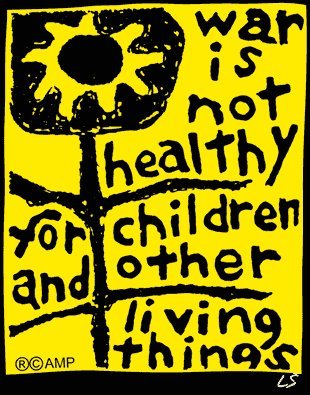
Back in the days of the Cold War, I thought the slogan "War is not healthy for children or other living things" eloquently put the problem in proper perspective.  Perhaps we need a campaign along the same lines to keep kids from suffering from our collective lack of concern for their future.

Sunday, 17 August 2014

Saturday Photo: Inca Path

Work on Road through Time progresses: the chapter about "Warriors' Roads" is just about done.

One of the things that I've learned is that most road improvements in early times came not from demand for better paths for commercial travel, but from the desire to link and conquer territory.  The Roman road system is perhaps the est known, but the grand Inca network should not be forgotten.  Indeed, when Spaniards first arrived in Inca county they were very impressed by the roads.  At that time there was nothing like them in Europe, since the Roman system--built more than 1000 years previously--had been allowed to deteriorate.

This photo is of a wall in Cuzco along a thoroughfare that had been laid out and built by Incas.  The neatly carved stone blocks are fit together so well that many have survived earthquakes that destroyed structures built after the Spaniards arrived.  


Saturday, 9 August 2014

Saturday Photo: All Roads Lead to Rome

Back to working on the next non-fiction book, Road through Time.  One of the pleasures of our trip earlier this summer was a day in Conímbriga, a Roman town in central Portugal.

For a good three hundred years or more, it was a provincial center on the road between what is now Lisbon and Braga.  Excavated over several decades in the 20th century, it now has a grand sample of what Roman roads look like. 

Friday, 8 August 2014

No Pears Bis: It's Not the End of the Bees, It Seems

This morning I checked out two other pear trees in the neighborhood to see how they had fared this spring.

As I recounted in the last post, we don't have any this year for reasons unknown.  My greatest fear was that the lack was due to the great Bee Crash, which may have devastating effects on food production.  Many, many crops need bees to pollinate, pears among them. 

Ironically, living in the centre of the city may be good for bees, since most municipal governments have stopped using pesticides and herbicides in their open spaces.  In addition, gardens in our part of town are of two sorts--those which are more or less left to go to seed, and those nurtured by eco-types who try to garden in an environmentally sound way.  Train tracks near by also are a corridor untouched by chemicals (for the moment, if there's an accident all bets are off, though.)  And I know of at least three places where people keep bees not far away.

So when it appeared that the blossoms on our trees produced no fruit, or so few that the squirrels have already disappeared them, I literally shivered.  However, it looks like things around here have not evolved into the worse case scenario.  The bees are out in force in our garden too.  If only they'd been more successful last May when the pears were in bloom.

Saturday, 2 August 2014

Saturday Photos: There Are No Pears

This is the weekend that I'm usually thinking about harvesting our pears before the squirrels do.  The two trees in our backyard have born fruit for more than 25 years.  Some years the crop has been more than the squirrels have wanted: the photo was taken in early August 2008 which was a particularly good year

But this year there are no pears on the trees at all.  They bloomed in early May as usual, I'm pretty sure I saw a few fruit setting on and a couple of half eaten, half formed pears on the grounds earlier this year.  So I'm not sure what happened.

Could be that putting compost tea on the ground early this spring gave them too much nitrogen.  Could be the cool and rainy weather in early May interfered with pollination.  Could be the trees are getting old.  Could be the general decline in the bee population is having its effect here.

Don't know.  I certainlly hope it isn't the last reason.  I'll have to ask around to see if other pear trees in the neighborhood have had the same problem. 

Wednesday, 30 July 2014

Horror Disconnect: A Prize for the Chainsaw Massacre Guy While Death Tolls Mount

Tobe Hooper who made The Texas Chainsaw Massacre 40 years ago is getting a lifetime achievement award today at Montreal's FanTasia Film Festival.  The festival, started 18 years ago and which has thrived when other Montreal film events have struggled, is presenting a long line-up of horror, speculative and sci-fi movies at the moment in several Montreal theatres.

The news of Hooper's award made the front page of the respected French-language daily Le Devoir  today with the headline "La peur en héritage," which translates to something like "The Heritage of Fear." What irony that the rest of the headlines detail one dreadful thing after another: more Israeli bombing in Gaza killing 67 people on Tuesday (The New York Times says "at least 20" for what that's worth), a precipitous decline in the number of Northern Gannets nesting on Ile Bonaventure in the St. Lawrence estuary, and Western nations playing catch-up in Ukraine and Malaysia Air affairs.

Seems to me that there is a real disconnect here between what's happening in the real world, and what popular culture is and has dreamed up. 

True, Jesus reportedly said "Sufficient unto the day is the evil thereof" in the Sermon on the Mount (Matthew 6:34) which supposedly refers to how we should not worry about tomorrow.  According to Aristotle, a tragic play offers catharsis, by "cleansing the heart through pity and terror, purging us of our petty concerns and worries."

But why do we need horror films and stories now?  Wouldn't we be better off trying to get to the bottom of why governments seem to be unable to govern and "civil society"  in so much of the world is performing very badly?

Just asking, at the moment....  The time for action is coming. The quote from the Dalai Lama is extremely relevant. 

Saturday, 26 July 2014

Saturday Photo: The Longest Day of the Year in the Bois de Vincennes Bis

Looks like a very bucolic setting but this was taken five minutes walk from the Porte d'Or and the Péripherique highway in Paris.  As I noted last Saturday, we had the pleasure of spending the afternoon of the longest day of this year picnicking  in the Bois de Vincennes with friends a few weeks ago.

The park, which once upon a time was the hunting ground of French kings, was set aside along with the Bois de Boulogne on the other side of Paris in the middle of the 19th century.  Baron Georges-Eugène Haussmann, architect of the great rejigging of Paris under Napoléon III, wasn't as convinced of the usefulness of big parks as was the Emperor, but nonetheless the parks were established in the hopes that through "a process of slow seduction they would lead these offspring of the city’s working poor to better habits.  and (to) the gradual amelioration of the morals of the working classes."

In the Baron's lifetime, the parks were not used much because of “the distance, the time needed to go and come and the cost of even the most economical  of transports which ended up being too much to be done very often." But he added in his memoirs:   "It is a pleasure to see that on each holiday the popular masses invade the two woods, spread out all over  the parks and enjoy themselves, feeling that they are at home there.”

Today it's easy to get to the parks, with Metro stops close by, and thousands of people living within walking distance.  They are used well and seemingly respectfully:  despite the crowds that Saturday, groups didn't interfere with each other, and enjoying one's place in the sun (or the shade) seemed everyone's goal. 


Tuesday, 22 July 2014

What the World Needs Now Is Love: If Only It Were This Simple

This showed up on my Facebook feed this morning.  It's a lyrical video compilation (I think I recognize clips from Apocalypse Now, Shingler's List and perhaps more) put together to make a point about how the world might be better.

Of course, the premise is simplistic, and love isn't enough, but as Jack Layton said, love is better than hate, hope is better than fear.  So I keep hoping....

Monday, 21 July 2014

More on Language Changing: Would That Things Be As Easy As Kids Make It Seem

A few weeks ago I posted about the inclusion of words from Arabic in Montreal French.  Wallah Wallah has become non-perjorative term for  someone of Arabic descent among Grench speaking teens in parts of the city, it seems.

Then, as hate surges through the Middle East, I was delighted to hear our Jeanne (not quite 4) encouraging her cousin Thomas (not quite 2) to take of his tricycle.  "Yalla, habibi," she said, "t'es capable."  The last part I understood straight off--"you can do it." 

The first part took a little interpretation.  Yalla means "let's go" or "come on," and "habibi" in this context is "my friend." Just the thing for a big cousin to say to a little cousin.

But just where Jeanne got the phrase is not clear.  There are a number of kids in her day care who have Arabic as their mother tongue, while a catchy popular song called "Yalla habibi" made the charts around here a while ago in its North American version.  However it happened, it's fun to see how easily a useful phrase can slip into everyday usage.

And given the horrible situation in Gaza where a number of Arabic-speaking children have been killed recently, one wishes that this kind of healthy meeting of language and culture were more widespread.  Here's an additional irony: habibi in Hebrew means the same as it does in Arabic.

Saturday, 19 July 2014

Saturday Photo: Hanging out Paris-style

This picture was taken four weeks ago, Saturday June 21, the longest day in the year at Lac Dumesnil in le Parc du Bois de Vincennes.  Situated just outside the Péripherique, this the park is the largest in Paris, accessible by Métro and close to dense neighborhoods.

We went there to picnic with friends and had a wonderful time.  There is a punt to take you across to one of the two islands in the lake, big old trees and the good feeling that comes from people prepared to enjoy a bit of nature in a big, big city.

Friday, 18 July 2014

Show Down: The Latest in Millenia of Conflict

While the world watches the debris of the Malaysia Airlines 737 smolder in the Eastern Urkrainian, I'm reminded of my recent reading.

Item:  Tolstoy--and I'm three-quarters of the way through Anna Karenina and read several of his short stories last winter--served in the Russian Caucasian wars.  That conflict saw Tsarist Russia impose its will on the territory which is now Ukraine and further south in the high country between the Black and the Caspian seas.

Item:  In The Horse, The Wheel and Language, historian and anthropologist David Anthony argues that wheeled chariots and tamed horses by the residents of the grasslands north of the Black and Caspian seas were major advances in warfare that set the stage for the advance of Indo-European languages throughout Eurasia and Europe. 

Item: the Sinashta Culture, unearthed in the Ural mountains of southern Russia, appears to offer evidence of this kind of warring as early as 2100 BCE.  This incredibly rich archeological site includes many maces--a weapon has not other use than bashing people's heads in. 

Moral: like the mountains of Afghanistan and the waters of the Jordan Valley, this region has known conflict for millenia, and maybe we ought not to be surprised. 

Monday, 14 July 2014

Drought: How Can We Live without Water in the Golden State

Growing up in Southern California, the spector of not enough water seemed frequently present.  Not enough rain falls to support a population a tenth as big as it was then, so water was imported from hundreds of miles away.  This year those sources are suffering from a three year drought, and it looks like some drastic measures should be taken to conserve what is there.
But according to the New York Times, not everyone in the Golden State has gotten on the band wagon.  In San Diego where I spent most of my childhood, water consumption has actually gone up since 2013.  Much of this goes to food production (and the choice of crops bears some re-evaluation), but apparently you're still allowed to use water to clean concrete surfaces in some parts of the state.  Seventy percent of water districts "have not imposed reasonable mandatory restrictions on watering lawns and keeping backyard pools filled," the story says.  Tomorrow the State Water Resources Control Board will finally get around to "placing restrictions on some outdoor water uses like washing paved surfaces."
We'll be paying more for fruits and vegetables from California this year, it's clear.  But that's not the big concern.  In a time when disaster and droughts due at least in part of climate change are more and more prevalent, how can people act to turn things around, when in many cases they seem unable to take steps to mitigate the mess we've made?

The photo by the way was taken in Eastern Washington last year, which, interestingly, seems to have had good rainfall this year.


Thursday, 10 July 2014

Back from Holiday, Tired but Pleased with It All

The photo was taken at one of the high points of our three weeks in Paris and Portugal--the countryside around Conínbriga in the center of that country.

I'll have more posts later about what we saw and did, but before I succumb to jet lag (it's been less than 24 hours since we got back) I must comment on the pleasure we got from not keeping up with world events.  For the first two weeks, Lee checked out the headlines on a friend's iPad, but after that the only news was what we saw in the ubiquitous TVs found in Portuguese restaurants.

The result?  Well, not much has changed in the world since we left home, and what we didn't know (immediately) appears not to have hurt us.  Strange conclusion from a news junkie like me.  But sometimes detox is good for the soul....


Friday, 13 June 2014

Walla Walla and Wallah-wallah: The Way That Languages Change

Attention particularly to my friends in South-Eastern Washington state: wallah-wallah has entered French in Montreal!

I'm the third generation of my family to be born in the small city of Walla Walla, and I burst out laughing yesterday when on Radio Canada reported that wallah-wallah has become part of teenage language in French-speaking parts of Montreal. The word comes from the Arab for "in the name of God", or O Allah, and has become, apparently, a non-pejorative term from someone of Middle-Eastern descent. Sweet revenge for me, who has endured chuckles from the unintiated every time I must say where I was born.

Walla Walla, the town, gets its name from the Native American on for the place, meaning "many waters." The photo, taken last summer, gives a taste of the streams that run through it. And here's the link to the Radio Can report.

Notice of Motion: The ERDC Plods Slowly Forward

The Electronic Rights Defence Committee has been fighting since 1996 to get recompense for free lance writers whose work was stolen and published electronically by The Gazette, Montreal's English language daily.

The ERDC won the class action some time ago, but working toward distribution of the settlement has been slow going.  Now a hearing has been set on the distribtion plan, with a notice to members of the class being widely circulated.  Here's the link.  You'll also find the DRAFT claim form and other related documents.  Perhaps we'll finally get around to calling for claim submissions in the fall. 

Saturday, 7 June 2014

Sex, Marketing, and Boys' Business

The Stephen Harper government has just brought out its new bill on prostitution which is getting criticsm from many quarters.  A compromise between all-out legalisation and complete outlawing, the Conservative caucus was apparently told. 

Well, maybe.  I haven't looked at the bill carefully, but I do see is that the selling of bodies is rampant in Canada as elsewhere.  This is the weekend of Formula 1 Grand Prix and there are all kinds of weird things going on.  A neighbor had her purse stolen in the cafe of a downtown department store, there was shooting at a night club near us that is usually very respectable.  And on Thursday the Femens were out, denouncing the event as an example of male egos run rampant. 

One of the things I thought would happen after the great wave of women's accomplishment that began in the last quarter of the 20th century was a downplaying of sex appeal as a female weapon/trap.  That has not happened, as witness the short short that high school girls around here are wearing and the deluge of suggestive selfies on the Net.  So I give the Femens credit for turningn the paradign on its head.  They're looking good in many senses of the term.

You listening, boys?  Or just looking?

(BTW, to put the shooting in perspective, a man was killed, bringing the number of murders in Montreal to nine for this year.  Last year when there were 28 in all on the island of Montreal, 11 people had been killed by this point.)

Saturday Photo: Chestnuts in Blossom

April in Paris, Chestnuts in blossom: right?

Well, no, it's June and the chestnuts are in blossom in Montreal.  That's about par for the course--or a little later this year, because of the tardy spring.

Nevertheless, I'm thinking of Paris a lot, as we prepare for a trip to Europe.  Two weeks in Paris and 10 days in Lisbon.  Can't wait!

This means however that I won't be posting much for the next little while.  The urchins in various combinations will be holding down the fort, chez nous, with several barbecues, I understand.   And we'll be having a terrific time, I'm sure.

Now to go shorten some jeans for Lee: he's just bought a new cap from Henri Henri, the marvelous Montreal hatter, because he, a man who is far from a fashionista, likes to look good in Paris!

Tuesday, 3 June 2014

Okay, Hockey's over (for Habs Fans,) Now It's World Cup

Living in Montreal is great fun this year: when your team washes out of the Stanley Cup finals, there's the World Cup to follow.  Not that I'm so big on the games themselves, but I do like watching the partisans.

Here's a link (thanks to Maria Lagatto) to a Guardian story about the rival songs for the World Cup this year.  You can be sure there will a lot of music blasting during and after matches around here.

Thursday, 29 May 2014

Thanks to Laurie, Mik and the Turks and Caicos Islands: Glad the Latter Weren't Annexed 40 Years Ago

Apparently the door is still open for Canada to annex the Turks and Caicos Islands,  but it doesn't look all that likely.  The idea is just as intriguing as it was nearly 40 years ago when I first heard of it, and started my traveling.

At that time my brother-in-law Mik was working for a construction firm that was trying to get into the resort-building business.  The islands were virtuely undeveloped as a tourist destination, and his firm wanted him to go look aroud to see what the possiblities might be.  If the small Caribbean archipelago became part of Canada, his bosses thought Canadians would flock there, the way Americans go to Hawaii.

The only way to get to the islands then was through Port au Prince, Haiti, and Mik and Laurie's plan was to fly there, spend a few days bagging some rays and then Mik would go on to T&C.  Would I like to go along to keep Laurie company while Mik was working?

Sure, I said.  I'd never been off the North American continent, my husband had no desire to do that kind of traveling, and this sounded terrific.  So we went, and Laurie, who'd done Europe several times as well as Hawaii, was nevertheless appalled at seeing Third World poverty in Haiti.  Given her reaction, Mik decided it wasn't worth the aggravation, so we spent the whole 10 days on Haiti.

Which they didn't like at all.  They slept late, took a couple of tours, but spent most of their time poolside drinking exotic punches, pretending they were in a less exotic, more tourist-friendly place.  I, however, decided that I couldn't waste this opportunity to roam, so I got up at 5 a.m. when the bells chimed at the church near our hotel  to go out walking.  My thought was that bad guys would be sleeping it off at that hour, and I could go out on foot with minimum fuss and/or danger.  By 8:30 a.m. when they were up, I was back with stories.

It's a strategy that I used 30 years later when I began traveling in earnest on my own for my books.  It's served me very well, indeed, thanks to Laurie and Mik who got me moving.


Monday, 26 May 2014

Saturday (or Monday) Photo: Late Spring Rain

Rain is falling right now, but the more spectacular thing falling to earth around here right now are the tiny flowers of various street trees.

The regular flowering trees are doing their best right now too.  Our pears just finished their white display, the Siberian crab apples in the cemetery were lovely on the weekend, and magnolias of various sorts have lovely, curvey petals.

But the big maples, ashes, and other sort of trees not noted for their flowers also are producing them.  And sometimes when they fall they transform the landscape.  This photo was taken a few years ago after a particularly lovely flower-rain. 

Friday, 23 May 2014

Austerity Doesn't Work, Even Though Quebec Liberals Give It a New Name

Quebec's Premier Philippe Couillard has introduced a new era of "fiscal rigor," the new code word for austerity.  His inaugaral address when the legislative session opened this week was full of threats about what will happen if expenses aren't cut and the deficit reduced.

His new finance minister Carlos Leitão was right behind him cheering: if debt and deficit are not brought under control, Quebec is headed for Portugal-like problems, he said three weeks ago. 

No matter that the International Monetary Fund is now admitting that austerity hasn't worked, has brought poverty and dispair to millions of Europeans, and should be rethought.  Here's a link to Paul Krugman's analysis of the situation:  it dates from a two years ago, but still is extremely relevant. The big Quebec thinktank, the Institute de recherche et de informations soci-économique   says much the same in a recent report.

But it's unlikely that anyone is going to pay attention.  Even the official opposition Parti Québécois is on the austerity wagon.  Interim opposition leader Stéphane Bedard called on Couillard to renounce the idea of allocating $15 billion to infrastructure programs over the next ten years.

Come on, corruption in infrastructure and other construction has been rampant--as the Charbonneau Commission is showing us--but spending on repairs and upgrading roads, sewers, water treatment and the like is necessary to maintain a healthy society.  What's more it provides jobs for lots and lots of people which is good for the economy.  Canada escaped some of the worst of the Great Recession because the NDP, BQ and federal Liberals made Stephen Harper spend a little money to keep things going.

But the only people who are likely to bring that up during budget discussions in Quebec now are the three members of Québec Solidaire---and thank goodness for them!

Wednesday, 21 May 2014

Arthur Porter, the McGill University Mega Hospital and Philippe Couillard

Okay, it's past the time to un-elect Philippe Couillard premier of Quebec, but some serious questions should be asked about his relationship with Arthur Porter, the disgraced former head of the big McGill hospital project.  Yesterday at the Charbonneau Commission into corruption in the construction industry and political party financing, Porter's neck-deep involvement in kick backs and fraud was once again exposed. 

The National Post reports:
"Sgt. Jean-Frédérick Gagnon of the Sûreté du Québec testified that Dr. Porter personally received $11.25-million in payments from SNC-Lavalin Inc., paid to a shell company in the Bahamas. Dr. Porter’s right-hand man at the MUHC, Yanai Elbaz, received the same amount through a second shell company, Sgt. Gagnon said, making for a total kickback of $22.5-million in exchange for ensuring SNC won the contract."

Couillard was Quebec Minister of Health from 2003-2008, during the beginning of the hospital's construction.  Porter was named director of the project in 2004, and while Couillard has noted that it was the hospital's board that made the appointment, that was on his watch.  Furthermore, he was a business partner with Porter in a health-related company (which Couillard says never did any business) and they sat together on two rather powerful boards of directors. 

Either Couillard knew about what was going on, in which case he should have set of alarms, or he didn't, and that casts a long shadow on Couillard's competence and his involvement in Old Boys networks. 

Moral: Old boys can't be trusted. Corruption hurts us all.  Whistle-blowing should be rewarded.


Tuesday, 20 May 2014

Nice Weather, Friends Visiting, No Time to Think about Heavy Stuff

Rekha Bitta and her family, whom I met nine years ago when I was doing research for Green City in Kochi, Kerala State India, was in town over the weekend.

We had a lot of fun showing off Montreal, and followed it with a barbecue on Sunday.  Monday was a holiday here so we all could enjoy some time outside when the weather was pretty good.

That's Elin, Rekha holding Jeanne and me down by Place des Arts.  Didn't think about anything world-shaking all weekend....

Friday, 16 May 2014

What's Wrong with This Picture: Fast Food Workers Demonstrate for Better Wages While Canadian Chains Bring in Foreign Workers

It's a no brainer, isn't it?  Pay people decently and they'll work.

I'd like the think that Stephen Harper and his friends are beginning to see the wisdom in this.  At least today there's talk of a "floor" in wages for foreign workers brought into this country to fill "empty" jobs.  " "Tories eye 'wage floor' and raising fees for foreign-worker program "


The ghastly truth is that fast food workers are paid very badly everywhere except maybe in Denmark where Mcdonald's worker can make $21 an hour. This week fast food workers in several countries demonstrated for a minimum wage of $15 an hour.

The truth is is that if you pay people they'll work...and they'll spend and the old economic multiplier effect swings into motion. 

Tuesday, 13 May 2014

Explaining irrationality: Téa Obreht's Take


 This week I've been rereading Téa Obreht's fascinating The Tiger's Wife in preparation for the Atwater Library's book discussion.  The book, which take place in the aftermath of a war in an unnamed Balkan country is an astounding combination of solid, evocative writing about what appear to be real events and magic.  

I have yet to figure out what it all means, but I think the clue may lie in this:

"when confounded by the extremes of life – whether good or bad – people would turn first to superstition to find meaning, to stitch together unconnected events in order to understand what was happening. He learned that, no matter how grave the secret, how imperative absolute silence, someone would always feel the urge to confess, and an unleashed secret was a terrible force."

Worth reflecting on.

Saturday, 10 May 2014

Saturday Photo: Daffodils, a Week Late

This was taken four years and a week ago, when the daffodils were at their best.  This year everything is late, and the daffodils are just coming into their own.

Been doing the grandkid thing and haven't had a chance to take any pictures of this year's crop, but believe me, they're even nicer than this one.

Wednesday, 7 May 2014

Another Can Lit Giant Falls: Farley Mowat Dead at 92

The past few months have been tough for Can Lit: Alistair MacLoed and Mavis Gallant both dead, and now Farley Mowat falls. 

The Globe and Mail's obituary quotes him as saying: “Fuck the facts. The truth is what is important," when "inconsistencies," to give them a polite name, were brought up between his log books of time spent in the Arctic and the picture he painted of Inuit life in People of the Deer. Seems he didn't spend much time there, in truth.

But where is the truth, one might ask.

The man had his heart in the right place, and got turned back at the US border at one point because of his opposition to the Vietnam War (that's where the cartoon by Aislin comes in.) 


Sunday, 4 May 2014

Dancing Is Important in the Grand Scheme of Things

Jeanne spent part of the dinner hour dancing around the dining room (with Thomas cheering her on from his highchair) to a variety of jazz pieces. Her dance technique veers toward the baroque--Marie-Natalie Lacoursière, the baroque dancer, is one of her godmothers after all--but she was definitely grooving.

Which made me begin to reflect on the function of dancing in civilization.  There is joy in moving to music that nearly anyone can experience.  As the video below--the Supercut of Pharrel William's Happy--shows, even the physically limited and far-from-beautiful can have their spirits lifted by dancing.

Given the many, many problems that the world faces and which seem to be getting worse, dancing  can bring the boost of energy necessary to challenge them. Certainly it's good for the heart, both in the literal sense and the metaphorical.

Thursday, 1 May 2014

Thomas Piketty and Inequality: The Video

French economist Thomas Piketty's best selling Capital in the Twenty-first Century is sold out--not bad for a 1000 page treatise on what's wrong with current economic thinking.

But if you can't wait until the book is back in print in order to learn what the message is, here's an informative session with Piketty and two Nobel prize winners, Joseph Stiglitz and Paul Krugman.

The End of Mirabel, Or Another Mistake That Shouldn't Have Happened

While I've been revelling in postive health things (new eyes!) and negative ones (shingles!) I have been somewhat insulated from reacting to the increasing number of things that are going wrong in the world.

Too late to make much comment about the scary stuff in Russia/Ukraine relations, other to say that it's interesting that when the heat was off somewhat in Syria, things erupted there.  Similarly the disgusting displays by that Sterling guy and Rob Ford hold lessons about our world, but I think my chance to expound of them has past.

However, one breaking story today is worth comment.  The agency that runs Montreal's airports announced today a call for tenders to destroy the terminal building at Mirabel International Airport, a nearly 40 year old white elephant that should never have been built.  Designed as a nifty compromise between world class airport hubs in Ottawa and Montreal, the airport was built on expropriated farm land an hour north of Montreal.  It handled international flights for several years, but its inconvenience (if you wanted to transfer to a domestic flight you had to travel by ground transport, among other problems) led to moving all passenger flights back to Dorval in 2003.  The facility's runways are now used for cargo flights.

Taxpayers have shelled out millions and millions of dollars on the buildings and their maintenance over the years.  What a colossal waste!  Nobody but them have been hurt by the bad decisions made so long ago, certainly not the politicians behind the project or their friends in real estate and construction who made tidy profits from it.

Wednesday, 30 April 2014

Report from the Front: Full Binocular Vision

And the patch was removed this morning so I can see in the world in full binocular mode, with colours gorgeously clear and all the details vibrant. A little discomfort focussing at a distance at first, but that seems to be past.  What an amazing thing to see so well at my advanced age :)

Tuesday, 29 April 2014

Getting the Other Eye Done Today...

The kitchen is just about clean, after my new eagle (left) eye uncovered all the grime.  Today is the day the right eye (formerly my better eye) gets done.  Back tomorrow with a report on whether I see more dirt than I did before.

And by the way Lee still looks pretty good, even if a little more wrinkled than I thought before.!

Friday, 25 April 2014

Yup, CBC/Radio Can Budget Cuts Will Affect Enquête

The Charbonneau Commission into corruption and illegal political party funding has started work again after the Quebec provincial election.  Just what it will come up with  when it's finished its hearings is a question, as is what the effects of the damning testimony will be. 

But one thing is clear: it's going to be harder to come up with evidence that might lead to such a public investigation, as Radio Canada has announced that Enquête, the public affairs show that produced program after program about shady dealings over a period of several years, will have its funding cut.

The Globe and Mail reports that the program will lose one-fifth of its staff in the $130 million cuts, announced recently.  It quotes Alain Gravel, the program's host: 
“Without these journalists, all of these people [involved in the scandal] would still be carrying on as if nothing ever happened...Instead of facing cuts, we should be getting additional resources.”

He's absolutely right!

Tuesday, 22 April 2014

Alistair MacLoed Is Dead: Far from No Great Mischief


The news this weekend was that Alistair MacLeod, short story writer and novelist, is dead at 77.    As it happened, his only novel No Great Mischief was the focus of the book discussion group I led at the Atwater Library last Wednesday which means that MacLeod and his interesting view of the world is very fresh in my mind.

The book, which MacLeod worked on for 13 years before finally agreeing to have it typed up and prepared for publication by MacLelland  and Stewart in 1999, is told by a Cape Breton man (one of three Alexander MacDonalds in the novel, now living a nice upper middle class life in Windsor, ON, as he tries ot help his alcoholic older brother.  The pace is slow, as it often is when stories are told aloud. There is repetition of key phrases and repetition of key events, just as there is in stories told aloud.  The voice is easy, as if the man narrating the events was sure from the beginning how it would end.

Along the way we are told a lot about the Highland Scots who settled in Cape Breton in the late 18th century, and how their progeny continue today to eke out an existence on the rough landscape.  It is a moving story, and one which I found absorbing.

As we spoke about the book last week, I wondered just how much of my appreciation of the book is colored by the fact that my mother was a McDonald, from the Protestant part of that clan. Certainly the people who seemed most taken by the book had a link with Scotland one way or another.  But MacLeod goes to great lengths to make the connection between the clannishness of the Highland Scots and the ties that bind peole in other communities: French Canadians, Zulus, the Masai, Mexican Mennonites.

Indeed, the link between the Scots and the French in North America is one of the major themes in the book, and led to an almost surreal book launch when the French translation came out a couple of years after English original. The event was sponsored by the Quebec nationalist Société St-Jean Baptiste at its headquarters in an elegant old house once owned by the Patriot Ludger Duvernay.  I suppose I was invited because I'd written a fictionalized biography of another of the Patriots (and here we're talking about the Rebellions in both Lower and Upper Canada in 1837-38) Robert Nelson.   When guests arrived we were greeted by two men in kilts playing bagpipes outside.  Inside we were greated to Scottish dancing, a short talk by MacLeod (in English, since he spoke no French), a reading of the French translation and the presentation of a scholarly work about the many French Quebeckers who have Scottish ancestors.

The leaders of the SJB society at the time were following very carefully the secession movement in Scotland, and had read MacLeod's book in English on their way to attend the first session of the Scottish assembly.  Obviously they found  a great many resonances with the Quebec situation.  As for me, I was delighted by the connections they made, as well as the pipers.

Will pipers play Amazing Grace or Over the Sea to Skye at MacLeod's funeral which will be held this Saturday at St. Margaret of Scotland Church at Broad Cove, Cape Breton?  Possibly. A more interesting question is: how religious will the service be?  One of the things that is strangely missing from No Great Mischief  is organized religion.  MacLeod avoids any reference to the Catholic-Protestant cleavage in Scottish culture in his books, because, I'd like to think, that conflict is irrelevant when considering the relations of people to nature and to the hard scrabble life so many live.

Monday, 21 April 2014

The Down Side of Good Vision: Seeing All the Grime

Too busy to say much because I realize just how dirty everything is around here, now that my eyes are working as they should.  People had warned me that I might be surprised/shocked at how old I and others around me had grown, so I was prepared for that after the cataract operation.

What I  wasn't prepared for was the highly visible proof that I'd rather do almost anything else than clean house.  But there are times when you can't avoid it, and thisis  one. Now to go down on my hands and knees and remove the spots from the hardwood floors...

You may not hear from me for a while....

Friday, 18 April 2014

Why We Need a Strong Public Broadcaster: Radio Canada's Enquête

The knives were out last week at the CBC and Radio Canada: 657 jobs will be cut and $130 million slashed from the budget. This is just the latest in the campaign to bring down Canada's public broadcaster orchestrated by the Stephen Harper Conservatives. 

Many times in the past I've ranted about the cuts to serious programming on what used to be the music service.  About five years ago, both the CBC and its French-language twin Radio-Canada started dumbing down the music content in a (I think) mistaken attempt to make the service more "accessible."  The repercussions for the future of music in this country are grave, since the serious music programming both builds audiences and provides jobs for musicians. 

But, much as I value cultural programming, what is coming now seems to have enormous for the political life of the country.  This was brought home when the Charbonneau Commission in Quebec resumed its investigation this week into corruption in the construction industry and the financing of political parties. 

In 2009, the Radio Canada program Enquête began a series of documentaries about "organized crime bosses worked hand in glove with both the construction industry and government bureaucrats who awarded highly lucrative contracts." as the Canadian Journalists for Free Expression put it in explaining why  Enquête received its 2012 Tara Singh Hayer award.

Journalists in other media followed up, with the result that  we see now: a large official investigation into corruption that had been going on for a very long time.  What will happen next depends on many factor, but nothing would have happened had not the Enquête team started digging.

The CBC/Radio Can brass weren't talking last week about getting rid of programs like Enquête but the danger exists.  Why send out journalists to  uncover difficult news that is embarassing to the powers that be, anyway?  The temptation is to think: maybe it's better just to keep your head down.

 Let's hope that doesn't happen.  Join the protests.

Tuesday, 15 April 2014

Rainy Day, But At Least Our Winters Are Sunny, Or What To Do Where the Sun Doesn't Shine

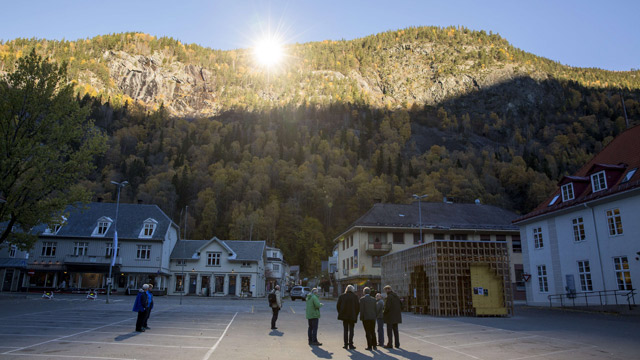
Came across this in The New York Times today: a town in Norway which now has mirrors beaming sun down into the town square. 

It's not a first: the BBC reported in 2006 on a town in the Italian Alps which had did something similar.  In Austria, a mirror installation was put up the year before. 

The sun in Rjukan, Norway, looks a little anemic from this photo, but I guess it's better than nothing.  Don't think I could last long where there wasn't some sun in the winter.  Give me a day in February when it's -25 C and the sun is shining on new snow, and I've happy!


Monday, 14 April 2014

First Robin of Spring Sighted...Or At Least, My First Robin

Out walking this morning and sighted the first robin so far this spring. The grass is mostly free of snow, but now yet green here, nor are there any leaves on the trees. Ordinarily things burst out the first week in May, and that is two weeks away. But here's a taste of what is coming.

Sunday, 13 April 2014

Saturday Photo: Collecting Onion Skins for Easter Eggs

Going to decorate Easter eggs with Jeanne next weekend, so I'm collecting onion skins to make the gorgeous Latvian eggs our neighbor showed me how to make. 

You wrap the eggs in the onion skins, tie them on securely and then boil them for 15 to 20 minutes.  They come out a lovely red, with splotches from the uneven skins.  An example is the egg on the lower left in the picture.

The other colours are also natural, but I decided last year that they're more trouble than they're worth and the red eggs are the best.  We'll see what the other members of the decoration team say, however.

Friday, 11 April 2014

We Have Seen the Future and It Is Beautiful (and Brazil Was There First)...

Missed this because our National Geographic subscription has been transferred to the grandkids, which  is probably quite fitting:  given the rate of racial and ethnic intermarriage in the US, by 2050 the faces of the country will be a gorgeous mixture of hair, eye and skin colour, the magazine says extrapolating from census data.

Following the rebuff given the xenophobic policies of the Parti Québecois in this week's provincial elections, it's good to see that migration and assimilation are trending in this direction.  There's no telling where love will lead us, is there?

Of course, anyone who's visited Brazil will say that faces like these are common there.  Some are the legacy of forced relations in the past, but many, many  are  evidence of a vast country where there never were laws  which prohibited marriage between "white" people and those who "had any known blood" as there were in many US jurisidictions.


Tuesday, 8 April 2014

Not Pleased about the Liberals, But Glad the PQ Got What It Deserves

Let me say right off, that 18 months ago I was ready to give the Parti Québécois some slack as it won minority government status in a provincial election.  Bringing in a budget at the very beginning was a smart move, since none of the opposition parties were in a position to challenge  it bring on a snap election.  Pauline Maurois and friends were setting themselves up to do some interesting things, I thought.

But they blew it--going back on their promise to cut a per capita health care tax, waffling about mining legislation, moving their economic policy to the right and much, much more.  Then came the disastrous attempt to appeal to French Canadian insularity with their charter on "a neutral state."  The state should of course be neutral--I fought for years to introduce public schools organized on linguistic, not religious lines--but the idea of outlawing the wearing of religious symbols by public servants was  simply terrible.

It's a measure of the incompetence of the PQ leaders that they thought widespread support for state neutrality would translate into partisan votes.  What were they smoking?  Who were their pollstars talking to?  Whatever, they got it all wrong.

Philippe Couillard and his Liberals are only marginally better on most issues, but this is a least worst situation.  Too bad the only party with a platform I can really supportm Québec Solidaire, didn't do better.  But maybe next time: QS just increased the number of its members of the National Assembly  by 50 per cent--from two to three.  That's a hopeful sign, although at that rate it will only take eight more elections for the QS to win a majority of the 125 seats and form the government. 


Sunday, 6 April 2014

Saturday Photo: Coming in the Not Too Distant Future--Snow Drops!

The snow is retreating in front, and a sprinkle of little leaves are pushing up from the dirt.  Spring is late this year, but very soon I expect the new growth will transform itself into the first spring flowers.

Snowdrops always raise my spirits.  This picture was taken a few years ago, and I can't wait until I see this year's crop.

Sitting Out an Election: What's Happening to Volunteers?

This is the first provincial or federal election in years that I haven't worked hard for some leftish candidate. Usually I do a lot of telephoning, or some door to door, and occasionally I've even been on of the "back room boys and girls." 

This time my various health issues--the shingles and the cataract surgery in the last couple of months--gave me a good excuse not to put a lot of time into campaigning for Edith Laperle, the Québec Solidaire candidate in our riding.  (Didn't work for her in the bye election last December because I was in South America, but that's another story.)   She's a fine young woman, a hard campaigner (this is the third time around), and definitely would be an good addition to the National Assembly.  We contributed some money, put up a sign on the front porch and certainly wish her well. 

But work?  No, not really.

I've felt guilty, but it seems that I'm not the only stalwart who is sitting this one out.  Le Devoir had a story on the weekend about how the volunteers which have until now been the backbone of a good, grass roots campaign are just not showing up.  Vincent Marissol wrote a similar piece in La Presse last week:  Where are the Militants?

Part of the problem is that the kind of work campaign volunteeers have done in the past just isn't as useful as it was.  The number of people with landlines whose numbers are easy to reach has plummeted, making telephone canvassing less effective.  Even when campaigns can come up with lists of sympathizers, harassing them to make sure they vote looks increasingly counter-productive.  To be sure, door-knocking can still work, but it takes a lot more time than telephoning did in the old days.

But perhaps even more importantly, many folks are finding it hard to get enthusiastic about the people running.  A sign of growing cynicism about the political process?  Probably.  This time around only Québec Solidaire seems to be running a campaign with clear cut stands on issues, and, in my view, is the only part worth voting for, even if I didn't do any work for it.

Wednesday, 2 April 2014

The View from the Other Side

Not much action lately because of various things, like cataract surgery on Monday.

But now I'm delighted to report that I'm seeing better than I ever have.

Anyone who's been nearsighted since birth can imagine how wonderful it is to look out the window and see everything in great detail.

The eye operated on was my worst one, and I'll need an operation on the other soon.  This one did nothing for the problems of elderly close vision either, so perhaps I'll have to have "reading glasses."  For the moment though, I just can't get over how well I see distances now, much better than I did before with my glasses.